
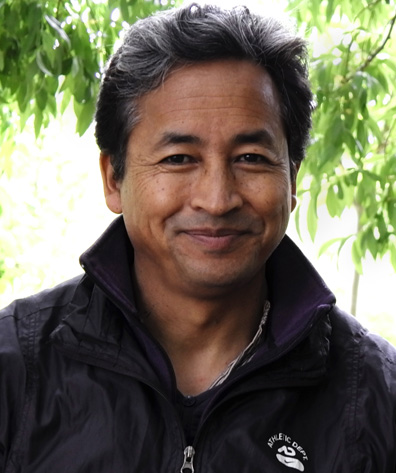
IN CONVERSATION
“We should foster empathy and kindness in children,
so they treat all living beings kindly, not just humans.”
SONAM WANGCHUK
Engineer and Education Reformer, IN
January 1st, 2018
Albert Einstein said, “Try not to become a man of success, but rather try to become a man of value.” I had the privilege of meeting such a person—a world-class educator and leader—on the campus of the Students’ Educational and Cultural Movement of Ladakh (SECMOL), nestled in Phey village, Leh. Sonam Wangchuk, an engineer and education reformer, along with a team of like-minded visionaries, founded SECMOL in 1998 to uplift the status of children marginalised by the existing education system. After decades of dedication and investment, Sonam Wangchuk’s expertise is now heralding a momentous shift in education.
Heera Alaya: Why is teaching important to you? And when did you first consider teaching as a profession?
Sonam Wangchuk: Teaching is a blessing in every possible way. You think teaching helps the person who is learning; it does. But teaching makes you learn much more than the one being taught; teaching is how I learnt.
My father wanted me to pursue civil engineering; however, my passion and dream were mechanical engineering. My father said, “If you want to study mechanical, do it at your own expense.” So, I had to leave home to pursue my interest. I got into teaching by accident—I used teaching to support my education.
While teaching, I realised how the teaching process could benefit both the learner and the teacher. I learnt about the depths and the subtleties of everything I taught, things I would never have learnt from a professor through a lecture. Our brain gives us the impression that we have learned, but it has gaping holes in the structure of the concepts that form in our heads. Knowledge comes out only when you have to explain something to someone. When you realise you don’t have a clear idea of the subject, you figure out how to explain it, which makes it a great learning process.
Since the course I taught became quite popular—it was teeming with many students (more than I could usually handle)—I devised a system where the students who were quicker to grasp a subject (and each subject has some good students, while the same might not be so good in another subject) would help the ones who were not so bright in that subject. Through this peer-teaching and peer-learning system, I saw that the weaker students became good, and the good ones became stars. I think every school should incorporate this valuable system.
So it’s a win-win situation.
Yes. Teaching is valuable to any growing child or learning mind. Learning something at any age and sharing it with others is an excellent service, yet it’s more of a service to yourself. What business could fall into the category where you give and become rich? I advise others to teach somebody.
Teaching is similar to trees—they provide nourishment and shade to others as they grow and become stronger.
Yes. As you teach, so you grow.
How and when did the concept of the Students’ Educational and Cultural Movement of Ladakh [SECMOL] originate?
SECMOL was not our primary aim. Our main work before this school was to reform the village and government schools. I coached 10th-grade students during my engineering program, and about 95% failed each year; only 5% passed. Initially, I helped students to support my education, but soon, I realised that education is more important than being an engineer. So, with other like-minded friends, I started teaching more students for free.
Then it occurred to me that if you only mend something broken, you would be doing it for another 50 years, and the system would keep producing more of the same. This mending can get many people thanking you, and you may feel very charitable, but that’s not the way to solve an issue. We decided to sort it out at the source so that no brokenness would come out in the first place. Nobody will be grateful, but that would be the best way to solve the problem. So we stopped the coaching approach and went to every village to improve the schools. Our aim for SECMOL was to eliminate the need for mending.
Did your concept face any resistance in schools?
[Faced resistance] Not because of the concept, but because you must strive to get results, and many people are used to not working hard. In government schools that produced 95% of the failures, teachers wouldn’t come to school for days, and when they did, they arrived late. We had to change all those behaviours. The trend was to blame everything on the teachers, which is not a good solution.
Our approach to this problem was through love and respect. We would not blame the schools for poor results, but we would give the villages everything they deserved and demand quality in return.
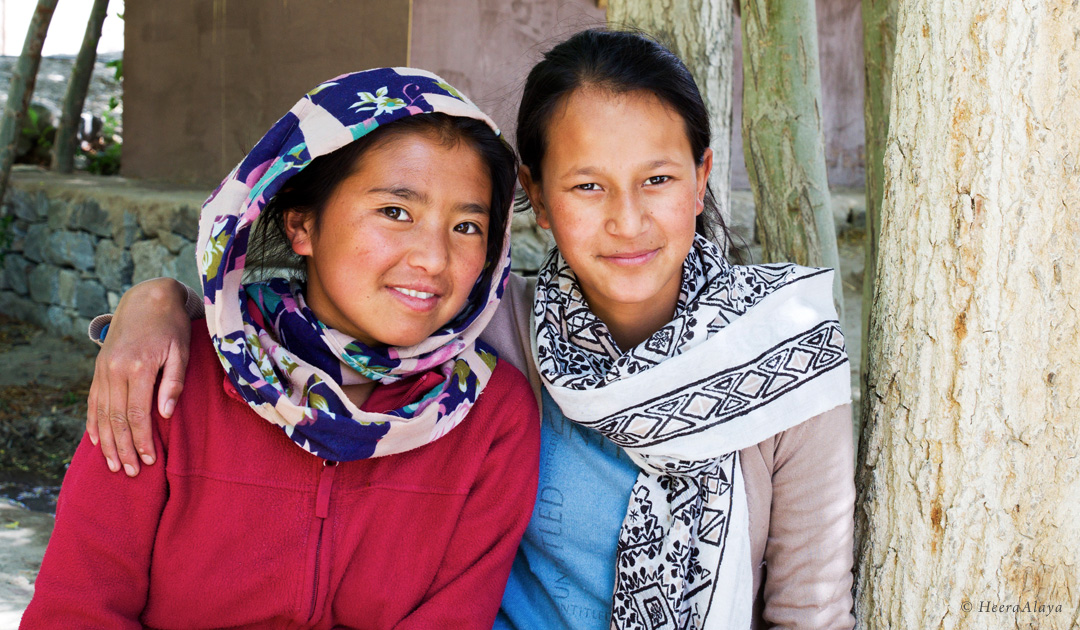
How did you change the education landscape—from society’s fear-imposing design to defining success on your terms?
We worked with government schools and made the teaching-learning process based on grasping the essence of concepts rather than fear and mechanical memorising. The school results changed significantly—the pass rate went from 5% to 75%. But for those who still failed, we set up SECMOL.
I don’t believe in starting private parallel schools—that happens when the quality of education isn’t good. You might not need these private schools when you bring the quality up. But for children who were rejected by the system, in their conventional outlook, there was a need for a special school. At SECMOL, the criteria for admission is failure rather than performance.
If I had my way, I would like everybody—the poorest to the richest, the least powerful to the most powerful person in the country—to go to the same government-run schools of respectable standards. That way, the most powerful will make the standards so high that even the least powerful will enjoy the results.
At SECMOL, we make learning a joyful, natural process with all animals and species. Only humans cage children in a room for eight hours a day and 18 years of life and lecture them to death; this way of teaching is not natural.
To what do you credit your unique mindset?
Honestly, the way I see things is the natural way. I don’t know how people think learning could happen in classrooms through lecturing; that’s unnatural. For example, long back, when I used to hear that a particular school was progressive, that they adopted the play way method of learning, I started thinking that maybe they are a good school, but wait a minute, play-based is not something unique we, humans, have invented—you see it in every animal. We think we humans are so evolved.
Take cats and dogs; their kittens and puppies are not learning in our way; they learn the play way. The mother cat plays with the kitten for a purpose—to prepare the kitten for life. Kittens learn to catch mice, but start with their mother’s tail as the target, pouncing on it. And by pouching on the tail, they are ready to pounce on a mouse. Cats never make their kittens sit in a corner and memorise: “When you see the mouse, take a position, pounce, and grab. When you see the mouse take a position, pounce, and grab.” No, they would all die the way we humans do.
[Laughter]
The play way comes naturally. Play is not a joke; it is the most serious programming nature has packed in the young ones, and that’s what they see through their learning process. Little puppies, little kittens, and little donkeys all have play that gives them all they want in their lives. Humans are also packed with all the play instincts of curiosity. Can you see how little children are bubbling and overflowing with curiosity?
Curiosity is the number one ingredient for a good learning mindset.
If you are curious, you don’t need a teacher. A little help would be very good. But what do we do? We first kill the curiosity. We ensure nothing is left and dictate to the child: “Stand up, sit down, turn around, sit quietly.” We destroy the most sophisticated program that nature has gifted, and then we complain that children don’t learn.
[Laughter]
Therefore, what I say is most natural.
I concur.
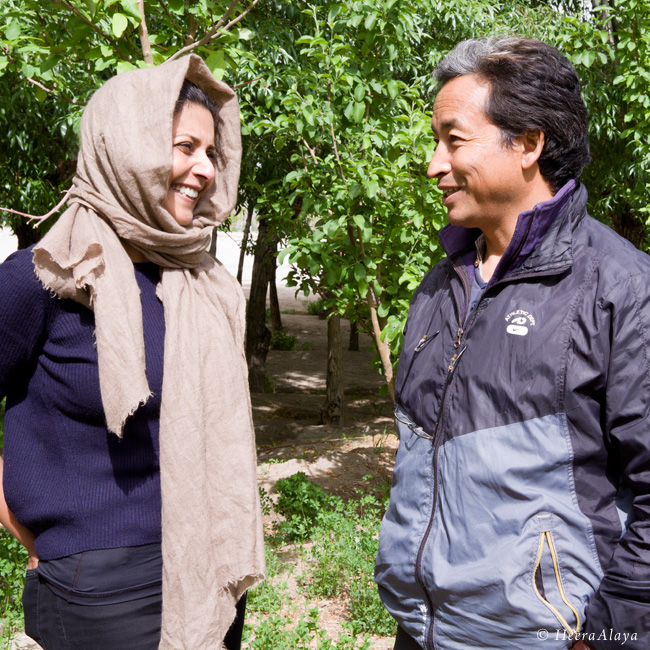
SECMOL is designed around the principle of “Bright head, skilled hands, and kind heart.” Could you elaborate on this concept?
Education has often been viewed as merely an intellectual pursuit—focusing primarily on subjects like science, mathematics, and language; in other words, it’s all about the mind. However, life demands much more than just intellectual capacity. We must be able to accomplish tasks, navigate challenging situations, and lend a helping hand to others. Thus, relying solely on the intellect is insufficient.
In solely developing the head, I see a disfigured body of a child—a large head filled with knowledge but lacking in other essential areas—going to school.
Because they have only developed the head, these children are very arrogant. This neglect leads to a sense of arrogance, as these children may feel superior because of their extensive knowledge, yet they are ill-equipped to face the real-world challenges they will encounter.
Every person should be intellectually awakened, capable of handling their own things and occasionally helping others. Therefore, what is missing in our school system is the hands-on part. Stunted hands can’t do anything independently; they can’t last a day or two if they are left in the wilderness. What good is that? Only the most progressive schools talk a bit about hands-on learning, which is a pity, because every school should be about both the head and the hands.
The third part is the heart. Even the best schools don’t lay any stress beyond the head. For a happy and vibrant society, you must have compassionate people who are not about themselves but about helping others. On the contrary, our schools train us to be competitive, kill competition, and survive alone above everyone else.
Human beings have this faculty of feeling for others—sensitivity and empathy. But our schools help us shed compassion and trample upon others, which is sad. Therefore, I often say that you may have a very bright head, but it can be dangerous—it can be arrogant and helpless when it comes to surviving. And then you might have very skilled hands; even that can be dangerous—the people causing the most significant problems on earth, whether terrorists or gangs, have very skilled hands and very bright heads.
Only when a child develops a kind, compassionate heart, the head and hand are put to good use and never to destruction. Therefore, we should foster empathy and kindness in children, so they treat all living beings kindly, not just humans.
How do you create learning materials relevant to children in Ladakh?
Our primary challenge was to eliminate textbooks that did not resonate with the children’s lives, and instead develop materials that reflected their experiences—complete with examples from villages they could relate to.
The next was accessing local material–using mud from the earth, taking children out to see, touch, and engage with things, rather than always bringing replicas to the classroom. And rather than being taught by only the history teacher, introduce people from outside. For instance, get people aged 80 to share vivid recollections of how the roads opened around 60 years ago. Resources in our society and our environment must come into the classroom to make it come alive. And our classrooms must go out rather than staying in one room.
How does the system you have created for children enhance the quality of thinking?
We make the children think, feel, and make their own decisions. For example, this school operates like a small country with a small government that changes every two months, and the children have responsibilities, which makes them think rather than hear or read examples. This participation makes the children feel that their responsibilities affect others. So each time the children do something meaningful—whether managing the newspaper or dinner—they learn to take charge of themselves and others, making a system run, which prepares them for real life.
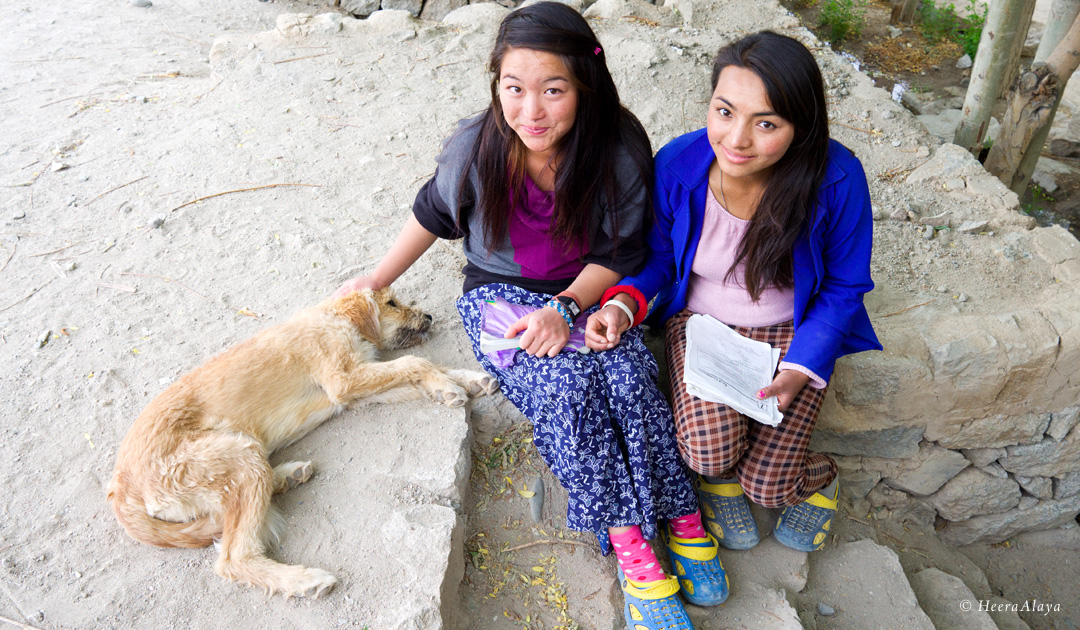
When I spent time with the children, I felt a clear sense of ownership. Their earnest engagement speaks of the trust and freedom invested in them.
What languages do the children learn in and why?
Since the students have had a rough schooling experience, we want them to feel comfortable in their mother tongue and, thus, encourage them to use Ladakhi as their first language. Then, we teach English through conversations in a relaxed classroom setting. You might have seen this when you participated with them.
I did. Thank you for the experience. It was heartwarming to see the children shyly express their eagerness to communicate in English. transitioned from Hindi to English, encouraging them to engage without hesitation and reassuring them that making mistakes—and even being laughed at—was perfectly acceptable. I then gave them examples of my embarrassment—of male actors in South India playing lead roles, laughing at my attempts to speak Tamil, Telugu and Malayalam.
Do children bring their experiences into the classroom? If yes, how does it contribute to your teaching?
While children do not always share their experiences, there are occasions—particularly after dinner—when they discuss their childhoods, talk about their villages, and reflect on the aspects of life that are closest and most meaningful to them. This sharing facilitates learning about one another and helps build their confidence in public speaking.
For us, it’s essential to understand the individuals—their backgrounds, the challenges they’ve faced in their villages, and the specific difficulties encountered in their previous schools. Notably, some of these children return to their villages during vacation to teach at local schools.
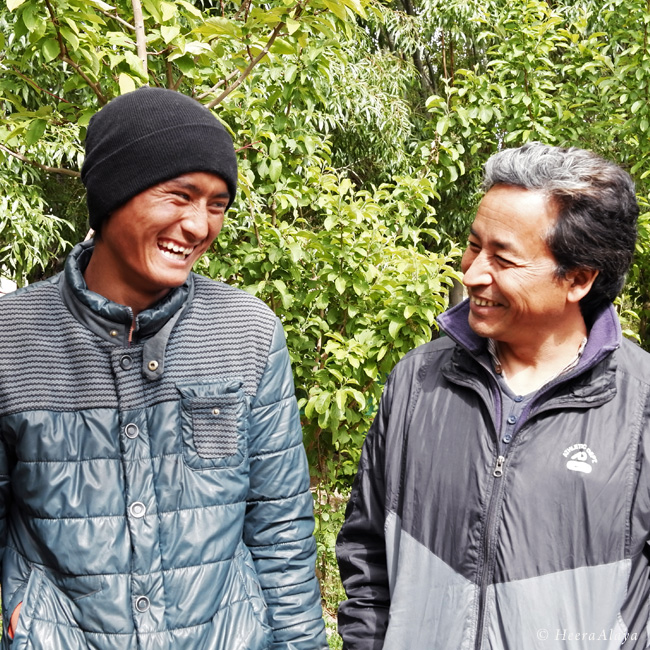
What’s the difference between memorising and learning? And what type of atmosphere and curriculum fosters genuine learning?
Memorising aids in recalling facts and figures, but issues arise when it becomes the sole focus. Learning, on the other hand, involves engaging in activities naturally—with confidence—rather than simply discussing concepts.
The current system, wherein you have a tea-making chapter, will read: Boil the water, put tea leaves, and add sugar and milk. The children will repeat the same—boil the water, put tea leaves, add sugar and milk—30 to 40 times. While they may write it down correctly on paper, they would still have never actually prepared tea.
Conversely, an individual who excels at making tea without memorising or documenting the steps could be viewed as a failure; that’s a problem. A person who brews exceptional tea should certainly learn to write, but they should not be dismissed simply because they cannot articulate the process in English. This situation exemplifies a broader trend: many individuals can read about various subjects yet lack the practical experience to apply that knowledge.
Education should focus on preparing individuals for life rather than merely progressing through textbook chapters.
True learning encompasses the wisdom required to navigate various aspects of life, knowledge that cannot be found within the confines of traditional educational materials. At SECMOL, we teach children how to lead, plan, and execute. In this environment, students take charge of the school, and more educational institutions should adopt such a model.
Relying on staff members to meet every child’s needs can be costly and often inaccessible to many. However, when students are given the autonomy to address challenges and seek solutions, they engage in hands-on learning. Children will make mistakes, but that is part of life.
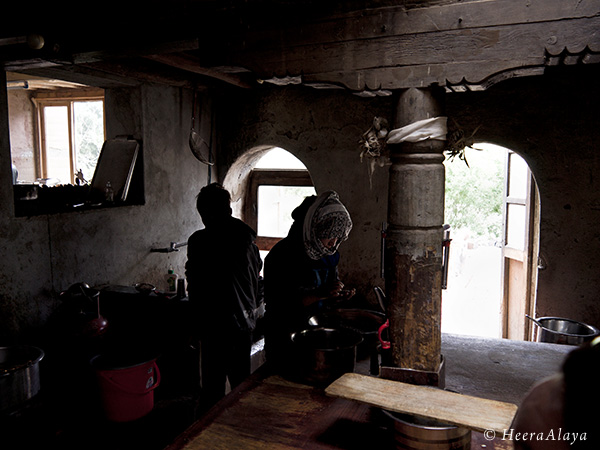
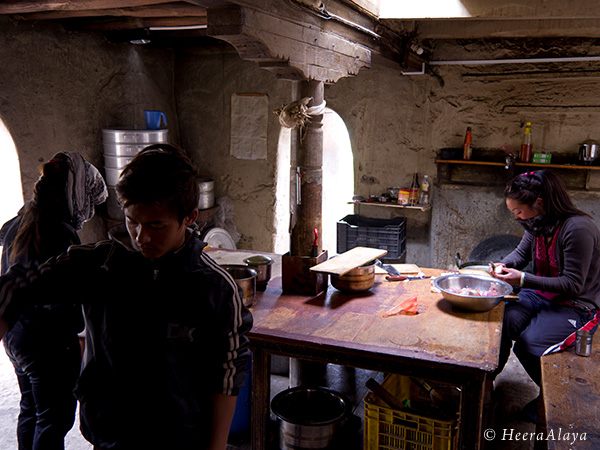
SECMO is self-reliant—we do not accept government or non-governmental grants for our daily operations. As a result, education is free, thanks to our students’ efforts in growing food and utilising solar energy. This active involvement allows us to waive tuition fees, except for a nominal charge for food, ensuring that students value their SECMOL experience.
The essential takeaway is that true learning occurs through action. When students engage in practical tasks, they develop self-sufficiency, allowing the best of both worlds to meet. At the university, our vision is for students to manage various enterprises—manufacturing products, managing tourism, and more. The university’s income to sustain itself will come from student efforts rather than the enormous fees colleges now charge, which many can’t afford.
How do fear and shame stunt learning and growth?
When our minds are filled with fear and shame, we are occupied with insecurity and overwhelmed by negative emotions, leaving little room to focus on learning. On the other hand, when you are entirely at ease, your mental resources are available to grasp the new concepts.
You can see this in English-language learning in India. So much shame and stigma are attached to English that when you want to say, “How are you?” your cheeks turn red, and you end up saying, “Are you how?” You are shaking and trembling.
[Laughter]
But when the same person meets a Gujarati, he smilingly greets: “Kema cho?” or in Nepali, “Kasto che?” They don’t make mistakes; they don’t turn red, and therefore, they learn best. In Ladakh and elsewhere in the colonised world, English is given such high status that it’s akin to honour or shame.
We have entirely unschooled mothers, and after six months of working alongside other Nepali workers on a road project or a similar project, they speak fluent Nepali. Whereas their daughters and sons, who have been in these so-called English medium schools for 16 years, still tremble to say a few words of English. In nature’s eyes, it’s just another language. Our warped mind tells us it is easy to speak Nepali, but one must fear speaking English.
I want to share an incident that resonates with what you’ve just mentioned. Eager to experience the Dal and Nagin lakes [Srinagar], I arranged for a shikara [a flat-bottomed canoe] ride at 4:00 a.m. On our way back, the young man paddling the shikara requested a brief stop, indicating he needed to speak with a family member.
Lost in my memories of swimming in these lakes as a child, I didn’t realise that another individual had stepped into the shikara. A few moments into the ride, I was greeted by a voice: “Excuse me, Madam, are you having a good time?” Hearing his polished English, I momentarily wondered if someone from Buckingham Palace had accidentally stepped into the shikara! It turns out that this man, with crinkles accumulated over 75 to 80 years, was the young man’s grandfather. The old man’s striking blue eyes lit up as he responded cheerfully to my curiosity about his English fluency: “Madam, I am illiterate. But there was a time when life was good, and I paddled many a Britisher. I picked up words as I went along, and that is how I learnt to speak English.” This incident illustrates what you point out about learning naturally, without shame.
So the older man picked up English like one would Nepali or Gujarati, not as English. Whereas our college and university graduates put English on a high pedestal, struggling to grasp and master it.
SECMOL celebrates traditional building methods while incorporating new technology. Can you elaborate?
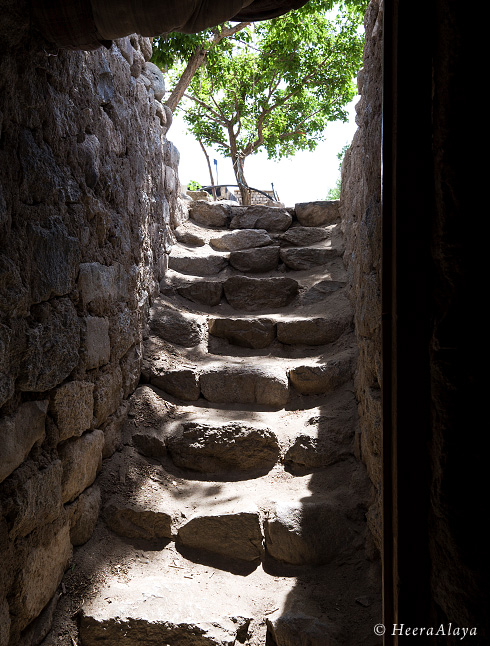
Regrettably, in Ladakh and various regions of India, there is a prevailing tendency to label certain practices as old-fashioned or backward. However, at SECMOL, we value the wisdom of our ancestors and continually learn from their mastery. Our buildings are primarily constructed from earth, a material that may not be considered trendy but reflects our commitment to sustainable practices.
When we founded SECMOL twenty-five years ago, there was considerable enthusiasm for concrete and cement as modern building materials. We posed the question, “What is wrong with our earthen buildings?” Some forts and palaces have withstood the test of time, enduring the elements for nearly a thousand years. In contrast, research reveals that concrete and cement typically have a lifespan of just 60 years, yet we still consider them superior to materials that have lasted for centuries.
You also learn that materials like concrete cause more pollution and emissions than the automobile industry, with the building sector accounting for half of the environmental damage. Just because some individuals in New Delhi or New York deem concrete fashionable, why should we follow suit? So, we started resurrecting old traditions. If our structures have certain limitations, we should seek to address them—this is the true essence of science and modernity, rather than throw the baby with the bathwater.
We combined all the ancient building techniques with modern solar heating technology. For example, our ancestors didn’t utilise glass, which is essential for harnessing solar heat. We have glass in the 21st century, which will be our contribution. Likewise, if it’s gardening, we try to learn from our ancestral practices. What is good should be preserved, and what is better should be introduced, weighing advantages and disadvantages.
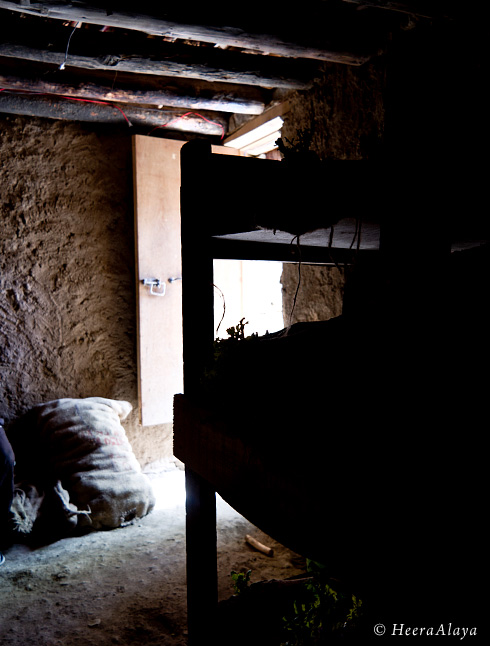
It’s similar to what you did in the cold storage room (on the SECMOL campus) used to preserve vegetables and fruits.
Yes. People customarily used to dig a pit. Why throw away an ancient technique and get refrigerators that guzzle gas and electricity? We have converted the pit into an underground room.
What is simplest and most effective is the symbol of sophistication and development.
What are the distinctive geographical challenges in Ladakh?
I don’t see them as challenges. Why think of us as remote or disadvantaged? What does “remote” even mean? From where I stand, it is New Delhi and New York that feel remote. We are close to ourselves.
You make a valid point; it may be challenging for me, but not for you.
[Laughs] These are natural conditions, so why view them as challenges? Ladakh is a cold region, and we adapt accordingly.
Places with hot climates, like New Delhi or Mumbai, would be very challenging for me, but not for the locals. All you must do is engage your faculties to utilise the resources around you in a way that meets your needs. If our ancestors built beautiful houses from the earth—yes, indoors —the temperature would be around 5 degrees—that’s not comfortable for human beings, so we apply the science learnt in schools to raise that 5 degrees to 15 degrees.
Someone from New York might argue, “No, 22 degrees is the international standard for comfort.” I don’t believe in that; I believe raising the temperature from 5 to 1 degrees is creativity, but after that, you don’t want to be spoiled and keep it at 22 degrees in minus 30 degrees. You must lower your desires from 22 to 15 degrees, where the two meet without destroying the earth. You can set the temperature to 22 degrees, but the effort and resources required to reach the last 7 degrees will cause significant harm to birds, animals, and human beings. Human beings must also adapt—come down halfway, raise the conditions midway, meet at a sustainable 15-degree standard, and live happily ever after.
What are you currently focusing on, and how are you diversifying your efforts?
I have a weakness for wanting to do almost everything—I aspire to solve water problems and green the deserts; I want to develop entrepreneurial ideas to help farmers do better and reform education.
We have made strides in education through SECMOL, yet Ladakh still lacks a university. Even if a university were to be established in Ladakh, the concern remains that students would be confined to traditional classrooms, subjected to repetitive lectures, and ultimately receive only a degree.
At present, I am working at a university that encompasses various disciplines—business, education, agriculture, tourism, and architecture—allowing me to leverage both my strengths and weaknesses. We aim to devise solutions to issues such as water scarcity, agriculture, and greening efforts, and to extend our engagement beyond Ladakh to other mountainous regions around the globe.
Collaborating with young people to study the challenges faced by mountain communities and develop solutions together is a dream come true.
If you have a raw answer to a problem, it can be studied, and if it shows definite possibilities, steps can be taken to implement it. I eagerly anticipate a time when my solutions, along with those of many others, can be evaluated for their effectiveness and subsequently brought to fruition.
Young people in their twenties can be productive and imaginative, engaging in finding solutions to all the problems surrounding them. For example, the ice stupa [Conical artificial glaciers constructed to address water shortage in cold desert regions.] was a water solution, and many people appreciate it. However, such innovations should not be in the hands of engineers alone; young people must be introduced to these concepts so they can generate countless other local, creative solutions to the challenges we face.
You have pioneered the development of ice stupas to address the water crisis in the Ladakh region. How can we better appreciate and protect our water resources?
Elements like water, air, and salt are undervalued because they are abundant. Gold is unnecessarily valued so high. You don’t need gold, but if you need salt, you will give all the gold for a handful.
Likewise, we frequently overlook the value of air because it is readily available in our environment. Our education system must foster appreciation for these vital resources. If I had my way, I would ensure that everyone recognises the importance of essential resources that sustain our existence—especially air and water, as accessing clean air in urban centres can be quite challenging.
First, we must understand the situation at hand. With population growth, human interventions are eroding the water system in the mountains, leading to climate change. Secondly, we need to cultivate empathy—recognising how our actions can affect others’ lives. Once you have values, you will educate yourself on how difficult it is for people to get a bucket of water, and you will do all you can to avoid wasting natural resources.
People often express a sense of futility, asking, “What can I do? I am just one person.” The irony is that seven billion people think the same way. I urge you to imagine the impact if all seven billion realised that even small actions could make a difference. If we all took initiative instead of feeling powerless, the results would be significant. While being mindful of our actions, we strive to influence at least ten others.
People content with the status quo often attempt to discourage those who strive for change, “You think you are going to change the world? Don’t try to fight corruption. You can’t stop criminals.” This pessimistic mindset reflects a lack of intrinsic empowerment. While decisive action requires effort, anything worthwhile typically does. The power of one can be remarkably impactful.
Indeed, if many such individuals began to take action, the world would undoubtedly benefit. People often choose the path of least resistance rather than making an effort.
A trend that is almost as harmful as environmental degradation itself is the appointment of celebrities as ambassadors for Environmental or Earth Day initiatives. Despite the positive image they project, these celebrities often lead high-impact lifestyles characterised by multi-week flights—many of which are private—gas-guzzling vehicles, extravagant swimming pools, and an insatiable consumption of resources, ranging from electricity to electronics, all while frequently engaging in wasteful disposal practices. How can such excessive consumerism and irresponsible discarding coexist with genuine activism?
I wholeheartedly agree that those who advocate for a cause must first embody its principles, as people tend to look up to individuals who lead by example rather than merely making statements.
To be truly effective, ambassadors need to be passionate, live honestly, and serve as genuine brand representatives. A more challenging yet impactful approach would be to select individuals who may not be widely recognised but who lead conscientious lives and appoint them as ambassadors. This could be part of a mission to transform how people perceive and engage with the world.
Focusing solely on so-called glittering celebrities in the context of Earth Day falls short of creating meaningful change. If we begin to appreciate and celebrate those who may lack fame yet live with integrity and positively influence those around them, we will have accomplished something far more significant.
Unfortunately, cricket overshadows everything in India. People must mature enough to understand the joy of various games; they must learn to celebrate other sports like Gulli-danda for the joy they bring. Sports should not revolve around money and power. And we must resist the temptation to turn our love for games into a battleground. Cricket often feels like warfare in this regard.
Similarly, it is ironic that society tends to celebrate an actor who portrays the life of an individual who has accomplished something remarkable, often neglecting the original achiever themselves. When the person achieving greatness becomes less interesting than the actor portraying them, it reflects a rather sad state of affairs.
Films possess the power to shape societal attitudes, yet many producers and storytellers often conform to prevailing cultural trends, focusing primarily on ticket sales and economic gain. Films are such a powerful tool; they should be taken with a sense of responsibility–films can burn or save a generation or a nation.
Why do you think our conscientiousness is failing so deeply? And why are we willing to settle for a superficial existence?
That’s a great question. It relates to our values and the influences we receive at home, in schools, and throughout society. If society adopts a more nuanced approach to what is valued, our children will benefit. Thus, the entire framework of social thinking needs to evolve.
Beyond educational institutions, the impact of individuals and personalities is crucial in shaping society. If we had figures like Gandhi or Tagore, their legacies would have fostered universities during their time. It is vital for opinion leaders to guide others toward greater maturity, much like you are doing by interviewing diverse thinkers. Creating more platforms for people to engage with alternative perspectives—beyond the prevailing narratives in society and films—is essential for broadening minds.
Thank you for your encouraging words.
How would you describe your style of leadership?
I want to respect and trust others, even though they might not do things exactly the way I would. But beyond a point, to achieve a significant goal, many people must take little pieces of connection among themselves and continuously support these parts to grow.
What do you hope to achieve in the future?
I don’t have any big goals or big ambitions. I want to help young people learn in the best possible way, with their learning having a multiplying effect so that they can teach more people.
Do you have time to rest your mind?
No. I wake up every morning and find it very hard to go back to sleep because an idea starts to take shape and swirl around. I always try to solve problems—think of how simple ideas can address big ones. I live in this world most of the time, only to come out and talk to you now.
How do you stay humble with success and accolades?
I don’t take life seriously.
From where do you draw inspiration?
At a young age, my mother was a profound source of inspiration, teaching me the importance of empathy and sensitivity to others’ needs.
The compassion my mother instilled in me motivated me to start solving others’ problems. When you make a positive impact, it fuels your inspiration. If someone has empathy and sensitivity for others’ pains and challenges and takes the initiative, that initiative leads to experiences. That experience builds confidence, which in turn leads to even more compassion.
Learn more about Sonam Wangchuk and SECMOL.
FRENCH LAUNDRY
restoring your soul’s hygiene
THE MARIONETTISTS
The master manipulators
BEING A BEACON
emblematic of my essence
THE BIRD BATH
holding space: a home to feel safe
EUDAIMONIA
amalgamations and elucidations
CÔTE D’AZUR
Clear. Intense. Serene.
GAURI MAULEKHI
Animal rights campaigner, IN
“Artificial insemination [AI] is extremely traumatising for cows (she has to be restrained); it’s as traumatising as it would be for a woman if a hand were shoved up her vagina.”