YURI and KAORI
character development
By Heera Alaya
March 27th, 2024
A world-class canvas for treasured canvases, the National Gallery of Art [NGA], Washington, D.C., United States, is more than a physical space—it serves as a living canvas showcasing art, culture and education. As I view the paintings and sculptures on display, I am reminded of the essential role played by the museum’s guardians. Where would these masterpieces reside without their meticulous curation, protection and illumination? What would we know of history? How would we grasp the lessons of history, or discover insights about ourselves?
Every aspect of this institution’s [NGA] canvas is the result of a meticulously orchestrated process encompassing research, collection, storage, and display. This approach echoes the commitment of the Old Masters, who were equally dedicated to detail—from preparing their canvases to the final touches of their artistry. A shining example of this dedication is Yuri, a Japanese guardian who guides her daughter, Kaori, to paint and frame her canvas of life.
In the lives of Yuri and Kaori, the museum visit marks the fourth significant chapter of the day that commenced with the pair carefully selecting their outfits for an event at the White House, the official residence and workplace of the President of the United States located in Washington, D.C. Their attire needed to be both occasion-appropriate and well-suited for the weather, considering Kaori’s preference for long skirts and floral sweaters.
With her refreshing, introspective perspective, Yuri expresses her appreciation for the finer details: “Even in everyday life, we are aware of plate colours and food placement. I used to present tea ceremonies [Japanese ceremonial preparation and presentation of tea], which makes me conscious of the season and occasion. My grandmother, too, is conscious of seasons, presentations and order (she performed tea ceremonies, too).” This pared-down aesthetic is reflected in the duo’s movement—it whispers. Yuri must have read my mind: “In Japanese culture, you must tone down in public places; you don’t talk loudly.”
The museum is filled with a cacophony of noise.
It would be a dream to experience a serene atmosphere within the museum, free from distractions. Unlike the quietude of a classroom, museums are often overrun by the noise of boastful parents, tantrum-throwing children, self-absorbed selfie-takers, attention-seeking loudmouths, oblivious visitors, entitled seniors, and clamouring influencers (specialising in increasingly disfiguring artistic institutions).
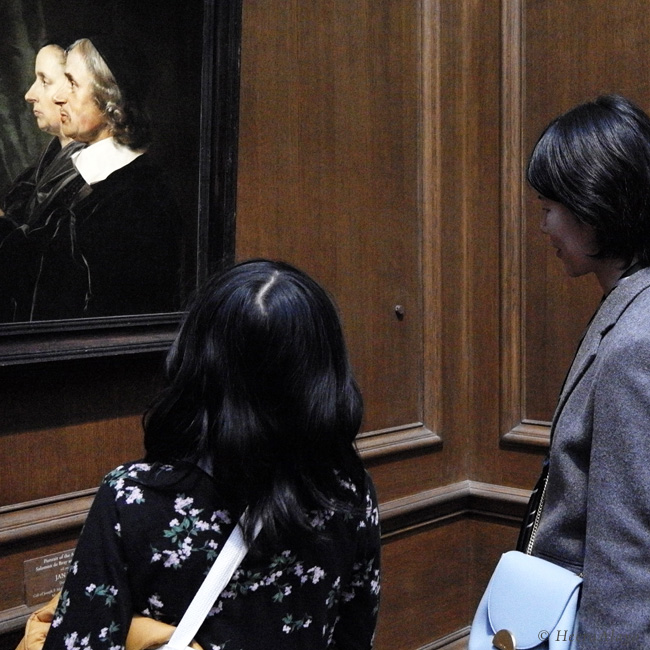
Amidst the crowd and its noise, it takes guardians like Yuri to preserve Kaori’s essence—moving silently while creating a serene space for her. The imperceptible, nuanced dance of the mother-daughter duo reveals glimpses of their thoughtfully executed strokes behind the composed demeanour and soft-hued attire. In this silent-moving classroom of discovery, discussion and transformation, Yuri stewards Kaori’s character development.
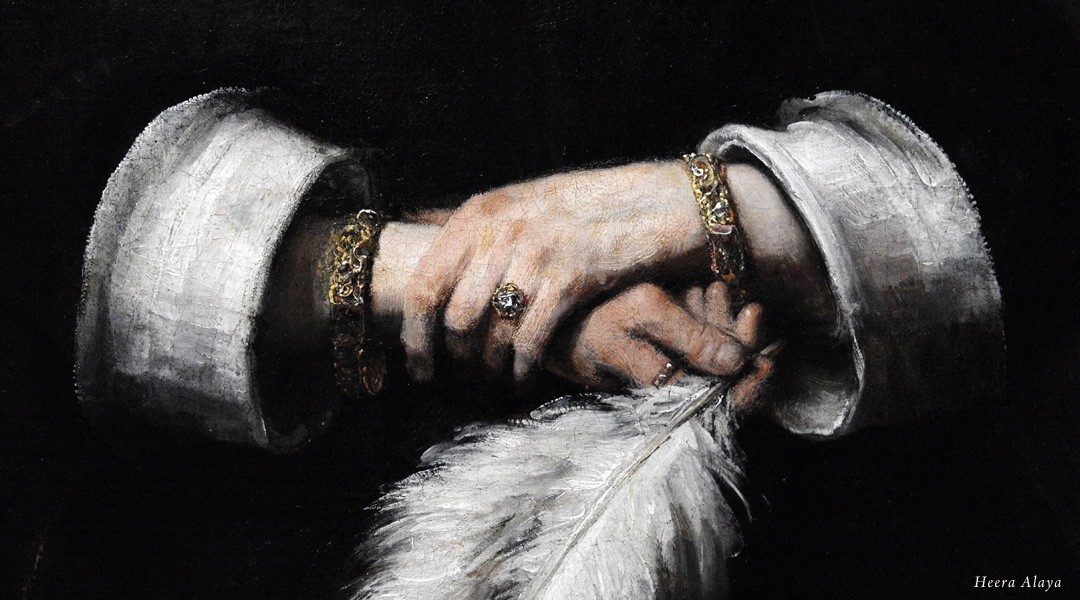
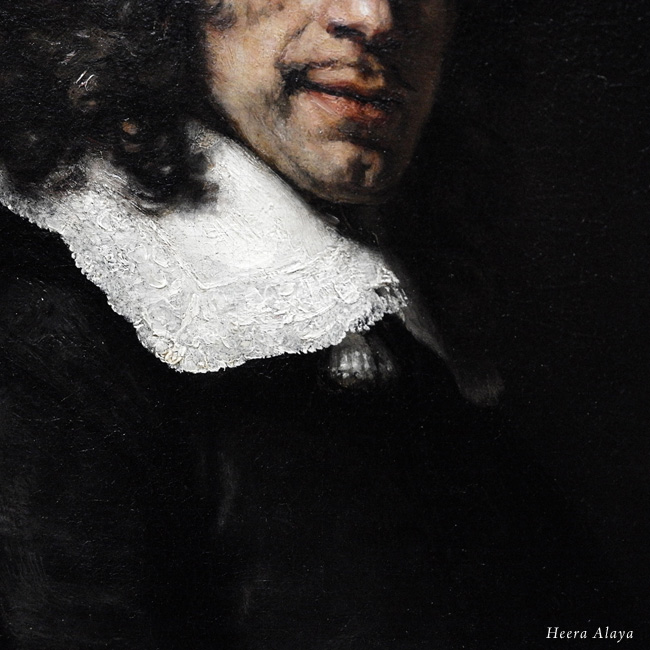
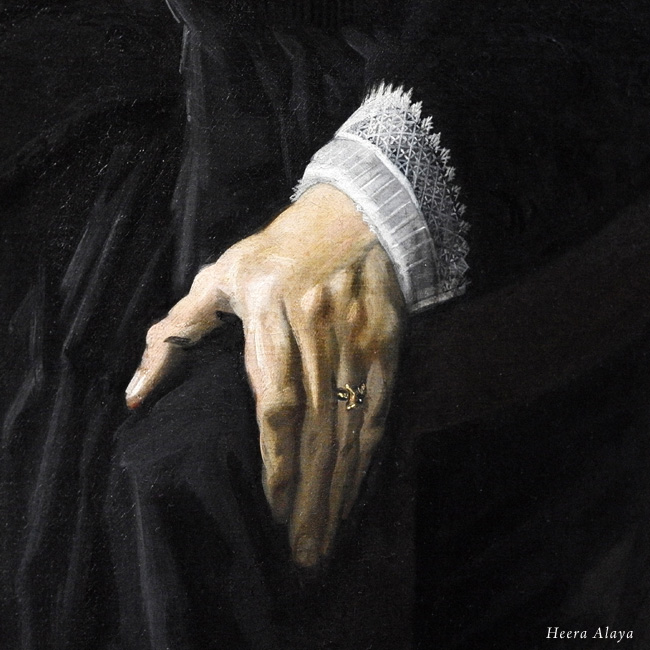
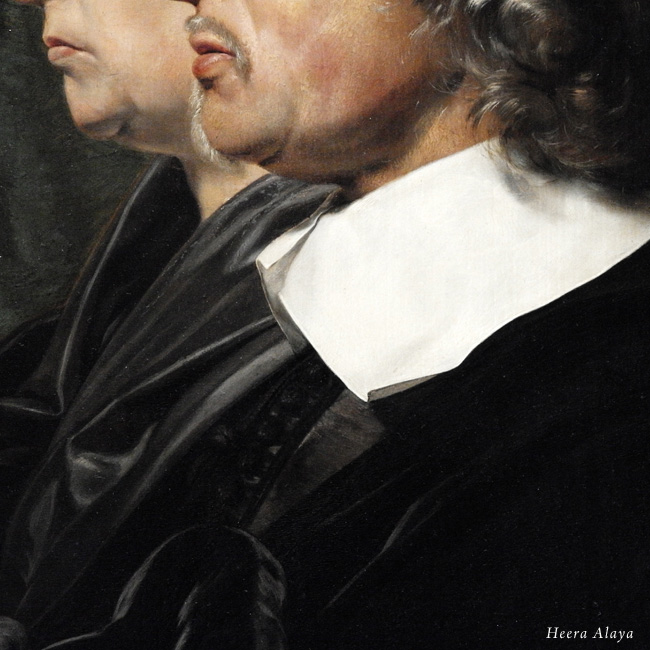
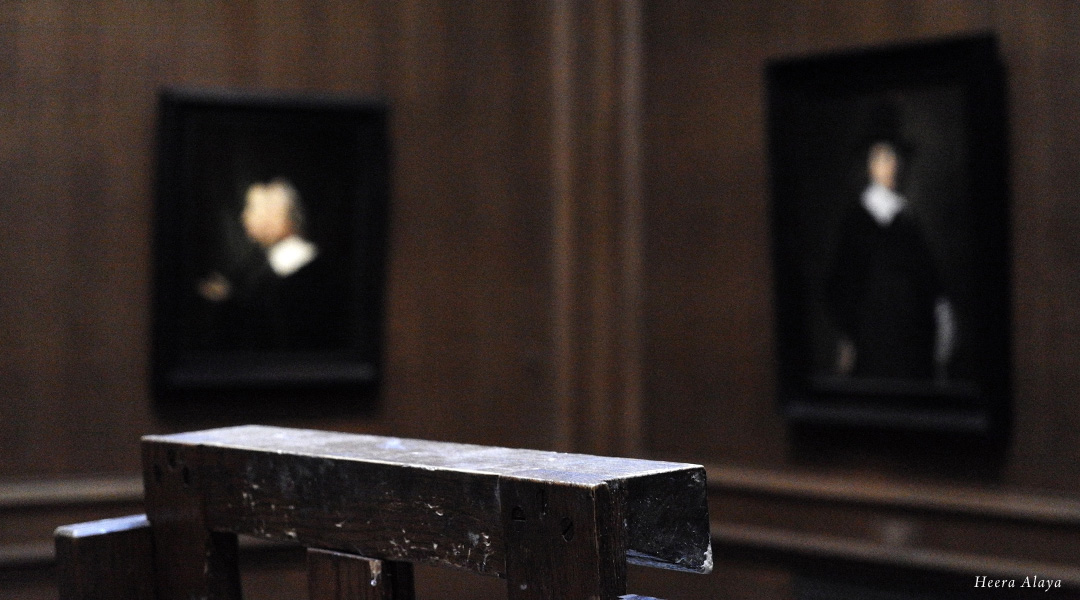
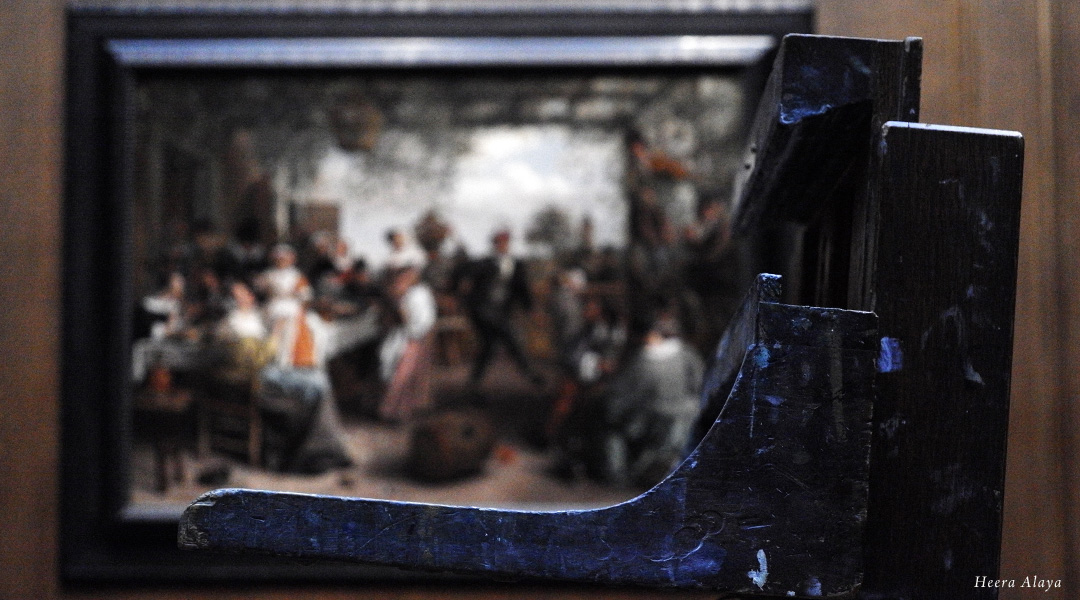
An integral part of a museum experience lies in the unique environment that enhances atmospheric effects. The grand proportions and expansive galleries, with their neutral architectural design that surrounds large-scale artworks, allow visitors to fully appreciate the intricate details. The proportionately scaled, wood-panelled rooms at the NGA enable us to explore the interplay of light and shadow, the emphasis on skin textures, and jewel detailing. Additionally, the seamless merging of backgrounds sparks interest in the dramatic effects of garment structures—such as billowing sleeves, intricate lace cuffs and precisely crafted upturned collars depicted in the portraits by Dutch masters Frans Hals and Salomon de Bray. I am particularly captivated by the virtuoso brushwork that portrays exquisitely detailed embellishments—ruff collars—ruffled, changeable fabric worn around the neck.
Yuri explains: “You can only learn a little about a painting’s history by looking at the painting alone. I am describing (to Kaori) the origin of the paintings and the movement around the artworks. We first saw the Impressionists, then moved to the Dutch paintings, and they are different, which I want Kaori to notice. Even though Impressionists think a certain way, some also paint traditional paintings. By observing these paintings, Kaori can learn to express herself in different forms (if she wants).”
Individual opinions are encouraged and supported in the space shared by Yuri and Kaori. While Yuri appreciates the natural light and visible brushstrokes characteristic of Impressionist artists such as Degas, Monet, and Cézanne, ten-year-old Kaori expresses her preference for Dutch paintings, stating, “Portraits and landscapes—by Rembrandt and Hals— are more expressive and clear.”
By engaging in thoughtful dialogue and encouraging Kaori to form her own opinions, Yuri is fostering her daughter’s individualism and self-reliance. Notably absent are theatrical displays of approval or condescending encouragement. Instead, Yuri’s guidance is anchored in a dignified self-assuredness.
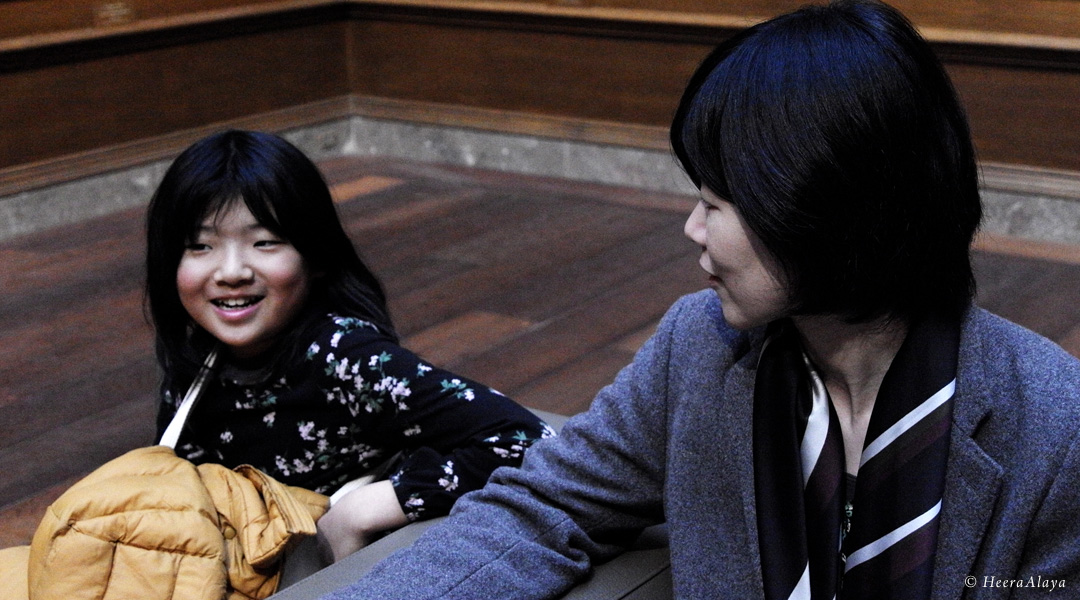
Parenting also involves establishing clear expectations: “I identify as a minimalist”, says Yuri. “The positive aspect of being a minimalist is considering where we place the item, whether it enhances what we already own, and whether it is easy to maintain. Kaori and her younger brother want more toys, which they can have, provided they tidy up.”
It is clear that fostering a sense of ownership has a profound impact on Kaori. Her enthusiasm sparked my interest in learning more about Japanese schools. Kaori shared that Japanese schools make learning enjoyable, feature dedicated swim time, encourage children to visit libraries, and embrace chores independently: “After lunch, we scrub the floors and clean the blackboards.” Then, with a hint of a smile, Kaori quickly added, “I like to keep my room tidy (unlike my messy brother).”
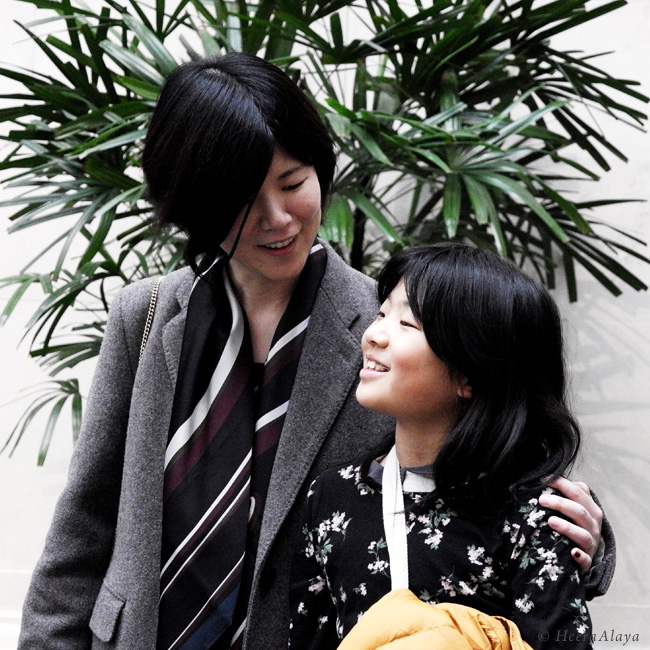
Kaori’s appreciation for the Japanese emphasis on independence—cultivated through both education and societal norms—is palpable. “In Japan, children walk to school on their own. It’s safe, and our backpacks are equipped with buttons that serve as alarms,” she explains, sharing insights from her extended visit to Japan. Underscoring the significance of independence, Kaori mentions that she chose the fine-dining restaurant (in Washington, D.C.) and made her own choices from the menu during the lunch she had with her mother before their museum visit. While these details may seem trivial at first glance, they play a vital role in preparing Kaori for an adult life characterised by a myriad of decision-making challenges.
Structure is a cornerstone of Kaori’s life. Much like the meticulously organised operations of a museum, her daily routine revolves around a well-defined schedule—piano practice, tennis lessons, and Japanese classes. And every Sunday, she attends a Chinese school to learn Mandarin. This energetic young woman possesses a robust appetite for adventure, eager to hike, explore amusement parks, and enjoy daily summer swims—perhaps even treating herself to Anpan, a traditional Japanese red bean pastry, during her visits to Japan. As the museum winds down for the day, it meticulously cleans and prepares to create a serene environment where artworks can rest, and spaces can breathe. Kaori’s own day mirrors this quiet transition. Upon returning home, she will write the last pages of her latest chapter. While her mother, Yuri, prepares dinner, Kaori will practice the piano and enjoy a Japanese cartoon. If luck is on her side, Kaori will get a post-dinner green tea mochi. And as she drifts into sleep, her mother’s guidance will be inscribed on her subconscious.
For this dynamic mother-daughter duo, the time they share is as invaluable as the cultural practices that celebrate their independence. Under the quiet authority of her mother, Kaori learns to take charge of her life, evolving from childhood to adulthood, shaping her distinctive identity and creating her authentic canvas. Just as art’s transformative power, individuals like Yuri and Kaori stand as vibrant cultural canvases from whom we can learn invaluable lessons—embodying the principles of conscious giving, grateful receiving, and mindful living.
BEING A BEACON
emblematic of my essence
THE MARIONETTISTS
The master manipulators
TAINA BIEN AIMÈ
“What was her life’s journey?”
FRENCH LAUNDRY
restoring your soul’s hygiene
OLIO NUOVO
custodians of culture
THE BIRD BATH
holding space: a home to feel safe
GAURI MAULEKHI
Animal rights campaigner, IN
“Artificial insemination [AI] is extremely traumatising for cows (she has to be restrained); it’s as traumatising as it would be for a woman if a hand were shoved up her vagina.”