CÔTE D’AZUR
Clear. Intense. Serene.
By Heera Alaya
May 10th, 2026
In a performative world that glorifies noise, flamboyance, and attention-seeking, it’s essential to recognise that a transformative landscape values quiet, understated, privacy and unpretentiousness. Trailblazers like American political figure and activist Eleanor Roosevelt, American civil rights activist Rosa Parks, and American novelist and philanthropist MacKenzie Scott clearly illustrate that one doesn’t need to be loud, ostentatious, or constantly in the spotlight to make a significant impact. Embracing traits such as quietness, introversion, and reserve can be a formidable advantage in personal success and social impact.
Before I delve deeper, it’s essential to clarify the distinction between privacy and secrecy.
Privacy entails being selective about extending access and controlling the flow of information. Furthermore, privacy is valued and upheld among emotionally healthy individuals, fostering mutual respect and trust. In contrast, secrecy involves hiding and deception driven by shame, wrongdoing, or fear. Within this dark and foul environment, the emotionally sick participants keep matters hidden and avoid consequences. Furthermore, breaking free of “secret pacts” is difficult, as they are designed to protect carefully curated reputations. The adage “you are only as sick as your secrets” captures this distinction well.
Circling back, loudness—characterised by high-volume television, blaring music, social media platforms, a constant influx of people, shallow exchanges, obnoxious behaviour, raucous environments, clutter and chaos—serves as a panacea for avoiding reality and is perpetuated by those who shy away from confronting uncomfortable truths. The noise culture, with intoxicated disassociation, enables people to evade self-reflection, mask their discomfort and pain, and escape into a state of distraction.
Those who thrive on constant loud interactions and seek external validation are uncomfortable with silence and often equate volume with confidence, perceiving your calm demeanour as dull and urging you to “come out of your shell.” There is no shell to emerge from—your quiet nature is your fundamental trait.
A loud, superficial world will interpret quiet, simple, and private as character flaws. But these qualities are anything but drawbacks—quietness and solitude encourage listening (rather than just hearing), observing (beyond mere seeing), feeling (instead of just touching), engaging (as opposed to superficial interacting), and intentionality (rather than impulsivity). Cutting out the noise gives you mental and emotional space to focus on and accomplish what truly matters.
As a quiet and private individual, you probably prioritise boundary-setting, selective social interactions, deep conversations, quiet generosity and discretion. This harmonious, mindful path helps you conserve your energy and replenish your internal resources, which enables you to foster emotional resilience and mental clarity. Allow your true self, not a persona, to softly shine.
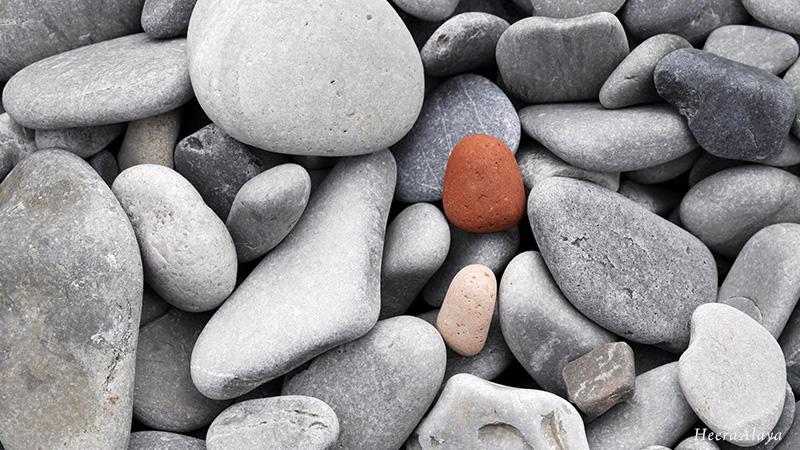
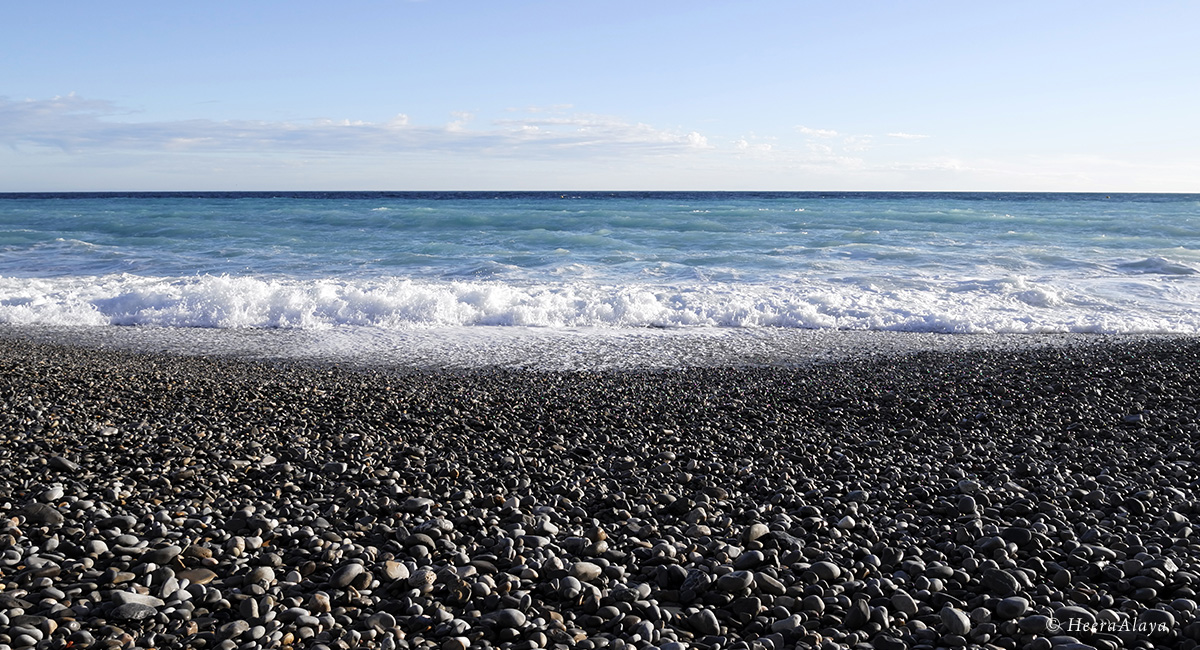
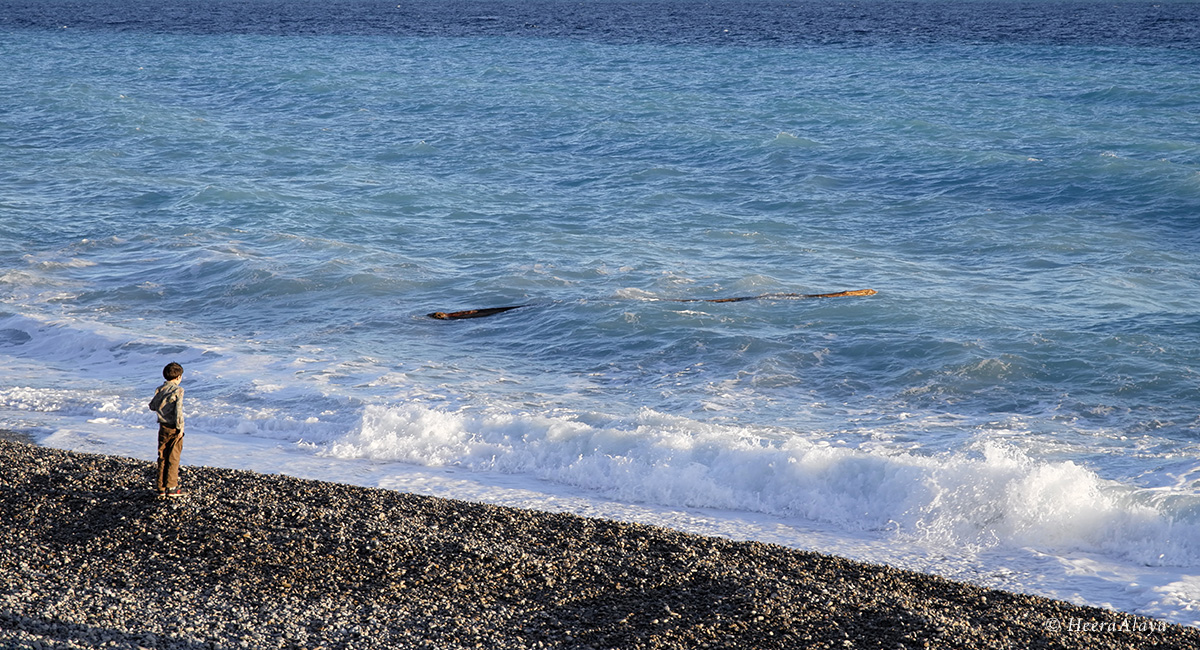
You must seek out low-stimulation environments. Quietness encourages you to cultivate depth: for instance, as the lapping, crystal-clear water of the Mediterranean Sea in the Côte d’Azur cradles me, I contemplate the sea’s origins, the presence of galets [large, flat grey pebbles], and the water’s blueness. And by fostering communication between what is visible and what is concealed, I build a deeper understanding of the interplay among energy, erosion, and light, allowing me to marvel at the wonders of the natural world.
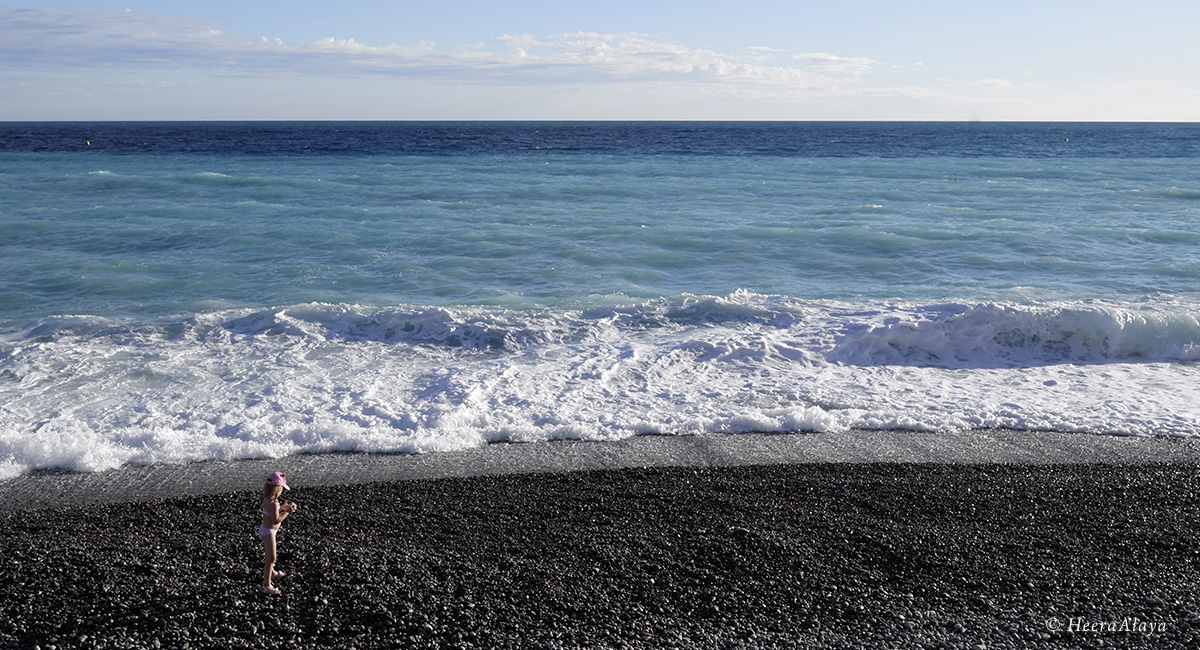
“Where is the sand?”
Surely, there must be sand on a beach, I mused, remembering the sensation of coarse sand beneath my feet in Provence and looking forward to a similar experience on the French Riviera. In the Calanques, despite my self-negotiating theatrics—BRRS—shivering and chattering as I steeled myself against the cold (in anticipation of turning into an icicle), my inner tigress growling, “Don’t be a chicken, Heera, you’ve got this”, the beach is sandy. Côte d’Azur presented an additional challenge: OUCH—the galets can be quite challenging on the feet (Disclaimer: If you plan to swim, I highly recommend wearing water shoes.). For this reason, I find entering the Mediterranean Sea at the Western Edge easier than the Côte d’Azur.
The absence of sand piqued my curiosity about the varied beaches of Provence (Western Edge) and Nice (Côte d’Azur), prompting me to decide that “it’s best to learn from the Niçois.” For a brief moment, as I was immersed in the passion of the Niçois, I felt transported back to Italy. It quickly dawned on me that this spirited conversation stems from Nice’s distinctive heritage—Italian and French.
“Topographie,” announced the first Niçois, brusquely, his shoulder rising as he spoke. The brevity made me feel embarrassed about my limited knowledge of the subject. Fortunately, my raised eyes prompted verbosity. Another Niçois, lips pursed, passionately explained the distinctions. He must lean towards Italian heritage, I suspected, enjoying the animated Italian gesticulations. In essence, the flatter topography of Provence and sedimentary deposits from the Rhône River delta contribute to the sandy beaches. Conversely, the galet beaches along the Côte d’Azur are the result of the steep Alps—the rivers, particularly the Var, transport larger rocks to the coast without crushing them into sand.
“And what about the azure water? How is it so uniquely blue and crystal clear?” I inquired, enjoying this open-air classroom, now with seven in attendance! As interest in the conversation grew, information overlapped cooperatively. Fact: The Mediterranean Sea’s isolation—its almost enclosed basin limits water exchange through the narrow Strait of Gibraltar—contributes to low algal production, which in turn reduces turbidity, resulting in high visibility and the signature Mediterranean blue colour.
Voilà; quietness shares a kinship with the Mediterranean Sea (Côte d’Azur)
—it thrives in an undisturbed environment.
Much like the azure Mediterranean Sea—where elements converge—with your prized quietness, you will come to discover the richness of your inner world.
Like the variable waves—calm to shore-pounding—of the Mediterranean Sea, you are resilient—despite the obstacles, you rise, fall and move forward.
Like the rhythmic sound of the Mediterranean Sea, your conscience whispers primal knowledge.
Like the depths of the Mediterranean Sea, you are profound—beneath your surface lie layers of complexity and mystery.
Like the deep colour of the Mediterranean Sea, you are intense and full of emotions.
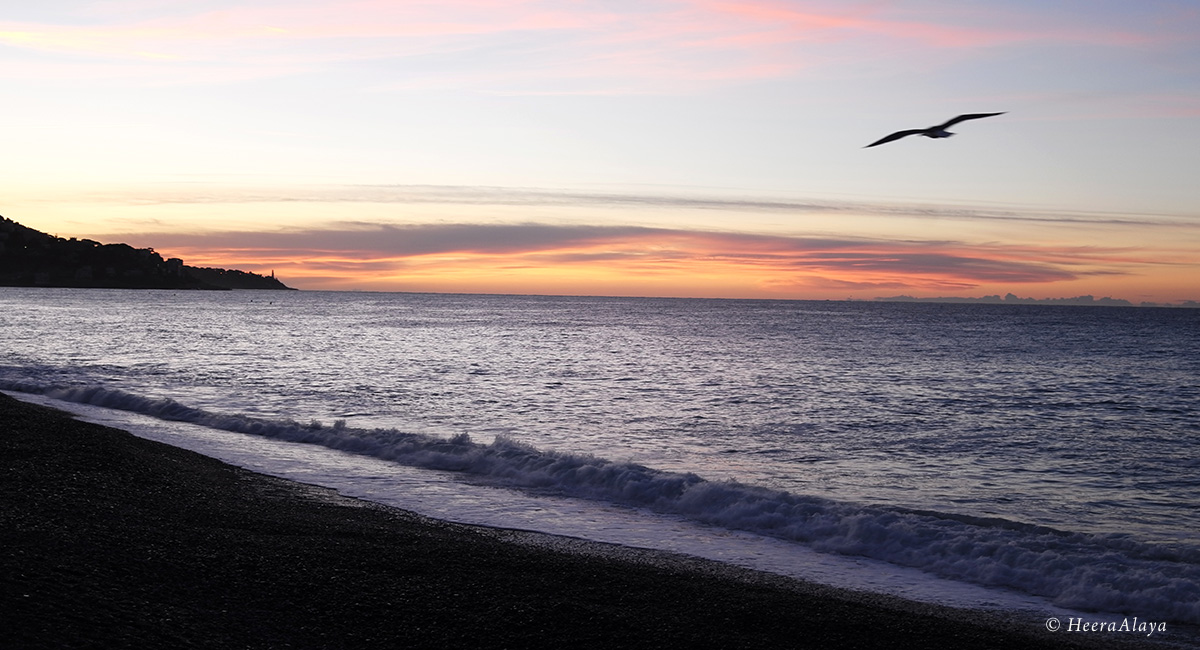
As the fading light of dusk illuminated the sky, a Bonelli’s eagle showcased its impressive manoeuvrability, soaring and swooping over the Mediterranean landscape. This poetic sight reminded me that growth and elevation eventually negate the noise of distractions. From an altitude, you see differently and CLEARLY. Just as the Mediterranean Sea has been a cradle of Western civilisation, you, as quiet, sensitive, private, and unpretentious individuals, will cherish and nurture your complex and powerful inner world, reminiscent of nature’s expansive force.
NUGGETS OF KNOWLEDGE
Azure waters
The Mediterranean Sea, deriving its name from the Latin terms medius (middle) and terra (land), is characterised by its almost entirely enclosed nature and limited water exchange, which creates exceptionally clear, deep-blue, and serene waters.
Italy to France
To secure military support from Napoleon III for the Second Italian War of Independence, Italy ceded Nice to France in 1860.
Côte d’Azur
In 1887, French writer and politician Stéphen Liégeard titled his book La Côte d’Azur, describing the intense deep blue colour of the Mediterranean Sea and the coastline stretching from Marseille to Genoa.
Upwelling
The Mediterranean Sea around the Côte d’Azur and the Calanques is surprisingly cold due to upwelling—a phenomenon caused by the Mistral wind that displaces the warm surface water, lifting cold, deep water to the surface. Moreover, the rocky terrain of the Calanques intensifies the cold.
The Mistral
The powerful Mistral wind that sweeps across Provence and the Côte d’Azur, is driven by the interaction of high pressure over the Bay of Biscay and low pressure over the Gulf of Genoa. Although the Mistral brings bitterly cold temperatures, it is renowned for clearing the air, creating exceptionally bright, clear, and sunny skies.
Beach versus boat
Entering the azure waters from a beach on the Côte d’Azur offers a sensory-rich, gradual experience between elements. Conversely, jumping from a boat offers instant immersion, plunging directly into the sea.
Bonelli’s eagle
Bonelli’s eagles are endangered in Europe, driven by anthropogenic factors (human-caused environmental changes, pollution and illegal persecution).
BEING A BEACON
emblematic of my essence
THE MARIONETTISTS
The master manipulators
FRENCH LAUNDRY
restoring your soul’s hygiene
TAINA BIEN AIMÈ
“What was her life’s journey?”
ABSTRUSE IDYLLIC OASIS
comprehending complex tapestries
BERNADETT TUZA RITTER
A Woman Captured
GAURI MAULEKHI
Animal rights campaigner, IN
“Artificial insemination [AI] is extremely traumatising for cows (she has to be restrained); it’s as traumatising as it would be for a woman if a hand were shoved up her vagina.”