IN CONVERSATION
“Borderline personality is often the lack of stability in a family,
and an additional component when mothers sexually abuse their daughter.”
ROBIN CHAURASIYA
Founder, Kranti School, IN
March 8th, 2016
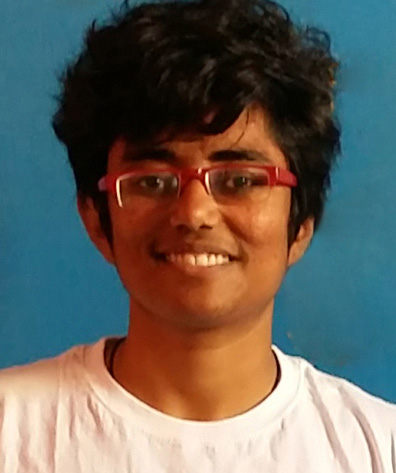
Robin Chaurasiya is the co-founder of Kranti, an NGO dedicated to empowering young individuals aged 13 to 23 from Kamathipura, a red-light district in Mumbai, India. The organisation offers a diverse curriculum that encompasses creative writing, geography, and current affairs, all taught with an emphasis on acceptance, compassion, and equality. The children at Kranti strive to reach their full potential. Ms Chaurasiya was nominated for the Global Teacher Prize in 2016 in recognition of her impactful work.
Heera Alaya: What is it that connects you to the children of Kamathipura—the injustice and pain you’ve experienced, or is it something beyond that?
Robin Chaurasia: It’s the isolation I felt as a teen, someone facing different types of abuse, not knowing what to do about being lesbian, etc. Teenagers in difficult situations have so few adults to help them; I wanted to ensure these girls [from Kamathipura] had the resources they needed. Not that Kranti can support or help all the girls we reach out to, but it’s a start.
What were your fears when stepping into this territory?
[The fears were] Not being able to support Kranti financially after taking on the burden of running a household; not being trusted by the community, especially if people found out that I’m lesbian; losing girls or not doing enough for them.
How do you confront your fears?
Honestly, I don’t have any fears anymore. I guess all my deepest fears have come to pass—we’ve struggled through months of no income and had to borrow money from friends, all of Kamathipura now knows I’m lesbian, and we’ve had to kick out several girls from Kranti and several left of their own accord.
What roles did Bani Das and Vandana Katti play in establishing Kranti?
I consider Bani to be one of the co-founders of Kranti. Alongside Bani, a 16-year-old girl sex worker at the time (and 19 when we officially started Kranti), we had a shared vision. We met at an NGO where Bani was involved in conducting raids and rescuing girls from brothels, while I managed housework for a group of 16 to 18 girls. Life functioned without actual training; girls were learning the ABCs, silaie [stitching], papad making [a type of Indian chips], and achar making [pickle making], but nothing that recognised their talents or valued them as individuals. One day, Bani and I had a conversation about our aspirations: “We will have our own NGO and will offer the girls different classes, and the girls will travel.” Two years later, Bani and I began to pursue our dreams.
The third girl involved, whom Bani had rescued, also worked at the NGO alongside us. She was intelligent, strong, and mature, and she pointed out that girls from Kamathipura or trafficked girls have a passion for changing their circumstances, which gave us the concept of Kranti—that every girl is an agent of social change.
Was transitioning from life in America to adjusting to life in India challenging?
While I am accustomed to relocating, rebuilding my community proved to be a significant struggle. It’s essential for me to have a clear community and to connect with people from different backgrounds.
We sheltered several girls who were dealing with mental health issues, and I often felt overwhelmed: “What on earth was I thinking—these girls are cutting themselves, and I don’t have an idea about where to find a therapist.” It took time to identify the right therapist for them and to connect with suitable organisations. It took a good six to eight months before Mumbai began to feel like home.
Do you miss not having a “normal family”? How do you manage the emotions associated with this loss and the complexities of life?
No, I don’t consciously miss a typical family; on a deeper level, I do, which is why I chose to make my own family with Kranti. And I cannot be happier, luckier, or more satisfied with the family we have built.
On how many levels does mental illness within a family affect a child?
Mental illness impacts a child on every conceivable level. I don’t consider mental illness entirely negative. On the one hand, my mother’s schizophrenia is the reason for a lot of my problems and insecurities, but it’s also the reason I studied psychology and became an extremely resilient individual. It all comes down to our perceptions of the events in our lives. Younger children don’t have an option and have to develop coping mechanisms, but as we get older, we can choose options like therapy and reframe our past.
We require all of our staff at Kranti to undergo therapy because we work with traumatised teenagers and should not transfer our baggage to their lives. As with most types of abuse, emotional abuse due to mental illness runs in a cycle, and someone has to break it. And I don’t think most people with mental illness realise its impact on their kids.
Have people tried to dissuade you from embracing your roots, particularly from coming from a family with a history of mental illness?
Of course. Especially in India, people don’t want to talk about mental illness as an illness; they dismiss it as a problem related to evil spirits or something that a person can change.
Strangely enough, I have made many close friends in Mumbai who share similar situations—being abused in the family and having a parent with a mental illness. Either mental illness is much more widespread than we realise, or millions of parents have undiagnosed mental illnesses.
Where do you draw the strength to rise above society’s indifference?
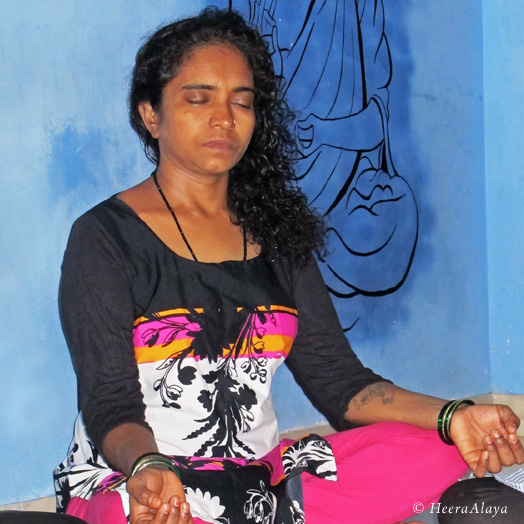
In the past, society’s apathy used to bother me a lot, but in the past couple of years, I have turned to meditation, which has allowed me to make peace with the fact that I can’t do anything about the world’s apathy. Of course, it is still difficult to accept, especially when you see violence or discrimination.
I’ve come a long way in feeling compassion (and pity) rather than anger toward the perpetrators. The strength we need is within ourselves, not the outside.
How do the children navigate their lives in Kamathipura, the world they come from, and Kranti, the world you provide for them?
Some girls transition between these worlds with ease. I love seeing them run around New York and Mumbai—ordering French food and Italian coffee—with the same confidence, and treating their family and community with the same love and respect. These girls are exceptional humans.
At Kranti, the girls from Kamathipura embrace a new life. How do their mothers and siblings respond to this transformation? Are they wholly supportive, or do they experience feelings of resentment?
Families are always difficult. The siblings are mostly supportive and excited, not jealous or resentful. Generally, siblings are supportive and excited for their sisters, rarely expressing jealousy or resentment. However, we do encounter some mothers facing significant mental health challenges—such as schizophrenia, substance abuse, and borderline personality disorder. These mothers aren’t always in the best place to make decisions, but sometimes they want their daughters “back” because they don’t want them travelling. The mothers think it’s time to marry their daughters off or (in one case) traffic her. But overall, families are quite supportive and excited for the girls.
What range of psychological scars do the Kranti children suffer?
The range of psychological scars experienced by the Kranti children is extensive. They endure various challenges, including psychosis, schizophrenia, hallucinations, self-harm, impulse control disorders, and personality disorders. Some girls respond positively to therapy, while others may take years to achieve even the smallest progress. We attempt several types of therapy, including art therapy, dance movement therapy, cognitive-behavioural therapy, and mindfulness therapy. Finding the appropriate treatment for each individual can be difficult, but we remain committed to pursuing effective solutions.
When abuse is a familiar part of life, it can become a source of comfort. Are the Kranti girls predisposed to return to abuse?
Yes. Therapy is a process; it works at different rates for different people. We have one girl whose mother married her off when she was just nine years old, resulting in her becoming pregnant; now, the mother is attempting to traffic her daughter. This girl was scheduled to meet her therapist at home [Kranti], but earlier that day, she expressed a desire to go out for a few hours. In hindsight, I should have recognised that her wish to leave on the day the therapist was visiting was a form of escape. She did not return in time for the appointment. This girl is now nineteen, has mental health issues and disabilities, and talks a lot about being confused about the difference between love and sex: “I don’t know when somebody is using me or abusing me.”
Boys are also victims of rape and sexual assault. Was it a conscious choice to work only with girls at Kranti?
Of course [Boys are raped]. My decision to focus on girls was more subconscious—I was attempting to heal myself by founding Kranti. I am a woman living in this house and have a family. I was specifically trying to support a younger version of myself.
Five years ago, I didn’t fully recognise this subconscious decision.
Had you asked me the same question, I would have said girls face a lot more marginalisation than boys do and don’t have many opportunities or resources or access to opportunities, which is still true.
During this period, I have gained significant insight into boys’ experiences. Some of these girls have younger brothers, and one year, you see these cute little 10-year-olds, but just three years later, they may find themselves entrenched in a life of drug dealing and incarceration. And it makes you realise the additional vulnerabilities that girls do not have. The girls’ vulnerabilities are different, but boys are just as vulnerable. Of course, in retrospect, if someone ever wanted to start a Kranti for boys, I would be 100% supportive. I don’t happen to be the person who will engage with boys.
I would like to hear your thoughts on violence against boys.
Several organisations have begun to work openly and extensively on child sexual abuse in India. The statistics are alarming—80 to 90 percent of girls get sexually abused, which is outrageous, and it’s equally shocking to learn that 50 percent of boys are abused.
While the topic of rape is frequently mentioned in discussions, there is a noticeable silence surrounding it when it comes to boys. This silence is particularly pronounced because much of the abuse occurs within families.
Quite a few of my activist friends—a couple of whom are gay—are working on child sexual abuse, and the boys’ families abused them as kids. This adds a layer of stigma, preventing many from coming forward about their experiences with sexual abuse.
Why do we often associate rape and sexual assault with men—specifically fathers, uncles, and other male figures—when it’s equally an issue involving women, including mothers and grandmothers? Evil exists within both sexes.
While I hesitate to call it disbelief, the situation is undeniably complex.
Women are victims in so many ways and are portrayed as victims to the point that they cannot even fathom the concept of a female serial killer or a rapist.
We have a hard time dealing with stereotypes. I’ve heard from several young women who shared their experiences of sexual abuse by their mothers, and their rage and resentment are palpable. The troubling reality is that few believe these girls when they attempt to disclose the abuse, leaving them feeling utterly powerless.
These crimes are perpetrated because the mother who sexually assaults and rapes knows that nobody will believe the children. Furthermore, do girls who have been sexually abused by their mothers function differently from those abused by men?
Indeed, when the abuser is a mother, society is particularly reluctant to accept the possibility that a mother could harm her own daughter.
Take Bandana, for example, who has three daughters. Despite the challenges of life and financial struggles, she loved her daughters deeply. However, when that crucial element of love is absent, it disrupts everything—leaving a child without security, confidence, and a sense of stability.
The girls whose mothers have sexually abused them have severe mental health issues. One has a borderline personality disorder, and I am sure you know this comes from having a very dysfunctional family. And sexual abuse of any nature in a family sends kids on a troublesome path.
Borderline personality is often the result of the lack of stability in a family, and there is an additional component when it comes to mothers sexually abusing their daughters.
Robin, we are talking about the challenges and abuses girls face in red-light areas. The same issues of sexual abuse, and to a higher degree, exist in the educated class, who project a perfect world in which abuse and violence are problems of the poor and illiterate. Does it help that people like you and me discuss these issues?
Precisely [Sexual abuse exists in the educated class]. Four or five of my close friends in Mumbai were sexually abused by their families. One of my friends’ mothers committed suicide recently; she had schizophrenia. These people are the wealthiest and some of the well-known families and last names in Mumbai, and they are being abused in their homes by their uncles and their servants.
Abuse knows no class, no boundaries, absolutely nothing. Abuse is worldwide; everyone is vulnerable; everyone is susceptible. Imagine the number of people going through abuse, whether it’s class or caste, that the world is set up so that the majority of Indians have experienced sexual abuse; it’s absolutely massive.
The question frequently posed is, “Why is someone discussing sexual abuse after 30, 40, or even 50 years?” The truth is, it often takes a long time to find the courage to speak up about such experiences, correct?
Yeah, sometimes it takes time [to speak about sexual abuse]. At Kranti, a couple of girls, 35 to 40 years old, will talk about being abused by their father. I tell the younger girls how fortunate they are to have access to therapy at an early age. Imagine the number of people in their 30s, 40s, and 50s who have never dealt with their issues of sexual abuse, and we pretend like the abuse is in the past, but abuse never, never, never leaves you.
You face stigmatisation that ranges from being treated disrespectfully to being denied a place to rent. Your daughters from Kamathipura have additional baggage—those of sexual abuse and having parents in the sex industry. How do we navigate the daily challenges posed by stigmatisation?
It’s [stigmatisation] a double-edged sword, particularly because our work aims to combat stigma. On the one hand, you do not want to talk about issues because you know you will face discrimination and on the other hand, if I do not speak, who will?
True.
And how are people going to realise that we are just regular people? If you don’t know that your neighbour is lesbian, how will you realise they are normal?
Your sexual orientation is inconsequential to me. Do you know what I mean?
Right. And it’s irrelevant who your mom is, what work she does or what your past was. Ultimately, when discussing human rights, you should have access to opportunities simply because you are human, not because of your background.
Are there times when your work life weighs heavily on you?
Of course, there were dark days; now, those days are fewer. I recall a particular moment during the monsoon season, standing outside the government headquarters in Mumbai as we awaited a meeting with the Minister of Women and Child Affairs. Overwhelmed, I began to cry. We had to move out of the rental house the next day, and we had no one to whom we could appeal. So we sent the Kranti girls back to Kamathipura—three to four girls per sex worker mother. Those experiences taught me the importance of resilience, and I want the girls to embody that strength.
Do you ever experience down days?
I have my down days; everyone shuts up and leaves me alone. Looking back at the last year, I feel I have found my grounding in meditation; things don’t seem as severe. Bad days no longer feel like the end of the world, like when we were kicked out of the house (which happened again the following year).
What motivates Robin?
Had you asked me five years ago, I would have said: “My anger and intolerance of injustice.” I would have also said, “I am here to set the world straight, that everyone is equal, and these girls deserve opportunities just as much as others.” Now, the concept of meditation has changed my perspective on what equality means to me.
And what is your perspective?
I have influenced people over the past two years by speaking compassionately. When I come to the conversation wanting to understand a person and giving them space to believe what they want (because they have lived a very different life from mine), the conversations are much more positive.
What was the moment that defined your power?
The day there was a change in the “Don’t Ask, Don’t Tell” law [A United States policy on service by gays, lesbians, and bisexuals in the military that lasted until September 20, 2011]. My friends and I had dedicated ourselves to campaigning tirelessly, even resorting to handcuffing ourselves to the White House fence and staging sit-ins. Seeing our work become a force capable of changing laws was a very powerful moment for me. I try to teach the girls at Kranti that they are a force to be reckoned with and that they need to use that force well.
Who do you turn to for advice?
A couple of years back, I would turn to my well-known fellow activists who are older and have spent a lot of time doing similar work. Now, I find myself turning inwards.
Sometimes, life tests you. A couple of months ago, the police arrived in the middle of the night and arrested three girls and me, taking us to the police station, where I was brutally beaten.
The cops beat you?
Yeah, yeah, yeah.
Robin, you say that so calmly.
[Laughter]. Just before this incident happened, I contacted a couple of my friends who gave me the numbers of legal people to call, but in the end, you are in the police station alone, right?
Right.
A friend called me from the US Consulate—I am still a US citizen—but in those moments of being locked up in a room, all alone, what can you possibly do besides turning inwards?
True.
Even those moments—of sitting in front of the government crying—make you realise that all you can do and the only power in the world is within you. You cannot expect anyone else to solve your problems and save your day.
And Kranti is not me; Kranti is a million people all over the world. Millions and millions of people have helped these girls; I am not negating any of that. But you need your strength to turn to when you are alone.
I happened to have my phone, and I recorded the whole incident, and you could hear the cops hitting me. I wanted to ensure others had access to my recordings, so I sent them to a couple of people (and deleted them from my phone). And these people asked me: “How were you so calm?” And had I not been turning inwards, I would have been furious; I would have reacted differently. You also know that you are responsible for the girls with you.
How does your voice affect your everyday life in India?
Yes, I am a lesbian, but I am very much a woman. I hate this concept of people thinking of me as a lesbian or people who sometimes think of me as transgender or something; this idea that I am not a woman. You know?
Yes.
The world does not put much pressure on you—your family and people close to you have expectations to control your life, like the men in my family. The concept of living for myself and by my own rules, with the men having zero control over me, is strange to these men, and these dynamics play out in relationships. For instance, my uncle tells me what to do with my mom, and I say, “No. I know better, and I will do things my way.”
Sometimes relationships change—my uncle asked me for financial help with his daughter’s education, which is nice to see. Just as much as I am a work in progress, my uncles are, too.
Can the younger generation—who views technology as a means of connection—ever truly grasp the essence of authentic human connection?
No. Kranti is an exception; we spend time talking, sharing, and listening as a family. Connecting is easy for the Kranti girls because they live with their best friends, unlike kids who bond on Facebook and the phone.
Our generation and the younger generation have been sold the story that success equals money, a home, and a car. Many, especially in India, have subscribed to this story to such an extent that it’s hard to envision how we might shift this mindset.
Intuitively, we all know that close relationships and trustworthy friends make us happy. Yet, we are conned into believing that buying a new car will make us happy.
Society desires positive transformation but often resents those who bring about tangible change. Have you ever encountered this behaviour?
In Kamathipura, the workers from three to four NGOs frequently engage in competition, often disparaging one another: “Don’t go to their programs, come to our programs.” Unfortunately, many organisations prioritise financial gain over genuinely empowering the community.
We say that Kranti should be obsolete in 20 years. Our mission is to empower the community to access resources and opportunities without the girls having to leave Kamathipura. When we get into “my NGO”, this and that, we lose sight of what we were initially supposed to be working towards. Eventually, it becomes more about sustaining and growing the NGO than building the community.
We had to face a lot of s*&# from a lot of other organisations; of course, the number one was: “Robin is lesbian,” along with comments like, “Kranti permits girls to have boyfriends and wear shorts.” In the red light district, there’s a common phrase regarding Kranti: “Yahan per reh kar randi banne wale the, Kranti mein jakar pade lekhe randi banege [the girls would have become prostitutes in Kamathipura, now they will become educated prostitutes in Kranti].
[Laughter]
This type of attitude—concerning what is permissible for girls—reveals a great deal about people’s mindsets.
We want to empower people in their communities, but not too much. A girl may attend school and learn English, but she should not take my daughter’s place at a university.
Consider the situation with domestic workers in India; the prevailing attitude is one of control and dependency. I will provide you with certain benefits, but I will ensure you feel inferior so you don’t seek better opportunities. Moreover, I prefer that your children do not succeed, as that would mean I’d have to manage my own responsibilities and learn things I am not capable of learning.
Absolutely. I am acquainted with individuals working in domestic roles. When the domestic help’s daughter gets into a better university than the employer’s daughter, it is tata (Bye-bye); we don’t want to see you. You [the domestic help] have worked for us for 20 years, but we never want to see your face again. These people who hire help need to reflect on themselves and what they want for people in life.
Do the girls from Kamathipura aspire to empower others in their community?
Three girls with different talents are eager to bring their skills to Kamathipura and set up a community centre to give other children opportunities they were denied. Many girls want to commute, be painters and journalists, and give back to Kamathipura. Kranti empowers girls from red-light areas to become agents of social change, regardless of whether their passions lie in dancing, veterinary science, or journalism.
Do you have a dream that extends beyond what Kranti represents? Where do you envision yourself in 10, 20, or even 30 years?
[Laughs]. Does enlightenment count as a dream?
Of course.
[More laughter] In the bigger scheme, my dreams are not just about these girls [at Kamathipura]. I came into Kranti as someone facing a different kind of marginalisation than these girls, yet we have so much in common. Changing systems should be about marginalised youth in general.
Many systems need to change, whether in education or the legal system. These girls and the marginalised youth, in general, are the future leaders of that change. I know this is vague, but rather than setting up systems that perpetuate discrimination and hierarchy—if I live that long, the next 20, 30 years—I would like to innovate systems that are more about equality and human rights and less about money and power.
My personal goal is enlightenment; I have just started to believe that if you want to do anything for people, you must work on yourself, because the biggest gift you can give the world is kindness and compassion. I want to develop a greater capacity to reach and help more people.
Learn more about Robin Chaurasia and Kranti School.
GLORIA STEINEM
we are linked to other people
BEING A BEACON
emblematic of my essence
LORELLA ZANARDO
II Corpo Delle Donne
SONAM WANGCHUK
as you teach, so you grow
THE MARIONETTISTS
The master manipulators
AJEET SINGH
we know of a baby who was raped

ALLISON ARGO
Documentary Filmmaker, USA
“Resiliency is another quality that comes to mind with the individuals I have filmed and profiled. They [animal individuals] have been through so much, yet they are still willing to trust.”