IN CONVERSATION
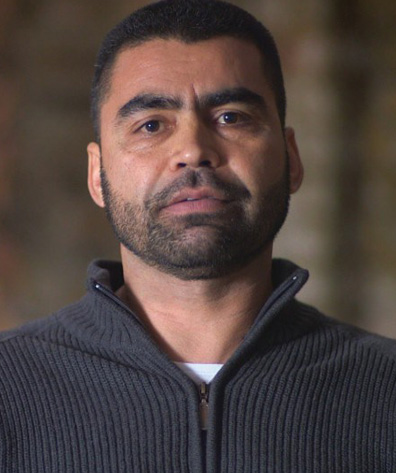
“I risk my life to pursue my aim of revealing the truth.
I have been rejected in the process, but it has made me strong.”
NAJIBULLAH QURAISHI
Journalist and filmmaker, UK
January 1st, 2021
Najibullah Quraishi, a London-based investigative journalist and filmmaker originally from Afghanistan, primarily focuses on Asia and Arab countries in his work. Passionate about uncovering the truth, Mr Quraishi faces formidable challenges as he creates impactful documentaries, including The Dancing Boys of Afghanistan, The Girls of the Taliban, Opium Brides, Behind Taliban Lines, Fighting for Osama, and Children of the Taliban. Quraishi has been honoured with several prestigious awards, including the Rory Peck Award, the Sony International Impact Award, and the Amnesty International Media Award.
Heera Alaya: Your documentary, The Dancing Boys of Afghanistan, addresses the issues of paedophilia and the sexual exploitation of vulnerable Afghan boys. I had no awareness of bacha bazi, or “boy play,” until I came across your film a few years ago. Thank you for creating such educational documentaries.
Najibullah Quraishi: You are welcome. It’s my duty to make films that present the truth.
How and when did you first learn about bacha bazi? What motivated you to expose this crime against children?
This illegal practice of bacha bazi has existed in Afghanistan for decades. As a child, I heard of places where young boys were made to dance, and I assumed they were dancing or that it was a dance competition.
The practice of bacha bazi is reminiscent of pederasty, where sexual activities involve a man and a boy. In the Roman Empire, women were primarily seen as nurturers, while boys of lower status were exploited for pleasure.
When I investigated the history of bacha bazi in Afghanistan, elders across the country told me the practice began in villages where people had nothing to do at night. To compensate for their boredom, people made their evenings more interesting by inviting musicians and boys to dance. However, men got pleasure from watching attractive young boys dance.
With the start of the war, around 1997 to 1998, in Afghanistan and the escalating conflict with the arrival of the Russians and Mujahedin, bacha bazi became common among the commanders who started competing for young boys. If one commander had two boys, the other had three boys. Bacha bazi was an open secret—amongst those around the commander and the wife—that these young boys were exploited for sexual activities.
That’s awful.
True. The wives had no power to say anything. In my documentary [The Dancing Boys of Afghanistan], one of the characters, the paedophile, claimed he would keep a boy if his wife allowed him. This paedophile probably wanted to present himself as a modern guy who cares for his wife’s feelings; in reality, he didn’t have to get any permission—he did as he pleased.
The Dancing Boys of Afghanistan highlights the sexual exploitation of vulnerable, impoverished children by those in positions of power—namely police officials, politicians, and warlords. How can the government enforce laws effectively when Afghan authorities are complicit in the abuse?
As shown in the documentary [The Dancing Boys of Afghanistan], officials from the Afghan National Army and the police forces, along with warlords, were involved in the practice of bacha bazi.
Before the release of my documentary, the law did not protect Afghan boys, and offenders went unpunished. But since publishing The Dancing Boys of Afghanistan, local media in Afghanistan and human rights activists worldwide have been discussing bacha bazi, which has put pressure on the Afghan government to take action. Finally, the Criminal Code was revised in May 2018 to criminalise the practice of bacha bazi. However, bacha bazi still exists; only it’s less rampant.
What does the future hold for these dancing boys who, in addition to being ostracised and rejected by their families, are stripped of their masculinity at such a tender age? Do these boys succumb to substance abuse, or do they become predators themselves?
When a child at the age of eight or nine is exposed to a particular lifestyle [bacha bazi], they learn to like it and eventually stay on that route, becoming predators. The few who try to escape are killed. Moreover, these boys can’t change their lives as they come from impoverished families, which is one of the reasons they become bacha bazi. The young boys eventually merge with the paedophiles and commanders, and the once young boys end up scouting for new young boys.
The exploited become part of the system that propagates a culture of sexual slavery.
Yes.
What contributes to the culture of denial surrounding women’s sexual abuse, as illustrated in your documentary “Opium Wives”?
In Afghanistan, talking about sex and sexuality is seen as shameful and embarrassing, which is why the sexual exploitation of girls is not acknowledged.
How does the oppression of women influence the current status of women in Afghanistan?
Approximately 20 percent of the Afghan population living in cities and towns know their rights, with a considerable number of women holding positions of power in offices and the government and serving as activists. In contrast, nearly 90 percent of Afghanistan’s uneducated population who live in the countryside have no power. The women in the villages don’t know right from wrong, and her husband is like a god; she has to obey whatever he dictates.
If these women (in villages) knew how to read and write, they would know that even the religious books affirm that men and women are equal.
Men are considered superior since a framework to support these women is lacking. And should these women complain about their husbands, they will beat them up.
Do repressive circumstances lead rural girls to enrol in a madrassa?
Yes. Rural families encourage their daughters to enrol in a madrassa, expecting them to leave once they turn nine or ten to get married. A few girls stay in madrassa until they are 20 or 25, eventually becoming teachers.
What does the madrassa curriculum entail?
In reality, madrassa teachings should be religious; instead, they teach extreme Islamic sentiments, not in the Quran [Religious text of Islam]. Naturally, the girls attending madrassa become extremists, and when these women get married, they impose their opinions on the entire family, influencing the family’s views. In the name of religion, madrassas misuse Islam, a significant threat to the whole country. Little progress is being made in fighting corruption or advancing women’s rights.
Ultimately, it’s all about political games—people exploit religion for their benefit.
Does the brutality observed in practices like bacha bazi, dogfighting, and Buzkashi arise from a culture that subjugates women, exacerbated by poverty and illiteracy?
Yes. The illiterate population in the countryside conducts dogfights, chicken and bird fights, and, as you mention, Buzkashi. Women can’t say anything because they don’t know their rights or have a voice.
So, life remains status quo.
Exactly. In Afghanistan, the wealthy city woman and her poor countryside counterpart have no power. In this entirely agricultural country, the power resides with the men. And though nearly 20 percent of the population lives in the city, that doesn’t mean they have power. Hardly 5% of women have power, and in rare cases, when a man is willing to listen to a woman, they are both educated.
I recall a time as early as the 1980s when Afghanistan had a commendable reputation for producing high-quality dried fruits. How did the country’s agricultural focus shift from fruit cultivation to opium production?
What you say is true. Afghanistan is suffering because of the neighbouring countries—Russia, Iran and Pakistan. Though Islam forbids drugs, the demand for poppies, along with the encouragement of people around farmers, makes them overlook religious teachings (to grow poppies).
In my film, Opium Brides, I document the poverty of Afghans (Poverty can make people do anything to feed their families). And though with the arrival of NATO [The North Atlantic Treaty Organisation] in 2001, billions of dollars have been spent on Afghanistan, it continues to produce 90% of opium in the world.
So, poppy cultivation is driven by supply-and-demand dynamics.
Exactly. The fact is, farmers don’t make a profit from cultivating poppies—they get pennies.
What role do the Taliban and the Islamic State play in the billion-dollar opium industry?
Taliban specifies the amount of poppy that can be grown and the sum to be paid towards Zakat, a system where you give 10% of your earnings to the Mujahedin or people experiencing poverty.
What did you want the world to know about ISIS [Islamic State] through your documentation?
By exposing ISIS in Afghanistan, I aimed to educate the world that ISIS is active and attempting to gain a foothold in the country. I also wanted the Afghan government and their allies to realise that Afghanistan—which is surrounded by mountains—could become a haven for ISIS. Any terrorist group can live in these mountains for hundreds of years without being destroyed.
How did you get to document ISIS with the children in the madrassa?
I went to document ISIS as a journalist and worked tirelessly with village elders and local people to secure permission; it was an eight-month wait.
I never expected to go to their madrassa; it happened organically. We were sitting under the tree when one of the ISIS members announced, “It’s time for madrassa.” The man who had to teach the children—the person assigned to be my caretaker—asked me to wait, and at this point, I asked my caretaker if I could film the madrassa; they agreed.
When I started filming, I was heartbroken to witness ISIS manipulate young children—they brainwash children by distorting the words of the Quran and groom children to use weapons and partake in Jihad [Holy War].
How did you maintain your composure amid ISIS?
I am an experienced journalist who has spent considerable time with the Taliban. However, I was nervous before I left to document ISIS—I wasn’t sure if I would come back alive. Once in their midst, I didn’t want to lose my confidence. Had I shown them my fear, it would have been a problem. Instead, I mingled with them, thinking: I am a human, and they are too. I demonstrated that we could move together and share life as human beings. Moreover, I had a couple of local people with me who were close to ISIS, and watching them greet and hug each other calmed me.
In the 1980s, it was alleged that the mining of semi-precious lapis lazuli stone served as a source of income for the Mujahideen. How is ISIS funded?
According to my information, ISIS gets monetary support from other countries; it also receives taxes from the local people. ISIS is richer than the Taliban, which is evident in how they dress and the weapons they own.
How have conflict and social upheaval affected the development of Afghanistan?
The money from the West during the last 18 years could have educated an entire generation. However, when corrupt government officials syphon all the money, the rich become richer, and the poor become poorer. We can’t expect anything from a weak government like the present one.
What you say sounds familiar; corruption destroys its people.
Exactly. In instances where fights erupt, or people are murdered, since there is no law or government to take action, local men from the region pass judgment on who owes money to whom or/and who must trade in their daughters or sisters as punishment.
What are the challenging aspects of being an investigative journalist?
My work primarily focuses on the Middle East, (South) Asia, and Central Asia, particularly Afghanistan, Pakistan, and India, all of which present unique difficulties. For instance, when I was investigating the taboo subject of bacha bazi, I found that the government was intent on keeping this topic under wraps. When I went to the foreign ministry to get permission to work on bacha bazi, they emphatically rejected my requests. They refused to provide any information regarding travel within Afghanistan for my documentary. I wanted to expose bacha bazi by any means, so I challenged the government, letting them know I didn’t need their permission. I relied on my contacts in Afghanistan—comprising officials, local communities, tribal elders, and other sources—to investigate and expose bacha bazi.
Moreover, being an investigative journalist can be incredibly challenging in a country like Afghanistan because of the insurgency by the Taliban, ISIS and other anti-government elements that control most of the land. The government doesn’t have power in most places.
As a journalist covering multiple countries, does your Afghan heritage deepen your commitment to Afghanistan and influence your documentary filmmaking choices?
Probably. As the first journalist and filmmaker from Afghanistan to attempt to expose taboo subjects, I aimed to open the eyes of people sitting behind the desks of power—the President and the ministers. I would like to know what the Ministry of Counter Narcotics (MCN) does with all the money, why the government refuses to invest in girls’ education, and why poor farmers are neglected.
When making my documentaries, The Dancing Boys of Afghanistan and Opium Brides, I sought advice from friends, family, and elders—educated people in their 60s or 70s—who live in the United Kingdom. I shared each film’s concept and asked for their opinion, but everyone rejected me, advising me against making such documentaries: “The films will bring a bad name to Afghanistan.”
My reasoning for others’ dissuasion remained consistent: “If we don’t expose the truth, our Afghan children and society will suffer for years.” This decision to reveal the truth left me feeling alone for sure, but with the advice and support of my wife, I continued doing my best.”
It’s inspiring to hear about your wife’s unwavering support and your remarkable perseverance.
Thank you. While my wife encourages me to educate the world by bringing taboo subjects to light, her primary concern is always my safety.
Filming can be exhausting. Viewers of a 45-minute documentary often overlook the months of hard work that go into its creation. For instance, I filmed The Dancing Boys of Afghanistan for nine months, shooting 110 hours of film. And the off-camera inhumanity I witnessed deeply affected me and often brought me to tears; I was incredibly sad (and it’s the same with all my documentaries). So, returning and sharing my feelings with my wife is a great source of comfort.
What makes you put your life on the line to document these stories?
I risk my life to pursue my aim of revealing the truth. I was rejected in the process, but it has made me stronger.
Outstanding Afghan journalists with local channels sometimes ask me: “Naj, you come from London to Afghanistan to expose issues we were unaware of. How do you find such stories?” I tell these talented journalists that while they are thinking of a specific city, let’s say Kabul, I think of the entire country. The fact is also that if these Afghan journalists expose the truth, their lives will be in danger. I live in London, travel to Afghanistan to film, and then fly back to London, from where I present my documentaries. When I return to Afghanistan, my life is in danger, too, but not to the degree of the people who live there.
Does command over the local languages, Farsi and Pashto, aid in telling Afghan stories?
Yes. Luckily, I know both languages, Farsi and Pashto. Most places I visit are Pashto-speaking, except for areas similar to where I filmed The Dancing Boys of Afghanistan; the rest are Pashto-speaking.
How does the commoner in Afghanistan perceive you?
I know the people’s support and encouragement are with me. Every time I go to Afghanistan and travel from Dubai or Turkey, at least a handful of people recognise and approach me at the airport, appreciating my documentaries. And where I am accustomed to being identified in Afghanistan or Turkey, I was taken by surprise at a US airport security check—an officer asked: “Are you the same Najibullah who makes those documentaries?” This official must have seen my films broadcast on Frontline PBS.
Do you see Afghanistan differently each time you travel back?
I was hopeful of seeing Afghanistan in a favourable light, but with each visit, I see the deteriorating state of affairs, which makes me feel increasingly hopeless.
When NATO entered Afghanistan, all the countries were putting flowers on NATO forces, optimistic about the war ending and peace as a way of life for Afghanistan. And it was like heaven for a couple of years—there was no war, no Taliban, and you could travel where you wanted. American and European forces walked the streets of Afghanistan without any weapons, mingling with people, and the presence of female soldiers made it possible for girls to feel safe enough to step out of their homes.
The situation in Afghanistan is entirely different today. I cannot see any hope in the future; I think Afghanistan is destroyed.
What are your dreams for Afghanistan?
Currently, the youth don’t have a mind of their own. For instance, if a mullah from Saudi Arabia goes to a mosque in a village preaching a distorted version of the Quran, the youth will believe him because they can’t read or write. Illiteracy is why it is easy to brainwash young minds to become suicide bombers.
My dream for Afghanistan is to have an educated generation in 17 years. Without education, we can’t build a country or bring positive change.
Learn more about Najibullah Quraishi.
TAINA BIEN AIMÈ
“What was her life’s journey?”
EUDAIMONIA
amalgamations and elucidations
KATE BLEWETT
Bulgaria’s Forgotten Children
OLIO NUOVO
custodians of culture
THE MARIONETTISTS
The master manipulators
FRENCH LAUNDRY
restoring your soul’s hygiene
GAURI MAULEKHI
Animal rights campaigner, IN
“Artificial insemination [AI] is extremely traumatising for cows (she has to be restrained); it’s as traumatising as it would be for a woman if a hand were shoved up her vagina.”