IN CONVERSATION
“When you know yourself, you learn to respect nature, eat healthily,
and live well instead of buying things and gossip papers.”
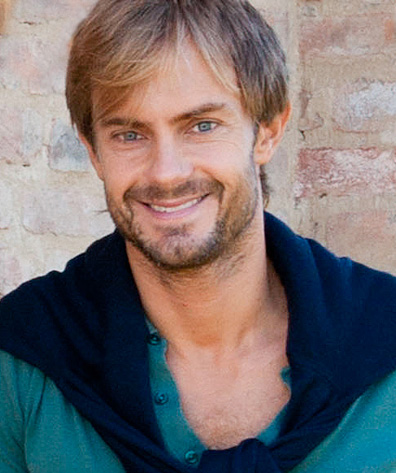
GUIDO MARTINETTI
Organic farmer and entrepreneur, IT
January 1st, 2011
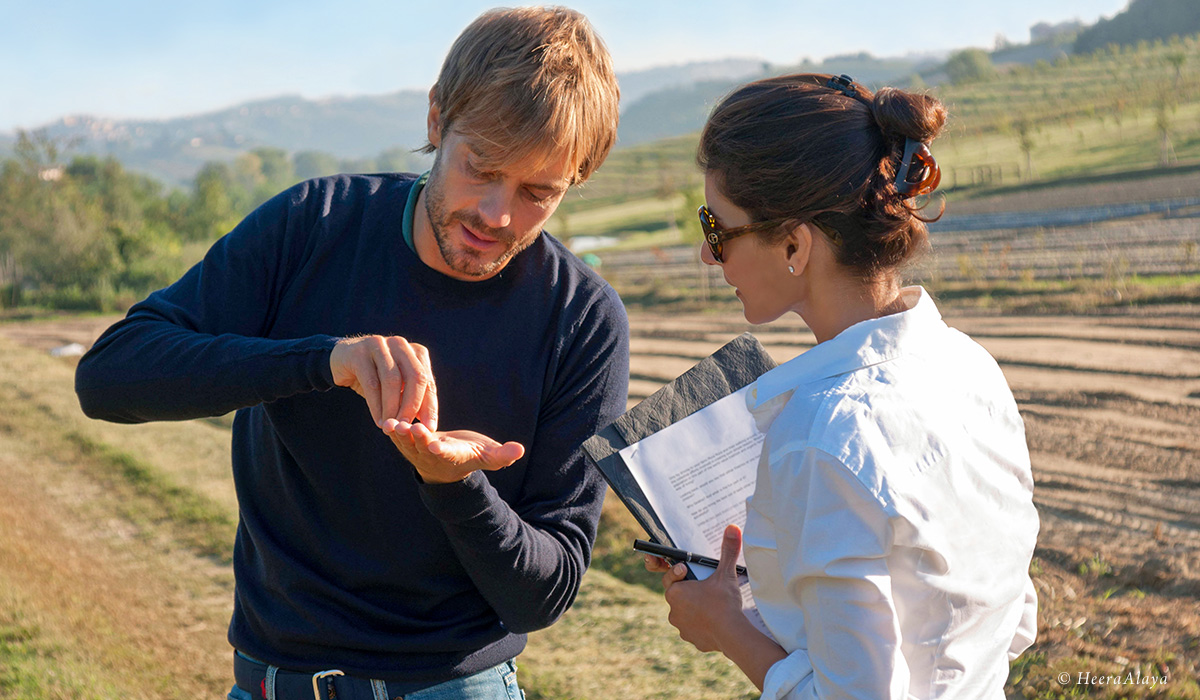
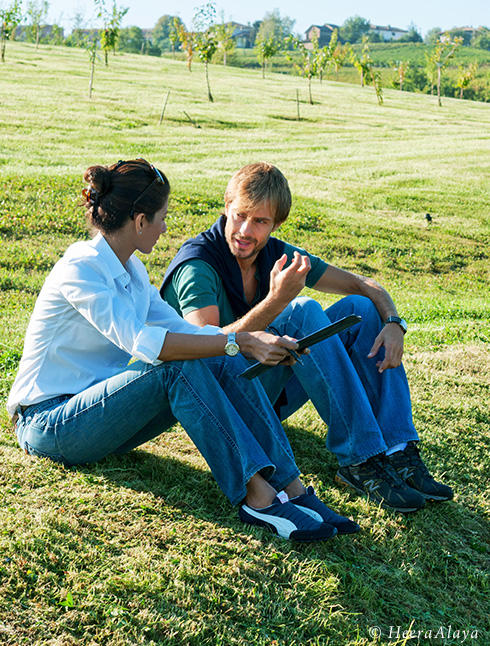
Friends and business partners Guido Martinetti and Federico Grom have engineered their reputations on a steadfast commitment to excellence. Their gelato brand, Grom, embodies this principle. During my conversation with Guido Martinetti at his farm, Mura Mura, in Costigliole d’Asti, Italy, it is clear that quality is non-negotiable—it permeates their approach to nature, farming, and relationships.
Heera Alaya: Guido, thank you for welcoming me to your beautiful farm. Tell me, why gelatos? I’m curious, what drew you to gelato, and where did your journey begin?
Guido Martinetti: Yes, it’s very, very easy. I love sweets, but I also have a different side: I like to run and swim, which I find philosophical efforts. I love to stay alone, endeavours like yoga—
Meditative, then?
Exactly, exactly. I always say running and swimming are like yoga—they encourage you to analyse yourself and life. I don’t need a sweet dish when I run and swim. But if I don’t run or swim, I need sweets. When I was younger, my favourite sweet was ice cream.
While in school, I read an article in the Turin newspaper La Stampa that stated, “Except for a shop in Orvieto [Umbria], no one makes gelato the natural way, without preservatives, added colours, or any aroma.” So I went to Orvieto with my girlfriend, and we tasted the gelato. I remember this gelato clearly. My girlfriend chose the melon flavour, and I asked, How can you choose the melon flavour?” I love chocolate and pistachio. We each tried two flavours, and when I tasted her gelato, it was real melon! And I thought, “This article [from La Stampa] is true!” This experience left an impression on me, but I didn’t consider it as a potential career.
The gelato had a significant impact on you.
Exactly, exactly. Exactly, exactly. And even though Federico and I had been friends since high school, we only got to know each other well when we served in the Army.
It’s fascinating how certain people enter and exit our lives at the right time.
A lot. I often reflect on the concept of luck, exactly like you say. During my time in the wine business, there was a moment when Federico, then a financial manager, needed some wine for his company, which I delivered. And we talked about doing things like two regular guys, 26 and 27 years old. It was during this exchange that I told Federico about the article in La Stampa and suggested that we could make the best gelato in the world with the best ingredients. It was a quick exchange.
After ten days, Federico called me back and said, “Guido, we must meet.” By then, I had forgotten all about the gelato. I asked, “Federico, what’s going on?” Federico arrived with a 60-page study on the gelato industry and presented me with a detailed business plan for launching a gelato venture. Remember that the gelato business was approachable because it was a very small shop, just 30 meters. We needed little money to start; it would have been impossible for us if the business required a big investment.
You can imagine our opposite personalities—Federico is consistently focused, and I am more about ideas and originality. Had I not crossed paths with Federico, my idea would have remained an idea. I am aware that Federico took that idea and made it a reality.
I truly admire your graciousness, and I’m sure Federico shares that sentiment. It also motivates you to strive for excellence at all times, doesn’t it?
Exactly. And now, when I talk more and more about luck, it’s true. When you are 35, like Federico and I, and when you build a company with more than 500 employees, you feel a lot of responsibility for many people. So I wake up early in the morning in the pursuit of excellence. If I can look for excellence, many people enjoy it differently.
We must dream every day.
Is Grom gelato made with organic milk?
No, not at the moment [referring to organic milk]. In Italy, sourcing organic milk right now is very hard. One of the projects Federico and I have is to eventually keep our own cows, which would also provide us with manure. We need 40 hectares for this project, and it will be a five-million-euro investment. Right now, we cannot afford it. I hope to have the funds in four to five years. To have our cows will be a dream that becomes a reality.
And what about eggs?
Only organic.
Is organic farming valued in this region of Piedmont, Italy, or has public opinion shifted over time?
It’s incredible; the food culture was much higher. A surprising 90% of Europeans don’t know that a cow must have a little cow before it can make milk. It’s surprising, yeah?
You have a stronger food culture when you touch the land and the farm with your hands and sell their produce in local markets.
You weren’t obliged to harvest fruit and ripen it to sell from where you lived. When you trade in local markets, you buy in the morning and sell by the afternoon, so people are in the habit of eating fresher, flavourful food.
In India, there was a time when one could buy fresh fruit from vendors who came door to door with a basket or a cart. Increasingly, polished symmetrical fruit packaged in layers of plastic is favoured. Flavour isn’t a priority.
Exactly. When you want to sell fresh fruit to the market, the first thing you look for is the appearance—the perfect shape and colour. For example, red peaches are more attractive than peaches that are part yellow and part red. The people behind the farmers make various selections and don’t prioritise flavour, aroma, or taste quality. They look for an appealing red colour. The market is also changing because I imagine a nation grows by eight to ten percent [a year], but you must find your road after a while.
It will be challenging for countries like India and China to ensure that food production keeps up with population growth.
Yes, absolutely. If the populations you are talking about can afford it, they will adopt the beef culture like Americans, which we cannot sustain. The approach to beef production and the way cows are raised pose significant challenges and threats to our planet. Do you eat meat?
I don’t eat meat, but I understand what you are saying.
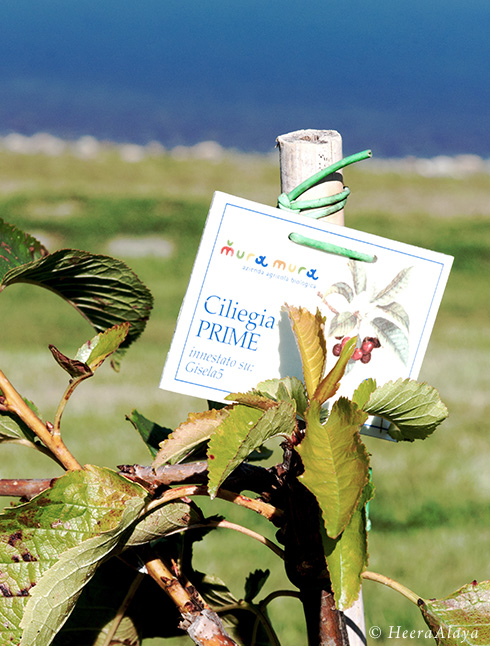
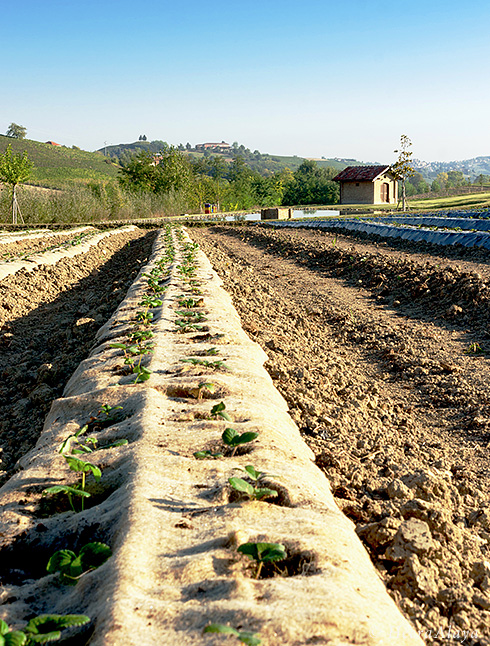
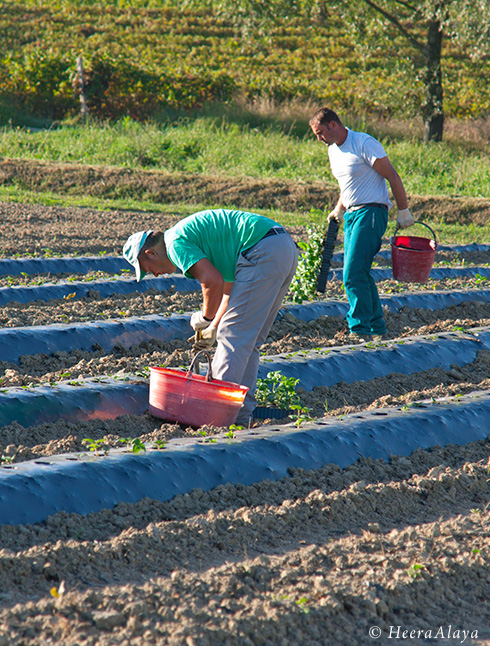
Compared with most gelatos, which tend to be sweeter and more artificial in flavour, Grom gelatos offer a more delicate taste. Have we lost our sensitivity to appreciating natural flavours, or would you attribute it to other factors?
What you are saying is entirely true—natural flavours are about aromas. It’s not that we’ve lost sensitivity; rather, we’ve lost the habit of seeking them. First, there is the issue of massive production—if you have a farm and produce one hundred, you gain from one hundred; if you produce four hundred, you profit from four hundred. Second, people want to preserve gelatos for a long time, which requires aggressive treatments before packaging, and packaging results in a loss of aromas. By combining these factors: low quality, low aroma, and long-term preservation, the product lacks aroma and requires the addition of artificial ones.
At the same time, the chemical world becomes increasingly powerful for researchers who can create aromas. If you look for food in a supermarket, if it’s packaged, you find an aroma. So, to make the gelatos, I look for natural aromas and acidity. When the acidity is just right, it creates a refreshing sorbet-like experience in your mouth.
Have you started cultivating fruit to create exceptional flavours for your gelatos?
It’s one of the reasons we decided to grow our own fruit.
Nothing compares to naturally grown fruit that ripens over a suitable period.
Yes, at the same time, farming is tough, as farmers struggle to meet selling windows. The typical process involves several agents: the farmers sell it to someone, who sells it to someone else, who sells it to the market.
You benefit from good weather, but you also have to endure spells of adverse conditions. How do you deal with nature?
For example, if it were to rain during my interview with Heera today, we would grab an umbrella and carry on. Likewise, if agriculture decides that grapes are not very good this year, you must accept it, which is a learning experience. Keep in mind that only a portion of the fruit we use for our sorbet comes from Mura Mura—our trees aren’t large enough to provide this quantity. We use our strawberries and mangoes. For example, our strawberry sorbet offered in April, May, and June uses only Mura Mura strawberries in June, because we don’t have enough ripe strawberries in May. And because winter here [Mura Mura] is too cold for lemons and mandarins— which we use a lot, especially lemons—I source them from a supplier close to Naples.
This strategy allows you to maintain a diversified supply chain.
Yes. It’s very important.
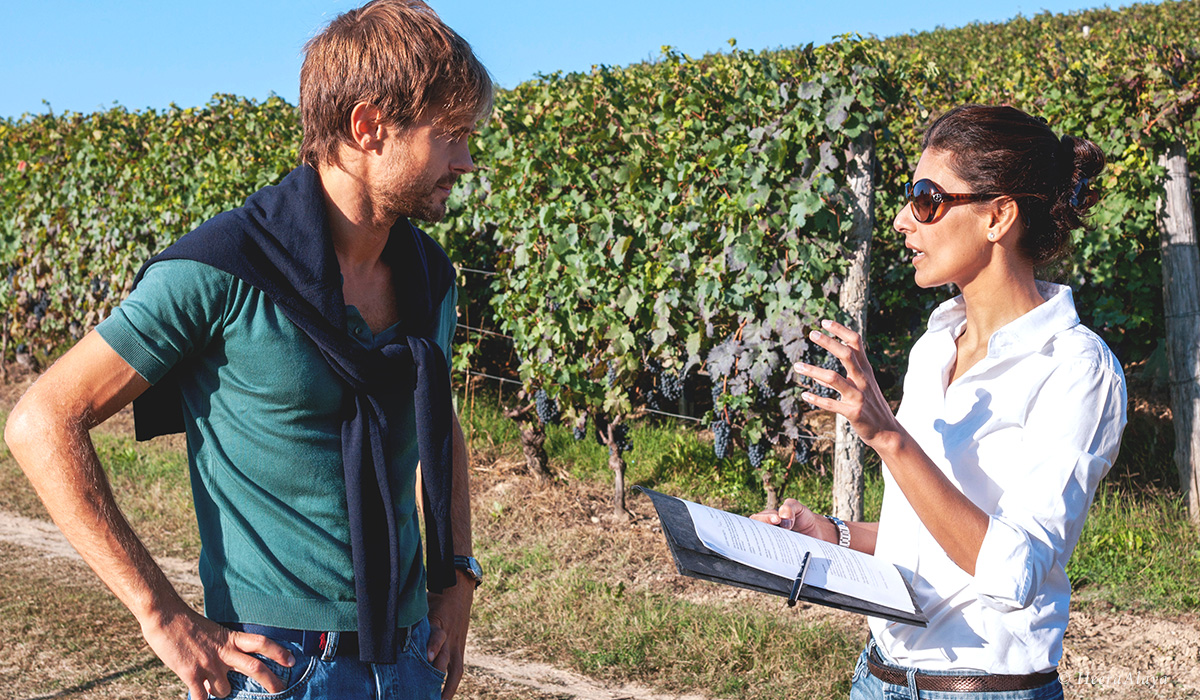
On my way to Mura Mura, I noticed that the farms appear quite small.
Exactly; the average property in Piedmont is very small. The farms can be as small as half a hectare.
Was it an uphill task to acquire your farm?
We got lucky. When we were looking, we found this person who coordinated nine different farmers to sell us the land.
Your farm appears to be in layers and sections.
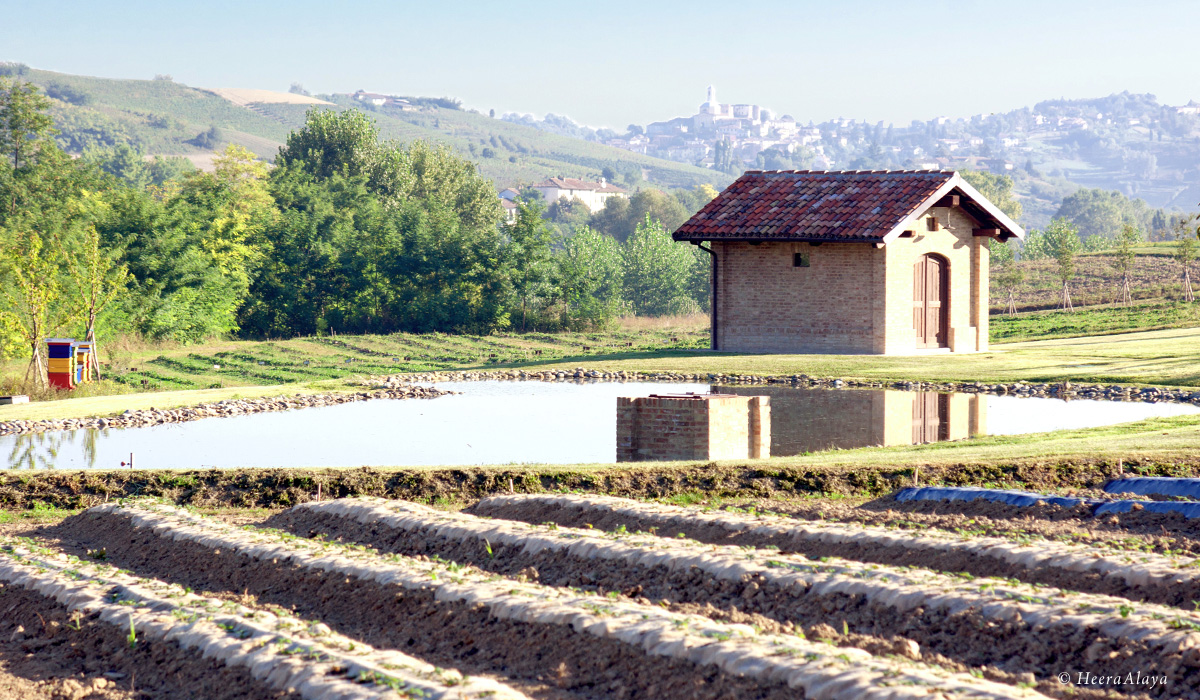
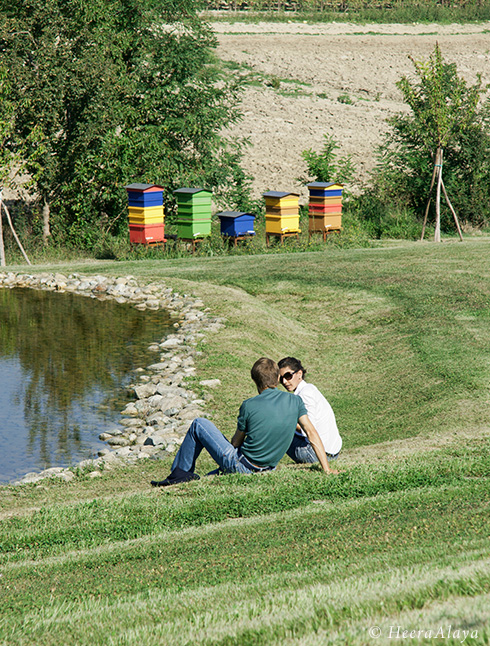
Exactly. Each year, we buy more land to expand our shops. To increase our production, we must cultivate the fruit we decide to use. We are planting thousands of trees, but we will designate that area [a section of the farm] as a flowering ground for bees. I am very proud of what we have created. I have gained the respect of people around here because they have not seen this kind of approach for generations.
Is it advantageous to grow a variety of plants?
Absolutely, absolutely. In agriculture, monoculture is bad.
Do you implement crop rotation?
Yes. For instance, in 2011, the melons will be here [pointing to sections of the farm], and in 2012, they will be there. By 2013, they will be here, and the strawberry will be there.
How does crop rotation benefit the soil?
We allow the soil rest for a year. During this period, we cultivate beans; not for sale but to enrich the land. When beans are ripe, they are full of organic matter, which naturally enriches the soil.
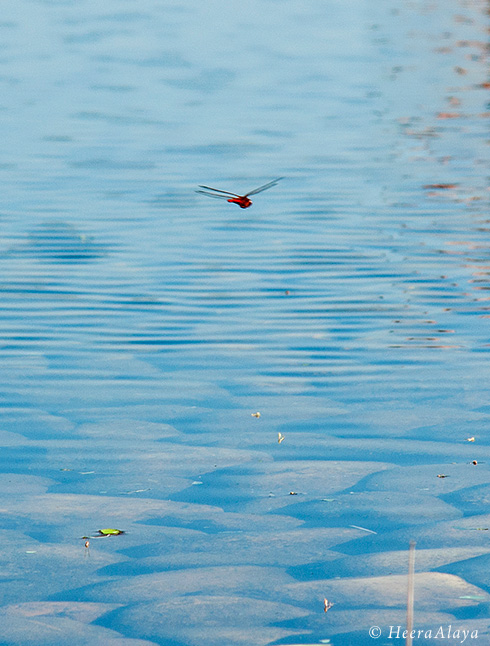
Guido, I am distracted by these beautiful dragonflies.
I want to attract as many [insects] as possible. I also have a lot of Coccinella—the small red insect with the black dots.
The ladybug.
Ladybug, exactly. I have many because of the natural biodiversity here, and with flowers planted over there [gesturing to different areas of the farm] and trees in another spot, I will continue to see an increase in diversity.
Different species living together?
Exactly. This will create a new balance at Mura Mura.
Can you explain this balance? Why is it essential for us to share the planet?
I cannot explain why it’s so important, but I can certainly analyse the consequences of failing to respect the planet. We exploit the planet by ourselves, not thinking about the next generation.
I don’t know that insect’s name, but that is a jumping one.
It’s a grasshopper.
Exactly. Heera, you know all these insects; that’s impressive. Frogs also thrive well in this pond.
I often use my parents’ generation as an example regarding their cigarette consumption. Most of them would toss the cigarettes on the ground. There will be a time when someone eventually has to clean them up from the fields.
If we want future generations to live well and not pick up cigarettes, we must not throw things mindlessly.
We should reflect on what we have inherited and be thoughtful about what we leave behind for the next generation.
Yes. There is a beautiful project called “Grom loves the world.” This project features famous phrases from the past about nature and sustainability, and one of them states, “The land is not something we inherited from our parents, rather something we borrow from our children,” which offers a different approach.
I have never encountered strawberry plants being cultivated in such a manner—enclosed beneath a fine mesh that covers both the plant and the soil.
You won’t find this fine mesh used elsewhere. I am very proud of our Mater-bi cultivation; it’s completely natural and thus very expensive. We use this mesh for two reasons: first, to protect the strawberry plant from bad grass [weeds], and second, because the strawberry plant has a shallow root compared to fruit trees. [Pointing to tiny irrigation tubes] These are used for drip irrigation, providing water directly to the plant and helping to maintain optimal humidity levels.
It’s biodegradable.
Exactly. Mater-bi is comprised of very thin layers, just 18 microns. To put it into perspective, one micron is one one-thousandth of a millimetre, so one millimetre is divided into 1,000 parts, each of which is 18 microns. We are using this covering to experiment with a company that produces Mater-bi, the same material we use to make spoons.
Considering the countless disposable spoons contributing to plastic pollution, one can truly appreciate even the smallest changes that benefit our environment. Are your gelato cups made from Mater-bi as well?
Our cups are made of paper with a Mater-bi lining to prevent the paper from becoming soft from moisture; this lining accounts for about 10 per cent of the cup’s total weight.
What prompted Federico and you to focus on environmental issues and invest in biodegradable products like Mater-bi and FSC [Forest Stewardship Council] recycled paper?
It’s a matter of luck. Federico and I are fortunate because we started with empty pockets when we were 27; we had a simple idea of making gelato with top-quality ingredients. And we are lucky because of our meeting—we have the same kind of education, but different talents. To be honest, our commitment to social sustainability developed later. The first thing we work on is the quality of life of the people who work for us. And you know, the culture of black money is high in Italy.
This situation of unreported money [black money] also holds in India.
It’s the same?
Yes, corruption is prolific. Thousands of farmers commit suicide every year; their lives are not valued. On the one hand, we want to indulge ourselves with material comforts, and on the other hand, we convince ourselves that young children lighting their father’s funeral pyres is acceptable. The focus is on amassing money. I cannot comprehend how the human mind rationalises greed.
In Italy, corruption poses a big, big problem. It is estimated that one-third of the country’s accounts are black money, which is a problem. As a business owner, I pay a lot of taxes on behalf of my employees; in 2009, for instance, we paid 60 percent in taxes. A company’s tax obligations depend on IRES [tax on gains] and IRAP [tax on people’s work], and the percentages differ from company to company, especially for IRAP. Overall, the tax rates are very high.
Federico and I made a conscious decision to be honest about everything. When you are young, you think you are lucky. We have always embraced qualities such as determination, patience, and a strong work ethic. And we had this kind of education that taught us the importance of giving back and sharing our success. So, the green approach is the last step.
For many companies, sustainability tends to focus on various marketing strategies. With social responsibility, you have two options: you do it silently because you do it for yourself, or you tell the world because you do it for publicity.
With growing awareness of sustainability, do you anticipate organic food becoming more affordable in the future?
Organic farming will be the only way forward. We must not ruin the planet by doing it a disservice. In the 1990s, Europe reached its lowest point of agricultural quality.
Unfortunately, many people mistakenly believe that buying things—cars, bags, shoes and everything—makes us happy. I hope that future generations will understand that our happiness doesn’t depend on what we buy.
For example, in what is described as low culture, people spend a lot on cell phones, cars, and clothes but not on proper nutrition. My long-term vision is to change people’s culture to have a different approach to money and happiness.
Thank you for bringing up the topic of culture. People often spend substantial amounts on tabloid-style magazines while neglecting to invest in healthy food, thereby depriving themselves of emotional nourishment. Media and marketing perpetually inform us that it’s acceptable to splurge on cosmetics, clothing, and cell phones; we can spend on anything—even supplements—but not on our well-being.
Exactly. Why do you think low-culture people buy gossip magazines? It’s because they are not curious about themselves; they want to see how others live. It’s a question of their culture. But I am very optimistic that the human race will become wiser over time.
So, it’s essential to step back and reflect. From a distance, I can view the pond through a broader lens; had we been closer, my view would have been limited.
Exactly. It’s the same with agriculture and farming; we are arrogant to forget the experiences of our grandmothers and grandfathers. We should also remember that we will be fathers and mothers and grandmothers and grandfathers; we must be able to educate our sons and daughters.
The deep teaching is not about saying, “Do this, do that, or I did this, I did that, no.” Rather, it’s about allowing people to discover the suggestions we offer.
It’s a gift.
Exactly. It’s very difficult, but it’s the way of wise people. My mother always said, “Do what you want, but I will not give you money, and always tells me the truth.” I was never attracted to drugs because, to me, they were not something forbidden. Instead, it was a question of how I wanted to manage my life and body, like you; it’s a different approach to life. When I was 13 or 14, I couldn’t understand the depth of my mother’s teachings; now I understand.
I recently read an article in the newspaper about a boxer who had separated from his wife. After being released from jail ( he was in jail over a fight), he visited his wife’s house to give his daughter 200 euros for losing a tooth. For this boxer, giving his daughter money was quick and easy for him—and she was a happy daughter in that moment—but it’s a way to make a child unhappy.
Emotional investment demands careful thought and effort. When adults give thoughtlessly, they risk teaching children to equate their self-worth and confidence with material possessions. In families devoid of emotional connection, the glue is only external.
Exactly. I understand perfectly. Material possessions will never bring true happiness to a child. And these children who keep taking things will think they need different things to be happy, which is not deep happiness; it’s five minutes of happiness. I am not happy if I buy a new watch, a different car, or anything else. I am much happier and more emotional if I harvest my first peach this season.
If people were happy with objects, every rich person would be happy, but that’s not the case. Why?
And with the approach to agriculture, believing in your project is crucial. You don’t plant a cherry tree here and expect to see immediate results after two days. No, the true outcome will come after four years of hard work and conviction. It’s also a lesson, no? You can manage more things across many other fields, especially in the industrial context. In agriculture, it’s a meeting between agriculture and man, so it’s a lesson.

Are there any plans to sell Grom?
I am not sure. If I choose to sell Grom, it’s because I want to be a father in the future. Today, I work 14 hours a day. In the future, I want to be a father for 14 hours a day.
How do you ensure that Grom’s core values are upheld as you expand the business?
When it comes to growth, it’s fairly straightforward. There are two factors: first, the goal is to make the best gelato in the world; second, the company is privately held.
Does direct ownership allow you better control over your expansion?
Absolutely. I don’t need to answer anybody. If my company were publicly traded or involved other partners, I would have to answer to them. If my partners see things my way, it’s easy. Right now, we are two, and we are few. If you are in the market, they expect you to gain more and more and more. So, you must make short-term decisions; we are focused on long-term ones.
What defines your spiritual, reflective, and philosophical nature?
It stems from my character. I have an insatiable curiosity for knowledge and a desire to analyse the world around me. I’m not the type to indulge in idle gossip; my interest is more profound. For example, if I have to plant the grass, I ask which grass, how, why, and what will happen in five years.
I have a few friends and hope to have a wife and family someday. So, right now, I have time to analyse. Many people are scared to be alone, but I am not. I love to read, and I also love to have information—it can be a new language, visiting Colorado, seeing a beautiful valley, or somewhere else. I want to travel the world.
One day, I will be 80, and when I look back, I want to be satisfied. I want to be proud of myself. I want to say: “I lived a good life.” If not, I will not die happy, and that is a problem. Socrates says one simple but important thing: “Know yourself.” When you know yourself, you learn to respect nature, eat healthily, and live well instead of buying things and gossip papers.
Learn more about Guido Martinetti.
BEING A BEACON
emblematic of my essence
THE MARIONETTISTS
The master manipulators
FRENCH LAUNDRY
restoring your soul’s hygiene
TAINA BIEN AIMÈ
“What was her life’s journey?”
EUDAIMONIA
amalgamations and elucidations
BERNADETT TUZA RITTER
A Woman Captured
GAURI MAULEKHI
Animal rights campaigner, IN
“Artificial insemination [AI] is extremely traumatising for cows (she has to be restrained); it’s as traumatising as it would be for a woman if a hand were shoved up her vagina.”