IN CONVERSATION
“We have to move beyond the emotional response to become
change makers who can articulate from a very high standard.”
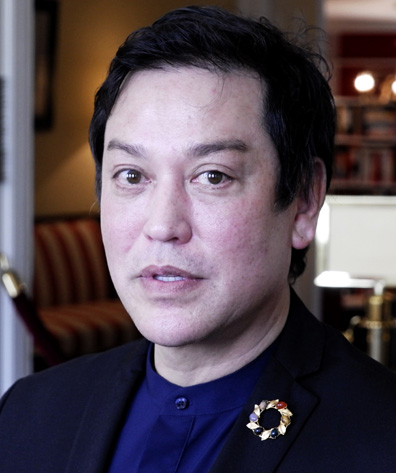
DANA TAI SOON BURGESS
American dancer and choreographer, USA
February 29th, 2024
Heera Alaya: How would you describe yourself as a hyphenated person, both as an individual and as an artist?
Dana Tai Soon Burgess: There are so many ways we can understand our intersectional identifications. I have multiple hyphens. As a fourth-generation Korean-American, this is a hyphenated part of myself. And the other is a dance artist who often draws inspiration from the visual arts.
The fabric of America right now—if we look at all the different threads we represent—is becoming much more sophisticated in how we see ourselves in our environment. The whole tapestry of America is a result of different alignments. Alignment can be a city, a group of individuals, a cultural background, or gender; all of these things create the portfolio of who we are.
You speak about the impact of Santa Fe [New Mexico, USA] on your early years. What was it about the essence of Santa Fe and visual artists [sculptors, photographers and painters] that shaped your foundation?
My parents were both visual artists (My father has since passed away). My mother lives in Santa Fe and makes art daily, and she’s commissioned for her art all the time. So, I grew up looking at the visual arts process from start to finish. I grew up in a predominantly Hispanic neighbourhood, going to bilingual schools (English and Spanish) and then going home to a much more Asian household. There was always a diversity of cultures, and I learned that movement is the fundamental language that bridges all those experiences.
I grew up in a Latino community, in an Asian household (Korean-Hawaiian mother and Irish-English Scott-German father). In addition to the diversity in my home, Santa Fe’s history dates back to the 1500s (before that, it was an indigenous settlement). So there are Hispanic families that go back to the 1500s, and it is a highly catholic community, and I wasn’t catholic. So, many things were very much about a community with cultural insiders, making me feel more like an outsider.
What were some stereotypes of Asian Americans? And how did you navigate through discrimination?
My childhood nickname is Chino, which means Chinese man. However, Chino is a pan-Asian term in Spanish for anyone who looks Asian or has Asian features; you can be called a Chino if you are Korean, Japanese, Thai, or Filipino. So, I rejected that perception from others because it didn’t align with my sense of being Korean-American.
But as I got older and understood that it [Chino] could be a term of endearment, I embraced “Chino” as part of my identity because it signifies the community I grew up in.
How does discrimination take place in America?
Within American culture, we have to go back to the exclusionary acts of the late 1800s to understand the systemic racism and perceptions that exist here. And when I say the Exclusion Acts, it is the legal exclusion of immigrants and Asians to America that goes way back. And then, there were exclusionary laws which did not allow Asian Americans to own land in specific locations. Some of those laws remained in place until the 2000s, which many people don’t realise.
These laws were still on the books, but not necessarily enforced. In Mexico, the exclusionary law for Asians and Asian Americans owning land was one of the latest, in the 2000s, to be amended. I also think that we have this whole series of socio-politically created caricatures, which come about due to the idea of the yellow peril [The Yellow Peril is a racist colour metaphor that depicts the peoples of East and Southeast Asia as an existential danger to the Western world.].
At times in America, Asia was exoticised and of interest, and at other times, politically, they were at odds with Asia. Suddenly, this threat of the yellow peril from the East creeps into everything. So, from a very early age, characters such as Fu Manchu, Ming the Merciless, and the Dragon Lady remain part of the American consciousness.
And then we have this whole shift in terms of looking at Asians as this model minority in America, taking away the reality of the difficulties in language access, medical access, all of these different issues that every new American struggles with. And yes, the model minority, in a way, takes away our diversity; it takes away our struggle and resilience. So, discrimination in America occurs at multiple levels.
I remember being in several meetings—even in academia, when I was a professor—and when I would voice my opinion and feel passionate about a specific issue, I could always tell there was a sense of shock that I had a voice. There is an assumption that Asians and Asian Americans are quiet, go along with the status quo, and don’t have ideas of how systems work and how systems must change. I still notice this conjecture—that we won’t speak up.
I think it is so important now, especially with the resurgence of anti-Asian violence in this country and abroad, that we speak up, that we are heard and that we exemplify in every situation. We are a diverse community, we have diverse voices, we have needs within this country [America]that aren’t always being met, and things can get better and should get better.
Is it necessary to be the head of an organisation [Dana Tai Soon Burgess Dance Company] to effect change?
We can all effect change, no matter our medium—writing, dance, painting, or politics. For me, having a dance company was a way to explore an evolving aesthetic. Within that aesthetic is a reflection of my interest in equity and equality issues.
Why do you emphasise listening?
I was referring to where we are in American cultural conversations right now. Of course, there is a lot of anger about inequality and what has occurred in our history. Yet, we must find succinct responses within those conversations and listen. And listen very carefully to what people are saying, to what institutions are saying, so that we can respond with the highest level of intelligence—
Instead of being reactive—
Exactly. We have to move beyond the emotional response to become change-makers who can articulate, to a very high standard, what we want the outcome to be.
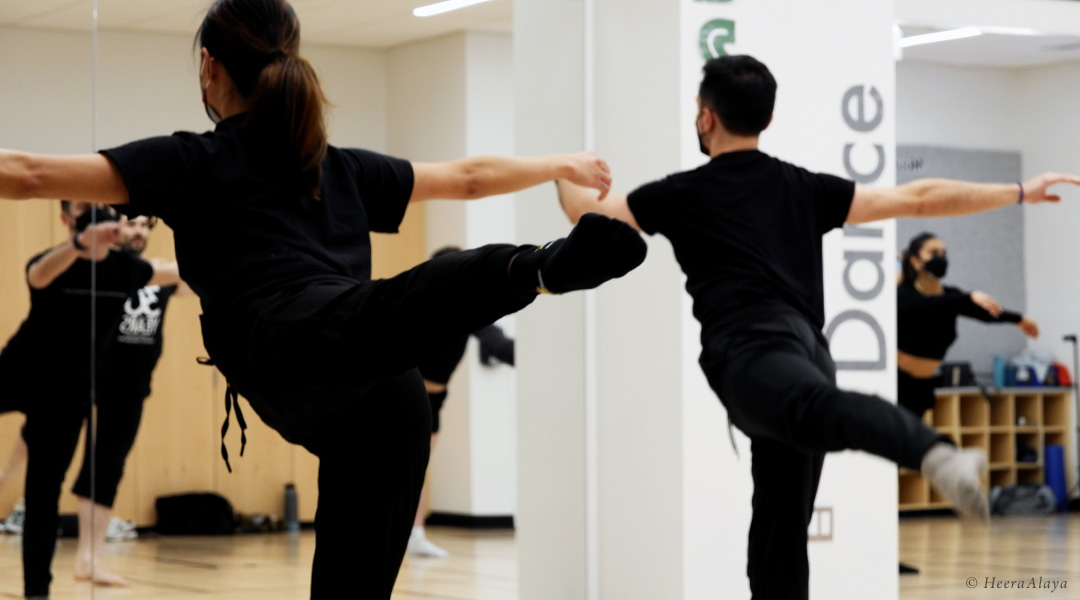
You are the inaugural Choreographer-in-Residence at the Smithsonian Institution’s National Portrait Gallery (NPG). What does this position mean to you?
So, it’s [being Choreographer-in-Residence] very personal. I have been in this position for nearly seven years, and it is a wonderful confluence of my background and upbringing, as it allows me to be in a visual arts context while creating through dance.
In another way, there is considerable responsibility to enliven stories from the collection that speak to the canvas of American history, which has not necessarily been placed at the forefront of the collection. Much of what I do is to seek out diverse stories—I think about diversity to help audiences contemplate America’s history in a three-dimensional way.
How does the weight of responsibility that comes with this honour as Choreographer-in-Residence at the National Portrait Gallery affect you?
I am always very cognizant of my responsibility and am trying to figure out how to make beautiful, sublime art. Many artists approach the question of equity, inclusion and diversity in a way that is sometimes more cerebral. And yes, I am interested in pursuing a cerebral process while ensuring it maintains an artistic dance quality, rather than moving into performance art.
Does your role at the NPG, along with access to its resources, allow you to create as you wish?
The one exciting thing for me is that, after seven years at the NPG, I am starting to move through different museums across the country. And that is exciting—we are launching all these new relationships this coming season—we will be at the University of Art in New Mexico, the Baltimore Museum of Art and the National Building Museum.
I am in conversation with three other museums nationwide, with different collections and located on different coasts of the United States. I am excited because I have learned how to work with many different museums out of this residency, study and embrace various collections, and figure out a way to honour those collections through dance.
I am trying to recall whether I heard you mention this in person or during one of your interviews: that with access to the National Portrait Gallery [NPG], you sometimes stroll through the gallery late at night.
Oh, it’s so great. An example is after hours at the museum [NPG] with George Takei (he played Sulu in Star Trek; his photo is in the National Portrait Gallery collection). We [Dana and George] met down there one night to talk and walk through the museum. It’s quite wonderful to have these moments to explore a collection without other people and, in choosing so, to converse with one person while walking (or I could walk by myself, too). It is all unique, and I love that; it feels very personal.
Given your humble beginnings, having access to such a prestigious space must feel surreal.
It makes me think of my parents’ unrequited dreams. I believe that all of us—children of parents—have our hopes and dreams, and some of those dreams don’t come to fruition in our lifetime. From the moment they hold us as babies, we are embedded with their hopes and dreams, which become part of our calling.
Do you require specific intelligence to compose eloquently?
That is an interesting question. Because language was such an issue from a young age, verbal and written communication were challenging. Going to bilingual schools and speaking Spanglish, English, and some Korean, my kinesthetic and visual understanding of the world or intelligence, drives me.
How did you, as an individual, hone your authenticity and art form?
I hand it to my parents—I watched them be individualistic within their art forms. If a choreographer can tap into their strengths and individuality, they will succeed. I have never considered following trends. Interestingly enough, that has helped my career immensely.
Being a non-conformist has proven beneficial, yet I can only imagine how challenging it must have been during those times when you found yourself in the thick of it—without a platform—second-guessing your decisions and taking risks daily.
Definitely, but I did not have a choice. I am driven to make art a certain way and explore it the way I do, and I never felt there was an option to vary from that. People sometimes ask,” Why did you become a dancer and a choreographer?” And I always say, “Oh my gosh, there was no other option.” There wasn’t anything else I wanted to pursue.
Good for us!
[Laughter] Thank you.
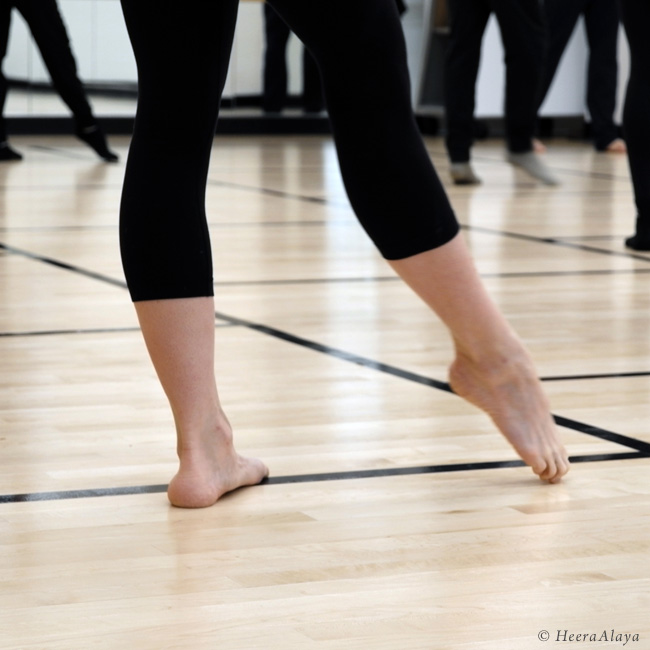
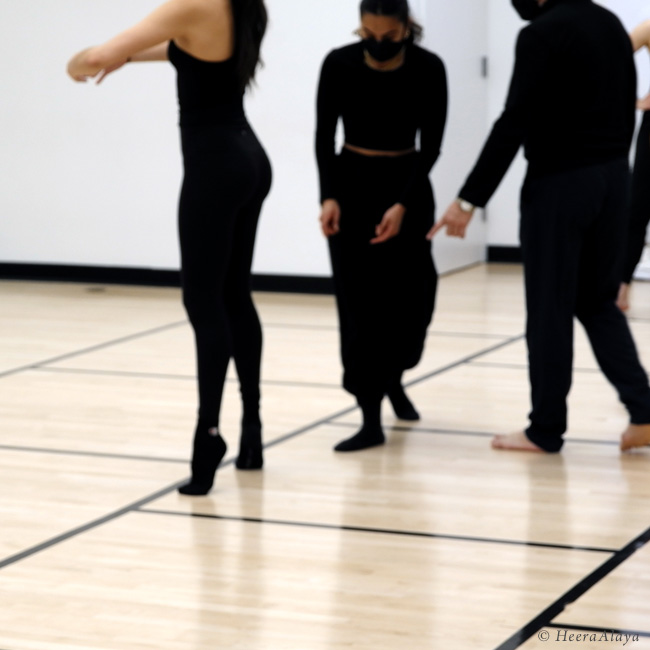
Does an artist need to evolve personally to grow artistically, or do these forms of growth occur simultaneously?
It [growth] is parallel. When I look back at my earliest works, I am horrified. At some level, I can see the angst of a 20-year-old and the confusion of a 30-year-old. Choreographers cannot separate their emotional and subconscious worlds from their work—it parallels the human experience. So where you are and what your emotional age is will be reflected in your emoting.
You practised martial arts. Have martial arts and meditation intersected for you?
When I started martial arts as a young child in New Mexico, I had this excellent teacher, Nishida Makio; he is still an outstanding master martial artist in Texas, where he continues to have a school. He started every class with meditation and was so disciplined that he demanded extreme discipline from all of us. I learned that you must put into the body’s physicality, which transferred perfectly into the dance studio.
In discussing discipline, you’ve mentioned that while you are empathetic towards your dancers, you also maintain a firm stance in guiding them to prepare for the realities of the professional world.
I empathise with a dancer’s journey because of the demands on a young 20-something. So much is demanded of a young dancer—in our field, the body is the medium, and the body reaches its peak for dance in the 30s, and then you are on the decline.
The frontal lobes of the brain typically do not fully develop until around the age of 25 or 26. As a result, young dancers often face numerous questions and confusion in their journeys. But I am also candid with young dancers; every dance teacher and mentor should be telling a dancer what they need to work on and where their future in the field lies. Honesty is an essential part of every art form. And sometimes systems are set up not to be honest, not to sit down and have those sit-down talks with people, which can get dancers off track for a long time.
Why do you liken artists to brushstrokes on a canvas?
Growing up, seeing my parents create visual artwork, I saw the stage as a canvas—on the proscenium stage, there was canvas after canvas. So, I am looking at the stage’s overall appeal and at how the dancers move, which is like brushstrokes; for me, they are calligraphy.
Do your dancers need to be cautious about their dietary choices?
[Laughs] Oh no. They [Dana’s dancers] are so conscious about discipline and the company’s aesthetic that I never have to advise them to be careful. It is an exciting time for dance—these conversations about body image are changing, and dance aesthetics are evolving as well. I was at the costume storage unit recently, looking at costumes from 10 years ago that were so tiny. None of my dancers can fit into these costumes.
I have seen your dancers; they are fit.
We embrace change and want the dancers to be healthy. Any dancer who is not healthy is problematic—not just for them but also for the repertoire; it’s not sustainable in the long run.
How did you transition from being a dancer to a choreographer?
I find the creative process far more fulfilling than performing as a dancer. Stepping off stage was a huge growth period for my work, and it was such a relief to know that dance wasn’t over—it was the evolution of it for the next part of my life.
The transition [from dancer to choreographer] was seamless. I stepped off the stage, put a hundred percent of my time into choreography, and coached the dancers without feeling split between getting myself ready for the stage and getting the dancers ready.
Do you ever miss dancing?
I feel completely satisfied with the choreography process. I teach company classes and engage physically while doing so, so I don’t miss dancing in the traditional sense. Also, as I get older, there are inevitable aches and pains, like the ones in my feet (bone spurs) and back. I celebrate being engaged in a studio with these beautiful dancers and seeing them dance so closely.
Please take me through your costume design process. For example, what inspired the creation of the parasols used by your dancers in the dance work, El Muro [The Wall]? How do you visualise your choreography, and what steps do you take to design the costumes?
The story of “La Llorona”—a grieving woman searching through a city’s water channels for her drowned children—is an image that has resonated with me since childhood. Besides, the Day of the Dead imagery often feature these parasols from a different era. So I thought: I need these parasols in this piece because they are part of that identity.
Once I have a concept, I reach out to collaborators and see whether they are available. I sit down with them and discuss the concert date, then work backwards from there. I work concurrently with designers, keeping the costume designers informed on how ideas are evolving and inviting them to the rehearsals.
Can you take time off between your performances?
No, that doesn’t happen. I have difficulty going on a vacation; I get anxious.
[Laughs] I don’t switch off—my time is while choreographing. If I am on tour and get a day to explore historic sites and buildings, or if I am researching something, learning about museum collections, that is exciting.
Sometimes, thoughts and visuals float in and quickly flutter out like butterflies. How do you cast your net over thoughts quickly and organise your ideas?
I start by making a mental note and later a visual note in my notebook. My sketches are enough to trigger and remind me of what fascinated me at that moment—whether it’s a specific thought about a movement or seeing a particular motion.
Also, I have been keeping a dream journal for the past 30 years, which has helped me remember things. I always keep a journal next to the bed. If I have a significant dream, I will write it down as fast as possible and then put it down. When I wake up, I read my notes, recalling the dream. Sometimes, my subconscious is continuously working through problems. I might go to sleep pondering how to resolve an issue in my choreography—perhaps a transition that isn’t quite right. Then, around 3:30 am, I’ll dream of a solution, sketch it out, write it down, and return to sleep. I am a big believer in figuring out a way to recall those crucial thoughts, those essential downloads of information.
Occasionally, while a dancer is moving in the corner or being playful, I find myself captivated by a particular gesture and think, “Oh, my gosh, that is the best gesture.” And I will pause rehearsal and say, “We need to just look at this gesture and input it in the choreography,” which always makes the dancers laugh, “Oh, Dana is always observing everything happening in the room.”
Even in everyday situations, whether I’m walking down the street or attending a social event, I am hardwired to notice movement, and I have to stay very calm so it doesn’t drive me a little crazy. When I go to social events, say, a gallery opening, I always go home and sit quietly for at least an hour because of the sensory overload. So, I constantly see movement in everything.
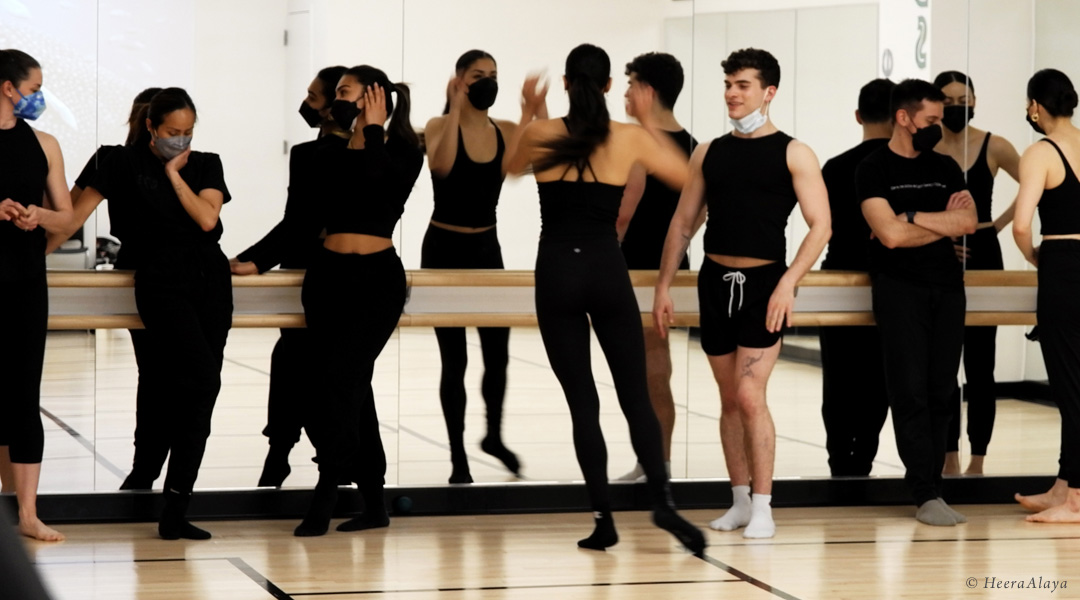
Do you have specific rituals to stay organised?
I am a big believer in getting up very early. I treasure my time from 4:00 am to 7:00, as I can get in a good six hours of clear work—before getting interrupted by the dogs, the household waking up and the phone ringing. Early mornings are when I write and research. For example, I am currently researching a potential new subject for a book, and I can go down the rabbit hole of exploration in my mind.
How do you keep your multiple projects on track?
In the past, I would organise my projects into distinct piles on my desk—there’s something about the tactile nature of paper that I find appealing (I’m a bit old school that way). But at the same time, my excellent assistant is amazing at Google folders, etc., which helps me stay organised. The organisation method can vary depending on the specific project.
From a business perspective, the one thing I do is that if I have a request for an email (or a call) that I can attend to immediately, I will do that so it doesn’t get put on a long list of things to do. I am the opposite of a procrastinator.
How has travelling influenced your personal growth?
Travel has been essential because it has helped me better understand American culture, how to engage as a global citizen, and informed my dances (I have been able to engage with other artists abroad and think about how different cultures are embodied through dance).
I encourage every artist to travel as much as possible while developing their aesthetic. It’s essential to step outside the studio; creativity is not just about four walls, especially when one of the walls is a mirror. This narrow viewpoint can limit your understanding of the world.
Is there a specific location that has had a profound impact on you?
Every place I have been has been impactful in different ways. For instance, my collaborations in Peru and dialogues in Pakistan and Afghanistan have been particularly transformative.
What prompted you to write your memoir, Chino and the Dance of the Butterfly?
The great quieting began with the COVID-19 pandemic. I was accustomed to getting up and running to meetings and going to the dance studios, and suddenly, everything shut down. During this time, I continued to lead our dance classes via Zoom, ensuring that the dancers remained active. While I was conducting museum classes, my dogs ran through, kicking a plant, and as dust lingered in the air, it felt as if the world was unravelling.
One morning, I found myself pondering: How did I get here? What is going on? How long is this [pandemic] going to last? For my own sanity, I needed to explore the past—to understand what I want to do with my life. What has been driving me my whole life?
I realised that with dance and non-profits, we are always in crisis management mode, always running. As a choreographer, I frequently plan initiatives two years in advance. Sometimes I am not even consciously in the dance studio, working on the project. When the chaos stopped, I thought: Oh, my gosh, I need to take a deep dive into how my work was formed, because this can help me live my life better when we get out of this pandemic.
What impact did the process of excavating memories have on you?
It was an incredibly enriching experience. It was shocking how many memories I had just stored away and hadn’t thought about for decades. Memories that were so important at one point in my life had seemingly faded into obscurity. I felt like an archaeologist, continually digging through boxes of old photographs, engaging in conversations with my mom and brother, and reconnecting with old friends from Santa Fe.
The main challenge was to assemble the pieces—like putting together a giant puzzle. I grappled with how to make sense of it all, not just for myself but for others who would read my book. My goal was to convey my life’s journey in a way that might also inspire readers to reflect on their own memories, lives, and futures.
What sets your memoir apart?
There is a notable scarcity of memoirs that focus on hyphenated Asian American artists and explore their individual journeys. It is also essential to recognise that there is a place within American arts communities for Asian Americans and for those with hyphenated identities in our contemporary world.
You mention writing parts of your book from a child’s point of view.
I didn’t want to skew my vivid memories by filling them in with adult memories. The sensations tied to my childhood memories—such as my mother’s rice cooker, the way she cooked, or the sight of her weaving and creating art—are incredibly strong for me. And I realised there are very much from a young person’s perspective. As a result, they were richer in imagery. If I were to analyse these memories through an adult lens, I might lose some of that visceral descriptive quality.
You also point out that “for a child, everything appears bigger,” and I agree with that sentiment.
Oh, completely!
I imagined I could touch the sky simply by placing a chair on a desk!
Right. Right. You know, sometimes children are born with this incredible wisdom, whether it comes from another life or they already know the encoding of this life. And over the years, it is unlearned, hidden, and locked away, like a child’s unbridled ability to feel suddenly bridled by society, by the family structure, by peers, by teachers. Gradually, they begin to unlearn their full potential. We must remember that we all have our full potential and figure out how to get back to it.
Dana, as we conclude our conversation, I want to compliment you. Your spoken word is similar to your choreography—you create a stillness to gather your thoughts and articulate them beautifully.
Oh, thank you. It’s so lovely of you to say that. It [coherent communication] comes with growing up, trying to figure out different cultures and communicating clearly. Sometimes a word comes to me in Spanish before it comes in English; sometimes I wish to say it in Korean. Things get jumbled in my mind, so I stay calm.
Learn more about Dana Tai Soon Burgess.
BEING A BEACON
emblematic of my essence
THE MARIONETTISTS
The master manipulators
FRENCH LAUNDRY
restoring your soul’s hygiene
TAINA BIEN AIMÈ
“What was her life’s journey?”
OLIO NUOVO
custodians of culture
THE BIRD BATH
holding space: a home to feel safe
JO-ANNE MCARTHUR
Photographer for Animals, CA
“Cows are constantly re-impregnated, and their babies are taken away for slaughter so we can drink the milk.”