IN CONVERSATION
“My parents gave us a beautiful gift in life:
they taught us to be in touch with our feelings—to feel and understand others.”
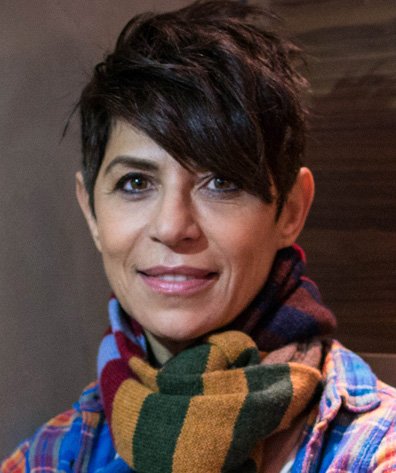
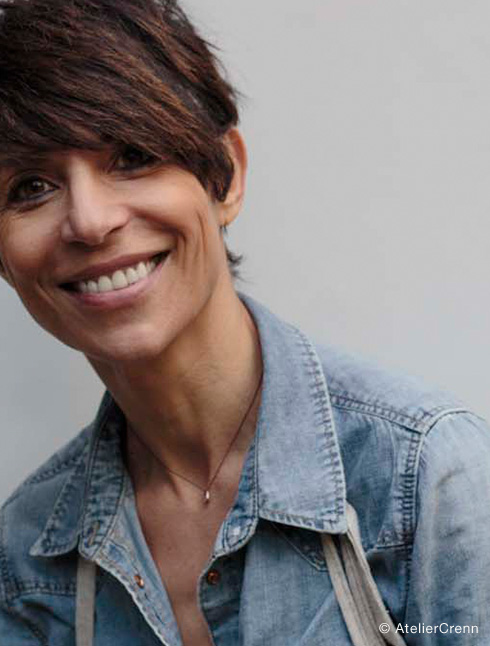
CHEF DOMINIQUE CRENN
Chef-Owner, Atelier Crenn, USA
January 1st, 2018
The World’s Best Female Chef, with her poetic culinary creations, stands out like a refined Ikebana, striking a delicate balance between flavour and aesthetics. Chef Dominique Crenn, of the esteemed three-Michelin-starred restaurant Atelier Crenn, has established her artistry through her remarkable talent and meticulous attention to detail. Chef Crenn’s expertise transports us to an indescribable realm, while her unique perspective encourages us to engage with life more mindfully.
Heera Alaya: You communicate through the language of emotions, a realm I am quite familiar with. Expressing emotions is viewed as a weakness; how do you infuse your feelings with power?
Chef Dominique Crenn: Many consider the expression of emotions to be a sign of weakness; for me, it is a profound strength. As human beings, we are all made of energy, and within us reside our feelings and experiences—they may be intangible, but they exist. It disturbs me that people fear vulnerability because connecting with our emotions is essential; otherwise, we risk losing our sense of humanity.
How do you nurture your sensitivity while harnessing its strength?
Sensitivity involves understanding your true self and finding your grounding. Sensitivity gives you humility. Moreover, when you start knowing what you are feeling inside and who you are, you can emerge as a stronger person in the world.
People who project toughness on the outside are the weaker ones. The work inside of them hasn’t been done; they are using toughness as a shield; it’s not impressive.
What influences your sensitivity?
My sensitivity is a combination of many factors. My parents gave us [Chef Crenn and her brother] a beautiful gift in life, and they taught us to be in touch with our feelings—to feel and understand others. This foundation has contributed significantly to my sensitivity. Being sensitive doesn’t mean you are weak; sensitive implies you are in tune with yourself and others, which is very important.
As I walked with my dad, looking at trees and feeling the breeze go through the leaves, my dad would tell me, “Trees and flowers are alive, and they have feelings; you have to pay attention to your surroundings, and you have to feel.” So I would sit for hours in front of trees or flowers, wanting to feel them, watch them move, and see them be alive.
Additionally, being immersed in the world of art from a young age has played a crucial role in shaping my sensitivity. Early exposure to art and music significantly enriches one’s emotional landscape.
You showcase your father’s paintings prominently at Atelier Crenn. What elements, emotions, or expressions does he capture in his artwork that make them distinctive?
My father was born and raised in Brittany, an extraordinary place in the world. The combination of the earth, the sea, and the sky (in Brittany) is quite magical. I have yet to experience that same energy anywhere else, except in Ireland. My father was very much a lover of the moment in time and nature; he was also in tune with what lies inside us, and this planet—we live on the surface, but what is under it? Most of his paintings focus on water, fruit, and flowers, immortalising what should be alive.
How has your father’s philosophy of life shaped you? How does your perspective on life translate into mindful living?
My parents adopted my brother and me, and their philosophy instilled in us an understanding that the world has many layers, including diversity, colours, and emotions. As humans, we are unique, but we also need to welcome diversity and be curious about the world. My parents’ philosophy also taught us never to think we are better than others, never judge anyone because we don’t want to be judged, and to respect our surroundings.
My parents were Catholic (my mother is still Catholic), and while I hold great respect for their faith, I am less religious myself. I believe more in energy and something greater. Central to my parents’ philosophy were ideals of equality, freedom, and peace; they gave me a sense of respect and humility, as well as a genuine concern for others, which was very important, and I am trying to practice these teachings.
In your book, Atelier Crenn: Metamorphosis of Taste, you reflect on your childhood with phrases like “when I was a little girl, as a child, as a kid”, suggesting that your memories are your heartbeats. Would that be an accurate interpretation?
Absolutely. Memories are indeed my heartbeats. Memories are what form you. For me, the past and my memories make me who I am today; every moment ushers in a beautiful light. This is why I find immense joy in recalling those moments. And I bring that joy—that taste I had years ago—through food, in celebration of those memories.
Does sharing profound feelings help to solidify memories?
Oh yeah, for sure. But remember, you create new memories that become part of the DNA. Forming memories is a continuous process; it’s endless. The initial memory gives you the core of your soul, your way of thinking, and your way of living.
You grew up in Versailles [France] and studied in Paris, yet your childhood memories from Brittany seem particularly vivid and distinctive. Is it, as you mentioned earlier, because Brittany holds a certain magic, or is there more to it?
Brittany is indeed special and vibrant, because everything I did with my parents there was purposeful, allowing me to treasure each moment deeply. The experiences I had in Brittany are so significant that they remain etched in my memory.
What inspired you to establish Atelier Crenn?
I despise the corporate culture, the commercial aspect of my industry, and the resulting disconnection it creates. People wanted me to be a certain way, and I didn’t need that. Moreover, we live in a world of instant gratification; I didn’t want to be a part of it. I wanted to create a special business for my team and me.
I have more respect for people doing their own thing with a story behind it than those who follow others because it’s trendy.
What contributes to the effectiveness of your leadership style?
Leadership is not being a boss. It’s easy to be a boss; it’s not easy to be a leader. There are a lot of bosses out there, and they are not very successful. The bosses care about the money; they don’t care about the people.
A true leader will put themselves in others’ places and seek to inspire and be inspired by the environment around them. At Atelier Crenn, we operate as a team. We push each other to improve every day and try to be excellent. We maintain a culture of respect and open communication. For me, the priority lies not in financial gain; it’s the people; it’s humanity.
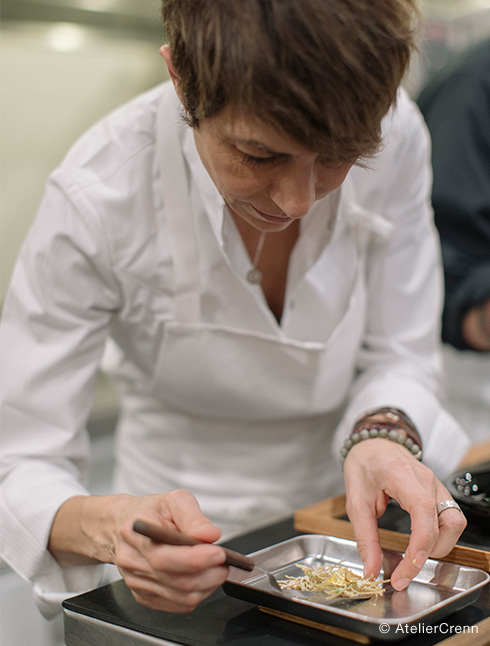
Does your nature naturally lend itself to creating with artistic intent and consciousness?
When raised with a philosophy of consciousness and caring, it becomes the core of one’s thinking. Creativity is the next layer of your consciousness. You use what you know and who you are; it develops organically.
What role does imagination play in your poetic culinaria?
Oh, imagination is a big thing in creativity. So, when we look at life, we must ask: Is it an illusion or a dream? Or is it a reality when you are in a dream? Imagination allows us to transport ourselves to different places, and it is vital for nurturing the mind. Losing that imaginative capacity means sacrificing a great deal.
How do you keep your creative process fresh?
I maintain my creative vitality through engagement with people, museums, art, music, literature, theatre, nature, the planet, and also by listening to the craziness of this world. I don’t like how people who call themselves leaders are leading countries today—for the majority of them all over the world, it’s all about greed.
I aspire to create something inspiring and uplifting. I want to lead the way I want life to be. And if I can inspire others to change their ways, that would be great. I am not imposing anything.
Why do you create with seasonal ingredients?
If you want to be greedy, you use tomatoes 365 days a year, as that’s often seen as a means to maximise profits and cater to consumer demand.
However, it’s essential to work with what nature provides at a particular place and time—embracing seasonality, the contributions of the earth, and what farmers provide. Otherwise, you are violating the soul. Eating meat every day or consuming food from industrial farming is not natural.
How do our consumption choices lead to wastage and hunger?
Conscientiousness is crucial; everyone ought to develop a sense of responsibility regarding their choices.
From the beginning of time, food has helped you feed your soul every day. It’s like drinking water or walking; food is a part of your day. Yet we often over consume, filling our plates to the point of excess and generating significant waste. So there is a lot of waste. For example, in Brazil, 50% of food is wasted despite the prevalence of hunger.
In San Francisco, many people in the homeless community are starving, even though we are considered one of America’s more affluent cities. So it’s all about values. We have to rethink things. I don’t have the answer, but I know what we are doing right now is not right.
What complexities of everyday life motivate you?
Currently, I have three businesses, with more on the way. My priority is to care for the team working alongside me, ensuring they can support their families. To achieve this, you have to make money. But to make money, you have to be profitable. I do not want to make money by being comfortable and not following what I believe, so it took me longer to get to where I am today.
I am trying to do the right thing, trusting the money will come, but the main thing is to ensure I break even, so the people working with me are secure.
An essential aspect of Atelier Crenn’s culture is sharing meals with your team. Is this intended to promote camaraderie?
Absolutely. It’s important for us to invest in the team. I have no desire to live in a multimillion-dollar home or drive a luxury sports car. While some people value such things, I do not.
Why do you place such importance on cleanliness at Atelier Crenn?
Cleanliness represents purity and respect for one’s environment. You must ensure that the space you are in brings clarity to your mind. Where there is no cleanliness, there is no clarity.
How do your lifestyle choices align with your values and personal growth?
For instance, by choosing not to drive a large vehicle that contributes to pollution in San Francisco, I help preserve air quality and protect the climate. If I don’t go to McDonald’s and buy 10,000 hamburgers, I don’t contribute to industrial farming. I buy organic food; I don’t buy food that’s been treated with pesticides. It’s the little contributions that make changes. You have to make conscious choices.
I don’t serve my kids macaroni and cheese out of the box; I prepare homemade meals and explain where our food comes from. I don’t want to buy a piece of chicken that is packaged in cardboard and plastic. This chicken is not even chicken; it has been produced by ten thousand chickens living in a box. Instead, I prefer to buy from a local farmer who has 10 chickens. At least I can appreciate the life of that chicken. I strive to be mindful and intentional in my choices.
What’s the distinction between perfection and evolution?
Evolution is the core of growth. Perfection, on the other hand, is about repetition; when you refine a task over time, that becomes your benchmark for life. There’s a stagnation in perfection, whereas evolution embodies continuous movement. The world evolves every day, and we must adapt to it. Engaging in this movement allows us to retain a core of excellence while striving to improve every day.
Were there any small lessons you learned the hard way?
I didn’t learn anything the hard way. While I’ve faced struggles, I never let them defeat me. I am serving the world and the people around me and learning to be a better person. I have been lucky in life to have good people around me.
How has on-the-job training aided your development while still allowing you to retain your essence?
School gives you some good structure, but I got structure for my craft from my parents, who taught me how to do things. After that, the real learning happens in the field. For those who haven’t attended school, it’s more flexible, and it’s better to try being more creative when you don’t have any set expectations.
How can fathers create lasting memories with their children?
You can tell children a story about your world, but be curious about who they are and how they feel. Parents are not curious about their children nowadays; they don’t ask: “How was your day today? Did something happen? Tell me about it.” You need to go back to making connections. This investment in children will be impactful when they grow up 20 years from now; children will remember those moments. fondly recall my father asking me questions and my mother, while standing by the ocean, asking, “What do you see? What is the colour that you see?” My parents were curious about what I saw; that is very important.
It’s also essential to stimulate children’s curiosity. Encourage them to express their feelings and foster an environment where they feel comfortable asking questions. Ask children questions when you are with them in the fields or by the water. Avoid imposing your own thoughts onto them.
What kind of dialogue do you want your poetic culinary creations to evoke?
I hope it evokes a dialogue that reflects an open mind—about others, diversity, and what we do at Atelier Crenn.
How do you nurture and replenish your soul within the demands of a life that often requires perfection and long working hours?
[Laughs] I prioritise meditation, quality and balance.
Do your pursuits as a chef and quests as an individual differ, or do they seamlessly merge?
Oh, everything is merging. We talk the talk, and we walk the walk.
You mentioned: “Atelier Crenn was a part of my dream, but when you realise a dream, it’s not a dream anymore. Other dreams come to you.” I wish you to continue to dream, and for all your dreams to come true. Merci beaucoup.
Thank you very much for your time.
Learn more about Chef Dominique Crenn.
FRENCH LAUNDRY
restoring your soul’s hygiene
BEING A BEACON
emblematic of my essence
OLIO NUOVO
custodians of culture
BERNADETT TUZA RITTER
A Woman Captured
THE MARIONETTISTS
The master manipulators
TAINA BIEN AIMÈ
“What was her life’s journey?”
GENE BAUR
President, Farm Sanctuary, USA
“When humans treat other animals with cruelty, it dehumanises us,and we start rationalising violence.”