IN CONVERSATION
“Stripping away Edith’s personality made her believe she couldn’t
live without them; this is manipulation by people who enslave others.”
BERNADETT TUZA RITTER
Independent filmmaker, HU
April 12th, 2021
Bernadett Tuza-Ritter is an accomplished Hungarian independent filmmaker renowned for her creative documentaries and fiction. Having studied directing and editing at the University of Theatre and Film Arts in Budapest, she has also contributed as an editor to several feature films and documentaries. Tuza-Ritter’s poignant and well-crafted documentary, A Woman Captured, set in rural Hungary [Central Europe], highlights the story of a protagonist ensnared in modern-day domestic servitude. A Woman Captured, Tuza-Ritter’s first documentary, received significant recognition, being nominated for Best European Documentary at the 2018 European Film Awards and for Best Documentary at the Sundance Film Festival the same year. A Woman Captured garnered multiple accolades, including the 2018 Hungarian Film Critics Award for Best Documentary, the Objectif de Bronze for Best Film for Human Rights at the 2018 Millennium Film Festival in Brussels, and the Golden Athena Award for Best Documentary.
Heera Alaya: The initial concept for your five-minute film—a school project—was to capture just one face. How did this theme evolve into A Woman Captured, a documentary about enslavement in rural Hungary?
Bernadett Tuza-Ritter: A few years before I began filming, I encountered Edith [the name given to Marish by her captors—Eta and her family] by chance and found her face intriguing. At the time, I knew she was employed, although I wasn’t aware of the full circumstances. A few years later, when I needed to complete a school project, I sought permission to film Edith for a few days. After a few days of shooting, Edith told me that she was not only not paid for her services but also sent to work in a factory, handing over her saraly to her family [Eta’s]. This unpaid labour and handing over wages from another job were the first signs that something was wrong.
When I applied to the Hungarian Film Academy to study documentary directing and had to make a film depicting a day in someone’s life, my idea was to make a short film on Edith. Since she had mentioned a few things, I wanted to follow up with Edith. This marked the beginning of my journey in documenting her story.
What fuelled your ambition to direct, and how did your experience assisting others in direction and scriptwriting prepare you to lead A Woman Captured?
I wanted to direct since I was sixteen. I applied to the Hungarian Film Academy several times, but when I wasn’t accepted as a director, I made the choice to study editing first. During ten years of editing and working as a script supervisor, I learned a lot from other directors and professional filmmakers in many fields.
When I embarked on this film, I had ten years of experience in the film industry. And though I didn’t feel like a first-time director, I frequently encountered skepticism, particularly from financiers, who questioned: “Why should they trust a first-time director?” This negative attitude was annoying, but I kept moving forward with my ideas. Simultaneously, I reapplied to the Film Academy to study for a Master’s in documentary directing, and they accepted me.
Does balancing multiple hats—writer, executive producer, director of photography and editor—come naturally to you, or did circumstances compel you to learn various aspects of filmmaking, which you now handle with competence?
Circumstances led me to be in several roles. With my documentary [A Woman Captured], the access to my protagonist was based on trust, and the family [who enslaved Edith] restricted the presence of other crew members in their home. In addition to doing the camera work, I had to finance the filming myself, as I didn’t have producers till the escape scene [when the protagonist escapes from her captors]. During the post-production, I tried to work with other editors, but in the end—having worked as an editor for ten years before filming this documentary—it was easier for me to handle the editing. My background as a script supervisor on several features also made me feel comfortable on set. However, I was grateful when producers and other crew members came on board.
How do you select your cast?
The cast is the most essential aspect of a film. In fact, I believe that fifty percent, if not more, of a film’s success hinges on the cast. It’s difficult to pinpoint exactly what I look for, but I am drawn to characters that I can envision in an exaggerated, cartoonish manner. And it’s also essential to be natural and photogenic.
I understand that you filmed with a single camera, which you held for the first time.How did this solo approach enhance the development of your relationship with the protagonist and contribute to storytelling?
Working independently was the only way to earn Edith’s trust and get close to her. So, having the camera in my hands felt advantageous—I could respond to her in real-time.
Even when collaborating with a Director of Photography [DoP], I still long for the experience of holding the camera myself. Doing the camera work myself allows me to express my thoughts with precision. However, I must admit that the result may not be as visually stunning as when executed by a professional DoP.
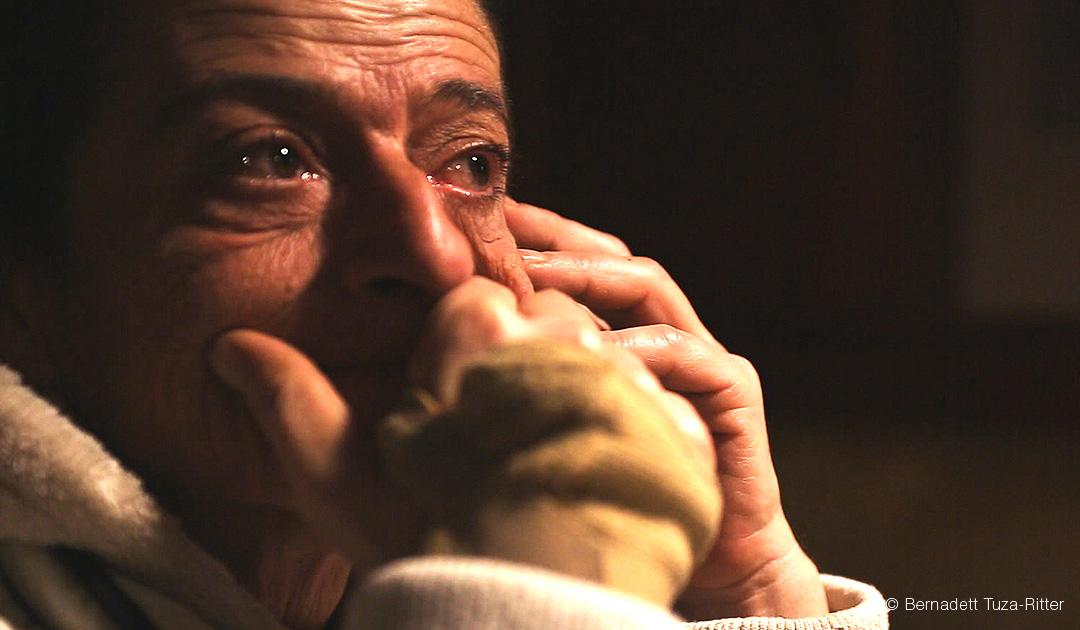
In A Woman Captured, the use of natural sounds, along with close-up shots amplify the narrative. What were your instructions for the background score to ensure it doesn’t overpower the natural sounds?
My only instructions were that the music must be natural, focus on the protagonist’s emotions, and not become more important than the film. The final piece is an opera, which I chose to feature at the conclusion of the film.
You intentionally use close-ups in your film A Woman Captured. I observed a similar emphasis on close-ups in your film Just the Way It Is. What considerations are at the forefront when you plan your storyboards and frames?
I wanted to bring the protagonist’s [Edith, the enslaved woman] emotions as close as possible to the audience so they could understand her feelings, so I decided not to focus on anything else but her. And close-ups worked well with the circumstances, as the family didn’t let me show everything. With Just the way it is, I had to start shooting the same day the producers asked me to make the film, and I had only five days to shoot, so I didn’t have time for any concept. Focusing on emotions has always important for me.
Why is focusing on emotions vital to you?
Simple storytelling doesn’t interest me; it’s always more interesting to show how a person feels in that moment, depending on what’s happening to them. Since this was my original idea, choosing to use only close-ups allowed me to go deep into the story and help people understand my protagonist’s feelings and what it feels like to be in her situation.
How do you balance your personal empathy and professional responsibility?
It [striking a balance] was not as difficult as it seems because I listened to my heart and placed my protagonist first and my film second.
I wanted Edith to feel comfortable in my presence and told her at the beginning that if she didn’t want me to film something, she had the right to stop me; I would put down the camera. When I had the final cut, Edith was the first one I screened the film at home—for her to voice if she didn’t like any part or if she wanted something changed.
Your film’s arc transitions from darkness—engulfing an exhausted, enslaved person—to light—lifting a joyful, liberated woman. Were you able to plan the film’s graph despite the unpredictable unfolding of your protagonist’s life?
I always had a plan, but it constantly changed. Before the day of the escape, I visited various locations to ensure we would be safe if Edith chose to escape. Also, as I wanted Edith to make all the decisions, I asked her which direction she preferred to escape—towards Budapest or into the country. I tried to make new plans depending on her [Edith’s] decision.
What does it take to navigate constant unpredictability?
I always enjoy improvising on set, so I had no problem with constant changes. Of course, there were moments when I wished I had a sound recorder or additional assistance, as it was challenging to manage everything on my own while balancing school and work commitments to fund the film. I was running from one place to another, but the freedom it afforded me was far more important. Throughout the shooting, I stayed in touch with several individuals who offered help when needed.
You worked on your documentary for nearly two years while working three jobs. How did you retain your focus on a profound subject?
Retaining focus on a profound subject was largely influenced by my experience as an editor. I approached the filming of Edith with an editor’s mindset. While filming [Edith], I was editing someone’s feature film, which helped me stay focused. I also finished school at the same time, so I knew how to concentrate on the cuts and my storyline in post-production. Whether I was working to earn a living, studying, or filming my documentary, my continual engagement with film made it easier to stay focused. At times, I screened footage for my teachers and classmates to get their feedback, which greatly helped me. Sleep was difficult—I hardly got a few hours a day.
After watching your film, I learned that your protagonist’s real name is Edith (not Marish). How does changing a person’s name affect them?
Changing a person’s name is a common practice by people who enslave others, as it serves to strip them of their identity, an important psychological factor. I witnessed that Eta and her family made Edith dependent on them during her ten-year stay by confiscating her identity card and papers. This deprivation extended beyond paperwork; it encompassed her entire personality. This stripping away of Edith’s personality made her believe that she couldn’t live without them, and I think this illustrates the manipulation tactics by people who enslave others.
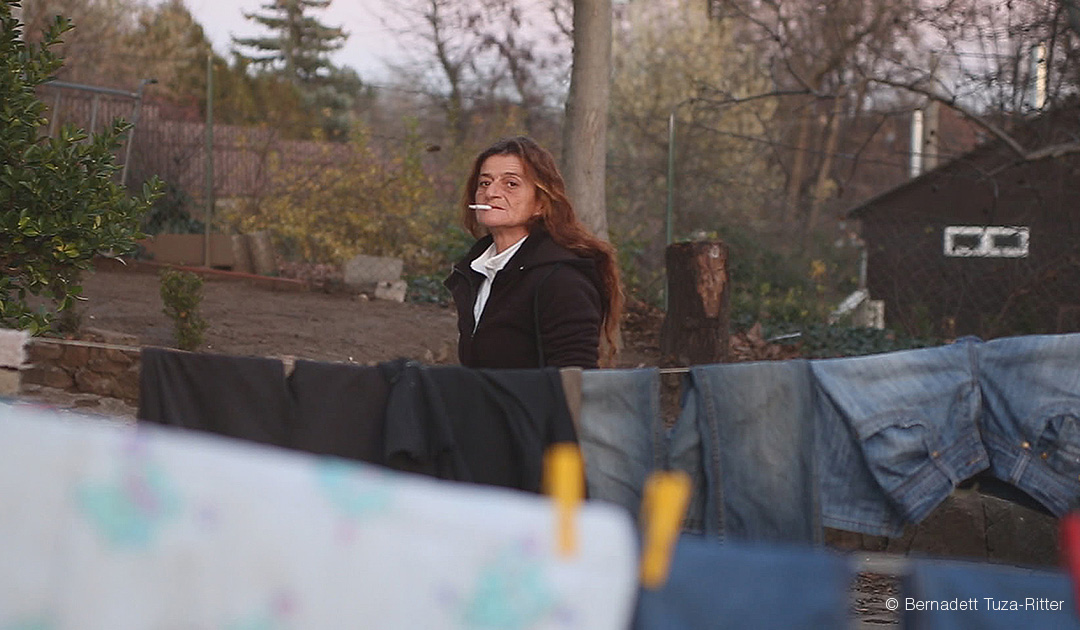
What are the repercussions of enduring years of abuse and intimidation, as we saw in Edith’s case?
Such abuse is not something one can easily forget after being in that situation for a decade. It’s possible that Edith may always contend with post-traumatic stress disorder as a result.
I was happy that Edith found a place at a social organisation, but at the same time, I think she didn’t spend enough time there (she left when her grandchild was born) with access to a psychologist. One year to work on this deep trauma level is insufficient; victims need a much longer recovery.
Edith is exceptional and has a strong personality, which immensely helped her. And she had my support.
How do we participate in making victims invisible?
This question is complex. Coincidentally, I stumbled upon the topic of modern-day slavery; it was not something I actively sought out.
When I made this film and shared the subject of modern-day slavery with friends and colleagues,: “Oh, I know someone from my childhood who lived in the same village, and maybe she was a victim too.” There are many victims around us, but it is difficult to recognise them as enslaved people. Perhaps we are also hesitant to engage in conversations about slavery, which is why open discussions are essential.
And as you saw in my film, no one could help her [Edith]. Therefore, a robust social system is crucial in assisting those in distress. Accurate information must reach victims in secluded environments where outsiders cannot enter, and enslaved individuals may not even be aware that help is available. Usually, they don’t have a phone or internet access. So if the information can be delivered to the house by radio, on food boxes (for example, a milk carton), or through similar methods, it would help enslaved victims a lot.
We also need to report enslaved victims when we see them. And when people are aware of the existence of this phenomenon, we can help.
Equally important is the need to avoid judging the victims. During my travels with the film, I witnessed many people pass judgment on the victim, saying things like, “It’s her fault,” or, “In her situation, I would have easily escaped.” If only we could refrain from such judgments, it would be much easier for those enslaved to reach out for help and attempt to break free.
Edith worked a gruelling 12-hour shift at the factory and handed over her meagre earnings to Eta, her captor. Why?
Edith didn’t have a place to live, so she had to hand over her salary to the family who held her captive. Refusing to hand over her earnings would have subjected Edith to further abuse (and she was physically abused too). The family knew where Edith was employed and could easily track her down, leaving her with no option but to change jobs if she wanted to escape their grasp. However, it could be a week or a month before Edith found another job, and without money, she couldn’t do anything.
It’s impossible to leave captors easily. Edith needed to change her whole life. And if you think about how hard it is for us to make some decisions—not our entire lives—but only some parts of our lives, you can understand how extremely difficult it can be for Edith to make this monumental decision.
True.
Trust is fundamental to your documentary and crucial for your protagonist’s positive development. Beyond refraining from judgment toward Edith, what qualities of yours helped foster her trust?
At the outset of filming, it was essential to reassure Edith that she could ask me to stop filming at any moment. Initially, I didn’t ask anything; instead, I patiently waited for her [Edith] to open up, constantly checking on her feelings: Is she okay?
It took considerable time to build a rapport with Edith and earn her trust, as she was understandably hesitant to discuss the abuse she was experiencing. I never judged Edith, which made her feel comfortable enough to trust me and open up.
At one point in the film, you ask Edith if she feels upset about your decision to pay Eta to film. In response, Edith declares, “I am not doing this for money…I am happy that you are shooting this. If you manage to screen it just once, a few people might realise how people shouldn’t be treating one another. That everyone deserves respect, even those who have lost everything. They shouldn’t be hurt; they should be helped. I’d surely do that if things were the other way around.” What are your thoughts on this profound insight from Edith, an enslaved woman?
Edith’s declaration was a crucial moment, as she realised that the documentary and her move towards escape extended far beyond her individual circumstances—they were about something greater.
We [the filmmaker and her protagonist] engaged in a discussion about how a person should treat another, and I disagreed with the abuse inflicted on her. At the same time, I reassured her that I had her back and that she shouldn’t be scared. Although I couldn’t provide her with financial assistance or housing, I made it clear that if she chose to escape, I would stand by her side. And by telling Edith that she could live on her own, she started to believe in herself. These conversations helped Edith see herself from outside the situation—she began to see the bigger picture. Hearing Edith’s larger-than-life statement was a remarkable moment.
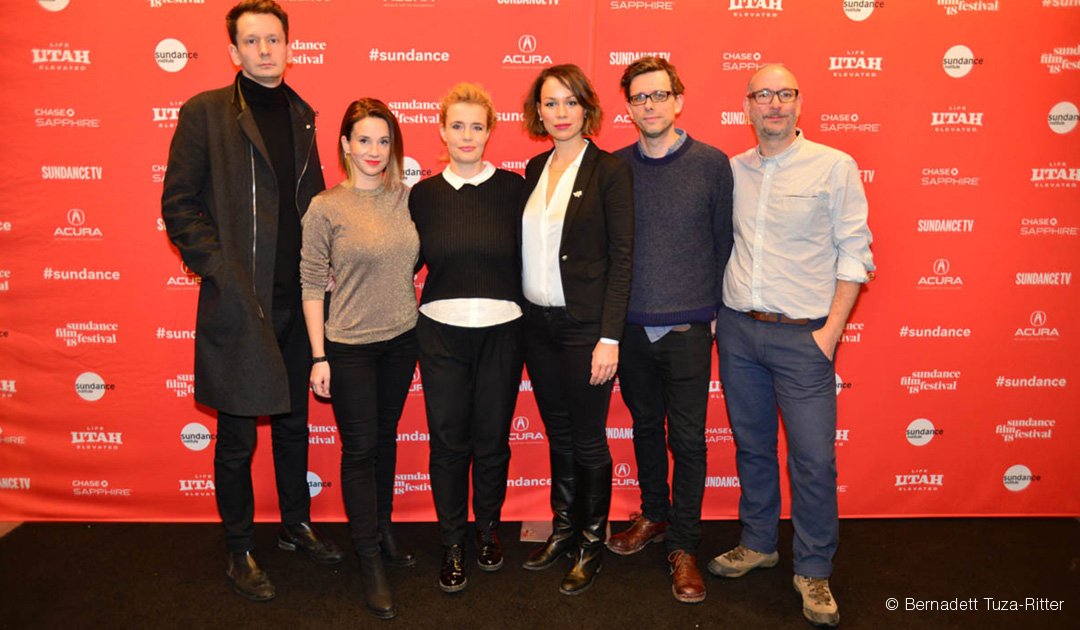
What role did your shared gender play in bringing you and your protagonist closer and in advancing the film to the point where Edith escapes?
Being a woman made it easier for me to get close to Edith, something that might have been more challenging for a man. Also, Eta and her family must have assumed that I was a young woman who couldn’t do anything serious and was attempting to do something with my camera. This assumption inadvertently worked to my advantage.
What does your film’s protagonist, Edith, think of your arrival in her life, her newfound freedom, and the audience’s response to her story?
Edith often referred to me as her best friend, which was a complicated sentiment for me. While I played an important role in her life by influencing her course and felt a huge responsibility for her, it felt like a one-sided relationship—she was not my best friend.
After Edith’s escape, we were in touch daily for nearly two years, and Edith needed my presence. But after a while (yes, she is my film’s protagonist, and I love her), I wanted to work on other projects, and bringing air into this relationship was very difficult.
You weren’t actively seeking out Edith or the subject of domestic slavery. Do you believe your encounter with her was fated?
I do believe that [in the fated meeting]. And we were fortunate because there were many difficult and dangerous circumstances. But at the same time, I don’t want to be engaged with this topic for long; I want to work on something else.
I understand. Have you begun working on your next project?
I have started a new project, but I’m unable to share any details at this time.
You make both creative documentaries and fiction. How do you strike a balance between the two genres?
I enjoy mixing the two genres, and I like to use fictional elements in documentaries. A documentary should entertain like fiction. The difference between the two [documentaries and fiction] lies in the ethical question of filmmaking, which sets the limits of a filmmaker’s imagination when making a documentary.
Have you discovered anything unexpected while documenting Edith that you didn’t learn during your studies in directing and editing at the University of Theatre and Film Arts in Budapest?
Absolutely. Working in the field can teach you significantly more than what you gain in a classroom setting. I never thought about casting earlier; it’s crucial to recognise the importance of choosing the cast, which accounts for fifty percent of the film’s success, if not more. I’ve also come to understand the necessity of breaking the rules. In school, you are taught so many guidelines, but when you enter the real world, you recognise that, apart from ethical rules, there are no
You encountered a stream of rejections. It would have been easier to make a film that appeals to producers. What inspired you to trust your instincts and pursue a solo project?
During the shoot, I spoke with various producers who expressed interest in collaborating, but I was determined to maintain my creative freedom.
This autonomy is also why I agreed with producers only after Edith’s escape. For instance, some people suggested: “Her [Edith’s] face is too boring to watch in a close-up for an hour and a half, so you should include other characters.” Some people said I should showcase the family [Eta’s], or that I needed a Director of Photography for more visually appealing shots. However, I stood firm in my decision. I wanted to follow through on my intentions and focus on financing the film later.
Starting the project without producers made it easier, as I didn’t feel the pressure to present them with something polished. I was free—free to experiment and to focus more on my protagonist than on the film. I could do whatever I wanted, which gave me enormous freedom.
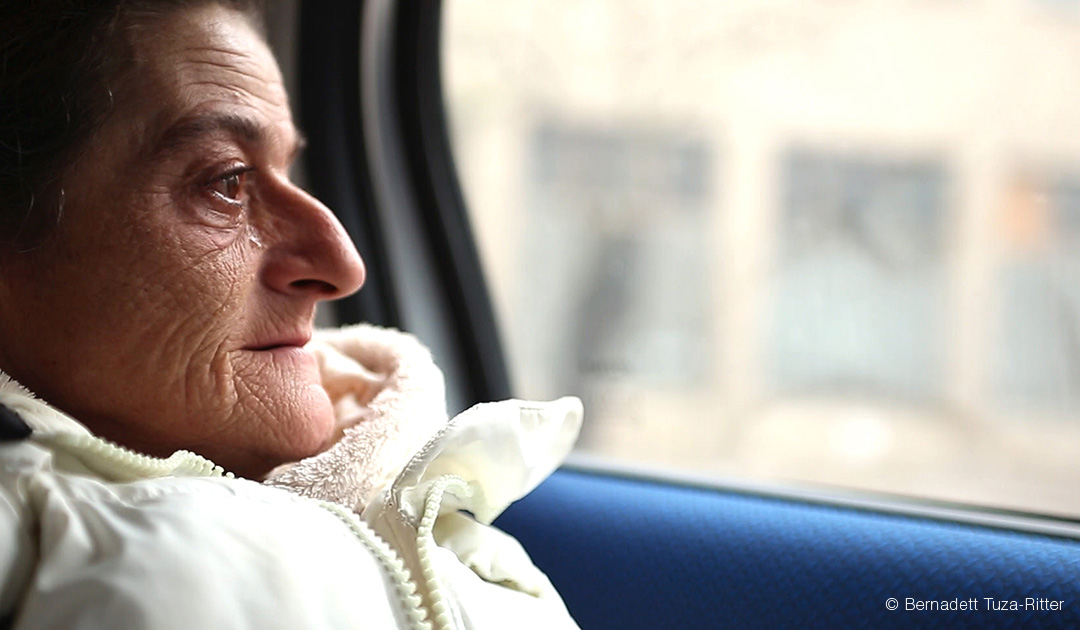
The producers of your documentary came in at the very end. What motivated Julianna Ugrin and Viki Reka Kiss of Éclipse Film to undertake its production?
Some producers love to participate in creative decisions, and I am open to listening to them, but I make my own decision. I chose to work with Julia [Julianna Ugrin] because I trust her to respect my creative freedom.
Julia came on board during the escape, and Viki [Viki Reka Kiss] joined us a few months later, after which they began raising money for the film (as I had been covering all expenses up until then).
We also participated in a workshop called dok.incubator—a post-production workshop that helped us a lot by building the storyline during the editing process, marketing, and other areas.
A Woman Captured had a global release. Where can viewers access the entire film?
Yes, the film has travelled worldwide and is part of a huge campaign against modern-day slavery. The film is sold on different platforms in different countries.
Among the numerous awards you have received, does any particular one hold special significance, and if so, why?
I don’t prioritise any one award over the others among the 36 the film has received. Winning the Best Film Director award is as important as the audience’s reception. It’s a great happiness to receive such acclaim.
And how are you handling this level of applause bestowed for your first documentary?
My focus while making A Woman Captured was not on acclaim. I was happy to help Edith escape her captors and document her journey. Also, I wasn’t sure if I could release the footage because Edith’s captors didn’t know the real topic of the film while I was shooting there, and I feared how they would react. After the release, they were really upset.
Of course, I was over the moon that the film was successful. It feels great to know that I was right in my decisions. There were other important issues during this process; for instance, we contacted organisations that deal with modern-day slavery to help them know this phenomenon exists.
You say: “I thought in the last ten years, everyone told her [Edith] what to do. So I really didn’t want to tell her what to do. Of course, I tried to show her that she’s a really strong woman who would be happier if she started a new life.” It takes a woman of strength and sensitivity to extend that same strength and sensitivity to another human being. Thank you, Bernadett, for being this individual.
Thanks a lot for watching [A Woman Captured] and for writing about it.
BEING A BEACON
emblematic of my essence
THE MARIONETTISTS
The master manipulators
CORONA DI ALLORO
wear your crown
FRENCH LAUNDRY
restoring your soul’s hygiene
EUDAIMONIA
amalgamations and elucidations
OLIO NUOVO
custodians of culture
GAURI MAULEKHI
Animal rights campaigner, IN
“How can the human race live knowing they cause so much pain, let alone justify the scale of cruelty inflicted on cows and buffalos that are blessed with such sensitivity? Cows and buffalos are attached to their offspring and other cattle in their herd.”