
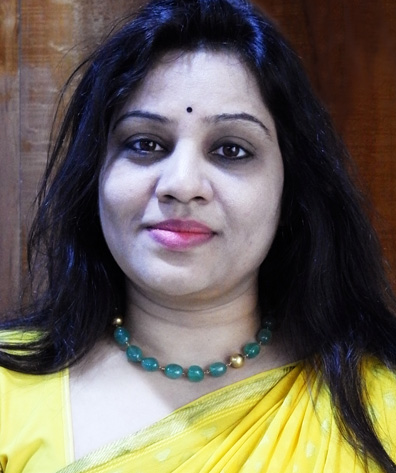
IN CONVERSATION
“An FIR is an endorsement of your complaint. If it pertains to a cognizable offence,
the police are required to register the FIR and provide you with a copy;
this is your right.”
D ROOPA MOUDGIL, IPS
IGP (Home Guards & Civil Defence), IN
March 21st, 2018
D. Roopa Moudgil, IPS, is the first female officer of the Indian Police Service from Karnataka, India, and has been honoured with the President’s Police Medal for Meritorious Service. In my conversation with D. Roopa Moudgil, she emphasises the values and principles that guide her policing, while also addressing the detrimental impact of corruption on society and the critical need for police accountability.
Heera Alaya: As a child, how were you exposed to the world beyond Davanagere?
D Roopa Moudgil, IPS: [Laughs] This unique question takes me back to my childhood. When I was in the fourth grade, there was no television; the radio was the primary source of entertainment. Every Sunday, there was an hour-long children’s program focused on the environment, which included a quiz segment in which children were encouraged to submit their answers to Akashwani, India’s national public radio broadcaster.
My mother encouraged me to listen to the program and helped me with the answers, which she would send to Akashwani. Approximately twenty to thirty children who provided outstanding answers were recognised with prizes. The prize ceremony was held at the Bangalore Town Hall, with the Governor of Bangalore, Khurshid Alam Khan, presiding as the Chief Guest. I was awarded a small microscope, marking the first time I ventured out of Davanagere for an achievement.
After that initial taste of success, did you travel beyond Davanagere?
Yes, I did. I participated in many district-level competitions and travelled to Chitradurga [an administrative district in Karnataka state, southern India] for contests and science seminars. When I reached the eighth grade, I came to Bangalore to attend science seminars organised by the Vishweshwaraiah Museum, which hosted events annually for both schools and colleges; I participated at both levels and was selected at the district level. When we visited Bangalore for science exhibitions, we stayed at the Mount Carmel Hostel and the Mitralaya Girls’ School. These are nice memories.
How did your home environment contribute to your foundation?
I grew up with working parents who were central government employees. My father was a BSNL engineer [Bharat Sanchar Nigam Limited, an Indian state-owned telecommunications company], and my mother was a Superintendent of Postal Services. With just my sister and me in the family, we were fortunate to grow up without experiencing discrimination.
Though our progressive working mother couldn’t give us quantity time, she gave us quality time. And she never told me: “You are a girl, and you will grow up to be someone’s wife, someone’s bahu [daughter-in-law], so you must learn to cook.” Even when I offered to help her, she insisted I study or prepare for the competitions I was participating in. This supportive attitude and progressive environment in which I grew up helped me a lot.
You chose to follow your father’s suggestion to join the Union Public Service Commission (UPSC) rather than your mother’s advice to pursue a career in medicine. What prompted this decision?
As a child, my initial thoughts about becoming a doctor revolved around injections, wounds, stitches, and surgeries, none of which particularly appealed to me. My father’s suggestion was in line with my personality—when my father explained the roles of IAS and IPS officers, the leadership aspect was attractive.
How did you maintain your commitment to becoming a civil servant from the age of eight?
There was simply nothing else I wanted to do besides joining the civil services. Moreover, I excelled in my studies. In my tenth board exams, I ranked 23rd in the state, after which I immediately shifted to Arts. People said I was making a foolish decision: “The way you study, you can get an engineering or medical seat.” But my mind was not made up for engineering or medicine. Why pursue something when it holds no interest? And I ranked 43rd in the UPSC Examination.
What factors shape your honesty and courage?
My outspokenness takes some people aback, but they get used to my attitude after they know me. As a child, I didn’t face many tests of integrity and courage, yet I have embodied these qualities since birth. I never cheated on exams, and I felt bad when I saw others cheating. Once or twice, I reported incidents to my teacher, stating, “Madam, she has copied.”
[Laughter]
During my training at the National Police Academy [NPA], the IPS trainees realised that I didn’t hesitate to report matters to the authorities. So, when they wanted to bring a matter to the authorities, they would ask me to do what was needed.
How did your immediate environment support your integrity?
We face many challenges after getting into services; my husband has been very supportive. Though in circumstances, I knew I was right, having the reassurance of someone close to me who was more knowledgeable than me gave me clarity.
It would have been easy for me to change my stance—many people do. I’ve witnessed others begin to do the right thing, only to back down later. Take, for example, Durga Shakti Nagpal, an Indian bureaucrat from the Uttar Pradesh cadre of the Indian Administrative Service, who faced suspension after demolishing a mosque wall. If she had acted in accordance with the law and stood her ground, she should have fought for what was right; instead, Durga Shakti Nagpal chose to remain silent.
When we commit to a cause, we must follow through. However, there is always significant opposition when individuals stand firm in their truth.
That’s certainly the case. When I submitted my prison report, some reacted by saying, “She [D Roopa] must have done this for publicity.” Others suggested, “She shouldn’t speak like that.” Even in a recent interview, I was asked if I was speaking for publicity. “Arre, what publicity? I took on Manargudi Mafia?”
I took a significant risk; the government could have reacted in a knee-jerk way and suspended me. But in my case, they couldn’t do that because I was not involved in that corruption case. I had been in my role for only 17 working days (or 25 when accounting for holidays) and reported solely on what I observed. So they tried a different angle, speculating that I didn’t get along with my superior. What does it have to do with the boss? What nonsense theories do you bring in?
You have discussed how unwarranted behaviour can rob individuals of their invaluable time and peace of mind.
Of course. The media also plays a role in this. The Kannada media made a mess of my report; thankfully, the national media gave my report some direction. When one reports on issues of maladministration and corruption, the focus should be on those concerns rather than questioning the motivations behind the report.
Every time a woman speaks out—whether it’s an actress discussing sexual harassment or women addressing issues that may threaten male interests, they will attempt to put up theories on why she is doing it; often attributing them to a desire for publicity. Damn with the reasons, first investigate—look into the things we have brought forth.
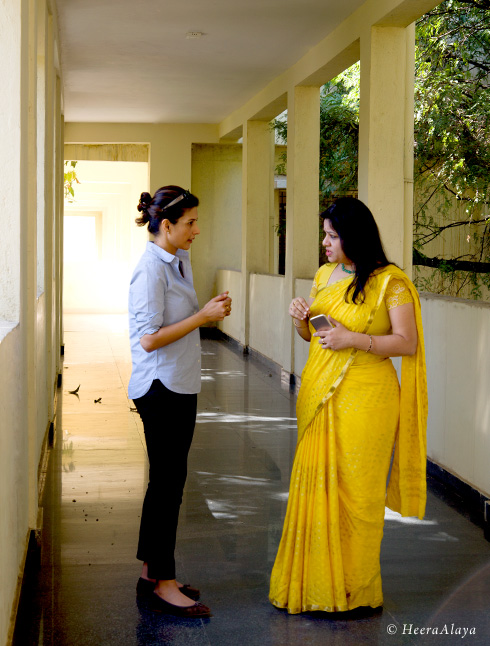
An FIR [First Information Report] is an endorsement of your complaint. If it pertains to a cognizable offence, the police are required to register the FIR and provide you with a copy; this is your right.
If the police don’t file an FIR, they must inform you if it is not a cognisable offence and give you an acknowledgement of your complaint.
It’s common for police to hesitate to provide a written copy of the FIR, but if they do offer an acknowledgement and it turns out the offence is cognisable, you can always take it higher up and get them punished. Always ensure you obtain something in writing from the police. File the FIR and request a copy, and if they fail to provide an acknowledgement, know it’s wrong.
Men often strive to downplay and dismiss women’s experiences. If you are a woman who remains silent, you are seen as a ‘good’ woman.
True.
Conversely, if you choose to express your opinions, you are labelled a bad woman or even a monster.
Yes. It’s common for men to remark: “Itna bolti hai [She speaks too much]; there must be something wrong with her.”
Beyond issues related to incarceration, were there other matters that required your focus?
In my role as DIG Prisons, I was technically responsible for overseeing the entire state. However, upon my arrival, my superior restricted my duties to three specific facilities: Bangalore jail, Tumkur jail, and a small open jail in Bangalore. My boss had intentions to promote an individual who had recently joined the ranks as a sub-inspector (SI) of police, even though an SI typically does not advance to the position of Superintendent of Police (SP).
After advancing to the role of SP, I subsequently became a DIG. As I approached my fourth year and was on the verge of promotion to DIG, my superior directed me to report to an individual who had been appointed under dubious circumstances, leveraging considerable political influence. This individual received the title of additional IG (Inspector General of Police), a position that did not officially exist—this title was essentially created for the SI. When my boss instructed me, “I am the DG, and I have the authority to make these changes,” I responded firmly, “You lack the necessary powers. Such an order must come from the government.”
Even as I navigated the challenges posed by the administration and endured its consequences, I continued to report my observations of significant corruption within the prison system. I was determined to keep administrative matters separate from corruption concerns. I kept my IPS association, including the president and vice-president, informed about my predicament. Despite my position as DIG Prisons, my boss sought to undermine my authority in favour of someone else—but regrettably, no one stepped forward to assist me.
I recently had a disagreement with my IPS association regarding a farewell for my boss. I questioned, “Why extend a farewell to someone who has acted against our interests, disregarded government orders, and attempted to undermine them through questionable means? My position may change, but the legacy of IPS officers will endure. How can we allow IPS officers to subordinate themselves to someone who does not uphold our values?”
When the police behave in such unfortunate ways towards you, can you imagine the difficulties faced by regular civilians?
I shared my thoughts on police conduct in our IPS association’s WhatsApp group. When I broached the topic of a farewell, one person said, “Don’t talk about this; he [the boss] is not in this WhatsApp group.” I told him to add the boss to the group. You can’t remain in denial. Some of my colleagues were unhappy with me. I told them they were insensitive and that, though I fought alone and poured my heart out to them, they were attempting to silence me. How can the general public expect anything from the same police officers?
The way the police treat the common person is both deceitful and condescending. Senior police officers may act politely, but only to gloss over the situation.
True.
Your tenure as DIG Prisons lasted a mere 17 working days. What did you learn about yourself during this time?
I had endured pressure earlier, too, but experiencing continuous pressure, along with being questioned by others and the media, helped me discover my ability to withstand it.
Is it true that you have been transferred twice within a year?
Yes, twice. Once, I was transferred thrice in a year, totalling 41 transfers in 17 to 18 years.
You say discomfort broadens our understanding of life.
You know about success only when you have tasted failure. Only when there are moments of sadness, when happiness comes, do you realise the importance of failure. If life is like a plateau, you don’t grow. Discomfort strengthens you and exposes many aspects of life, people, and yourself.
How do you define power?
Power is transitory, but people live in a state of “maya” [Illusion], believing it to be permanent. And power corrupts people.
Power can have different connotations, depending on the situation and the people involved. For instance, police officers create many levels of hierarchy, making it difficult for the public to approach them. I am surprised to learn that even in a city like Bangalore, educated and well-achieving people have no direct access to meet the Commissioner of Police: “Only if you know somebody they [the Commissioner of Police] will meet you, so could you please put a word?”
That’s true.
How does corrupt power manifest?
All the ills you see in the media every day are manifestations of corrupt power. This corruption often presents itself through nepotism, law-breaking, and a blatant disregard for the law.
How would you describe your power, and how does healthy power manifest?
I have always adhered to an open-door policy. It’s crucial not to let power cloud judgment or create distance from the common person; after all, it is the everyday individual we serve. While rules and laws are essential, one must approach the suffering of the common person with compassion.
First, I recognised that prisoners were not undergoing medical tests to screen for infections, tuberculosis, and HIV. I advocated for these tests, understanding that early diagnosis is key to effective treatment. Second, when I engaged with prisoners in their barracks—inquiring about their backgrounds and the circumstances that led them to incarceration—I discovered that many were languishing in jail without legal representation. The majority were poor non-locals from Tamil Nadu and Andhra Pradesh. I identified eight to ten individuals and facilitated their access to Free Legal Aid.
Ultimately, power remains constant; it is the individual in the position that can either enact positive change through genuine interest and empathy.
I want to encourage people that when police treat them poorly, need to elevate their concerns to senior officers. There is always someone higher up, including IPS officers, overseeing those on the ground. IPS officers are selected through rigorous examinations—ensuring a merit-based system devoid of corruption—and receive extensive training.
Why is it vital to uphold equality within the prison system?
When I reported on the special privileges granted to a VIP prisoner, accompanied by instances of corruption, some remarked, “What’s the big deal if privileges are given? Ek Sashikala ko de diya toh kya ho gaya [If privileges are given to one Sashikala, what’s the big deal?]?”
In my opinion, granting such privileges is a serious concern because crimes like dacoity or economic theft committed by the underprivileged often stem from experiences of discrimination and inequality. If the same conditions of inequality and bias are replicated within the four walls of the prison, the poor man is reinforced with thoughts that only the big man gets VIP facilities, so committing crimes is best—you have to take shortcuts and break laws to live comfortably. Therefore, establishing conditions of equality is crucial.
My report deserves serious consideration; it can serve as the starting point for significant prison reforms.
If the police are meant to serve the people, why do ordinary citizens—lacking wealth and influence—fear them?
While there are certainly good officers, our police force often lacks a people-friendly and fair approach. The police are always pleasing people in power. We have seen this pattern, particularly when a victim is impoverished and voiceless, while the perpetrator holds more power, the police will support the perpetrator. This behaviour is especially evident when a politician, a politician’s family, or a wealthy individual is involved.
Victims often face hostility when attempting to file a complaint at the police station, being subjected to delays or being made to go around in circles.
I want to encourage people that when police treat them poorly, need to elevate their concerns to senior officers. There is always someone higher up, including IPS officers, overseeing those on the ground. IPS officers are selected through rigorous examinations—ensuring a merit-based system devoid of corruption—and receive extensive training.
Most of us at the IPS level follow an open-door policy, and though there are many complaints about junior officers who tend to be harassing, it is essential to bring your concerns to the attention of senior officers; this can be effective.
What does the process of filing a First Information Report (FIR) entail?
An FIR [First Information Report] is an endorsement of your complaint. If it pertains to a cognizable offence, the police are required to register the FIR and provide you with a copy; this is your right.
If the police don’t file an FIR, they must inform you if it is not a cognisable offence and give you an acknowledgement of your complaint.
It’s common for police to hesitate to provide a written copy of the FIR, but if they do offer an acknowledgement and it turns out the offence is cognisable, you can always take it higher up and get them punished. Always ensure you obtain something in writing from the police. File the FIR and request a copy, and if they fail to provide an acknowledgement, know it’s wrong.
When is a case considered closed?
The investigation of a case can take anywhere from three to six months to one to two years, depending largely on the priorities of the investigating officers. Although supervisory officers are tasked with overseeing every case, the demands of VVIP bandobast [security] often divert police attention. Consequently, many officers end up meeting with the Chief Minister or the Home Minister rather than focusing on their core responsibilities. This shift in priorities has influenced the mindset of senior officers as well.
The underlying message to perpetrators is clear: “Don’t worry. Let victims pursue their cases; we are on your side.”
Indeed, the Indian Penal Code (IPC) mandates that investigations must be concluded within three months, or at most, six months. This means that victims have the right to ask, “What steps have been taken regarding my case?”
What exactly is VIP [Very Important Person] culture, and how does it contribute to the erosion of law and order?
India’s constitution is grounded in the principle of equality—the governance of the people, by the people, and for the people. Upon becoming a republic, the country abolished all royal titles, effectively turning former kings and rulers into ordinary citizens.
There should be no VIPs. Although the law does not allow for inequality, some individuals attain VIP status through their long-standing positions of power or influence. These VIPs often take their privileges for granted and exploit them. For example, under VIP culture, politicians face no real threats yet are assigned policemen as bodyguards, primarily for show. Frequently, these officers are repurposed to run personal errands.
VIP culture is about getting preferential treatment. I have highlighted instances of special privileges granted to a politically influential prisoner, which are not sanctioned by law.
What undermines law and order in society?
Law enforcement officers can maintain law and order when they act strictly in accordance with the law and resist external pressures. The problem arises when they succumb to partisan influences—favouring one party over another.
What role do civilians play in upholding law and order in society?
Civilians play a crucial role in maintaining law and order. If you witness vandalism or crime, it is essential to report it to the authorities. Unfortunately, many people adopt an apathetic stance, thinking, “It’s not my problem; why should I get involved? I might be harassed at the police station.”
As responsible citizens, we must be willing to go the extra mile. This may involve enduring some discomfort, but it is a risk we must take. Everyone has a role to play; we cannot simply say, “Let others handle it; I shouldn’t be bothered.”
What is corruption, and what are the long-term costs of corruption to society and humanity?
Statistics indicate that corruption costs society around $100 billion each year. But let’s look at the simple things in our day-to-day lives—you give a bribe and get the job, but by offering a bribe, you have made a meritorious person lose his daily bread. Citizens should develop empathy and realise that it’s not right to act unfairly. We all think that corruption is abstract, but day in and day out, we see and participate in it.
A bribe is generally monetary, but at times, it can be in the form of other services—like a resort stay for three to four days for the family of the person you are bribing—for getting undue favours. Corruption reinforces inequality and discrimination, dividing the haves and the have-nots.
What qualities empower an individual to make the right choices?
In my experience, it stems from the understanding that I have nothing to fear or regret about my past, and that I hold no personal stake in the future. For example, I am not obliged to anyone in my position, as I know I will not curry favour for cushy, prestigious postings, foreign tours, or other privileges, and that I will always act in accordance with the law. Second, you must be clear and competent in your work, knowing what is right, what is as per law, and what is not.
Does contentment play a role in staying true to yourself?
Yes. A sense of contentment and the respect I earn from everyday people are significant factors in my ability to stand in my truth.
You were recently honoured with the President’s Police Medal for Meritorious Service. What does this recognition signify to you?
While dealing with multiple pressures, this recognition motivated me further. The President’s Police Medal for Meritorious Service is also a responsibility—to become a better person and be more responsible towards society.
Learn more about D Roopa Moudgil, IPS.
TAINA BIEN AIMÈ
“What was her life’s journey?”
RECLAMATION
owning my narrative
GLORIA STEINEM
we are linked to other people
AJEET SINGH
we know of a baby who was raped
THE MARIONETTISTS
The master manipulators
LOTTIE ALLEN
Hidcote Manor Garden
ALLISON ARGO
Documentary Filmmaker, USA
“Resiliency is another quality that comes to mind with the individuals I have filmed and profiled. They [animal individuals] have been through so much, yet they are still willing to trust.”