
IN CONVERSATION
“Chatting with Bob made me realise that I couldn’t eat
eggs, drink milk, or consume dairy products.”
ALLISON ARGO
Documentary Filmmaker, USA
November 20th, 2016
Allison Argo, a multiple Emmy Award-winning visual storyteller, artfully merges her deeply held values with her craft to create thought-provoking documentaries. Her films, including The Urban Elephant, Wisdom of the Wild, Parrot Confidential, and the more recent The Last Pig, lead viewers on impactful journeys, educating them on various subjects and fostering a more profound sensitivity toward animals.
Heera Alaya: Dr Linda Koebner’s heartfelt words—”Hey, remember me?”—directed at a chimpanzee in your film, The Wisdom of the Wild, resonated deeply with me. This scene encapsulates compassion through its tone, setting, and background sounds. How do you construct your narrative to convey your message with such sensitivity?
Allison Argo: What an interesting question. I take journalism very seriously because it’s important to present information that helps people make informed, humane choices. Let’s say the topic is chimpanzees in North America. I try to understand the history—what chimpanzees are like in captivity, why they are in captivity. Then, I try to find stories that actively illustrate these different topics. For instance, Linda [Koebner] returns to see her old friends again; it’s dramatically fascinating and exciting to be right there with Linda and the crew, waiting to see what will happen.
You will see a couple of consistencies in my body of work. One is that I think of all beings—whether they are human beings—as individuals. And because of that, I focus on individual animals rather than an entire species. Take chimpanzees as an example: if you see a cage of 10 chimpanzees, they appear as black, furry creatures; you don’t get the insight that each one is unique. By shining a light on them as individuals, people can have more compassion because they see them not as a thing but as a being.
I also hire incredibly talented cinematographers, as I care about cinematography quality as much as I do sound quality. I write the narration after editing the film, because the film tells me what the tone of voice should be. These elements are imprinted on my work. It’s not something I do conscientiously; it’s who I am and how I relate to other species.
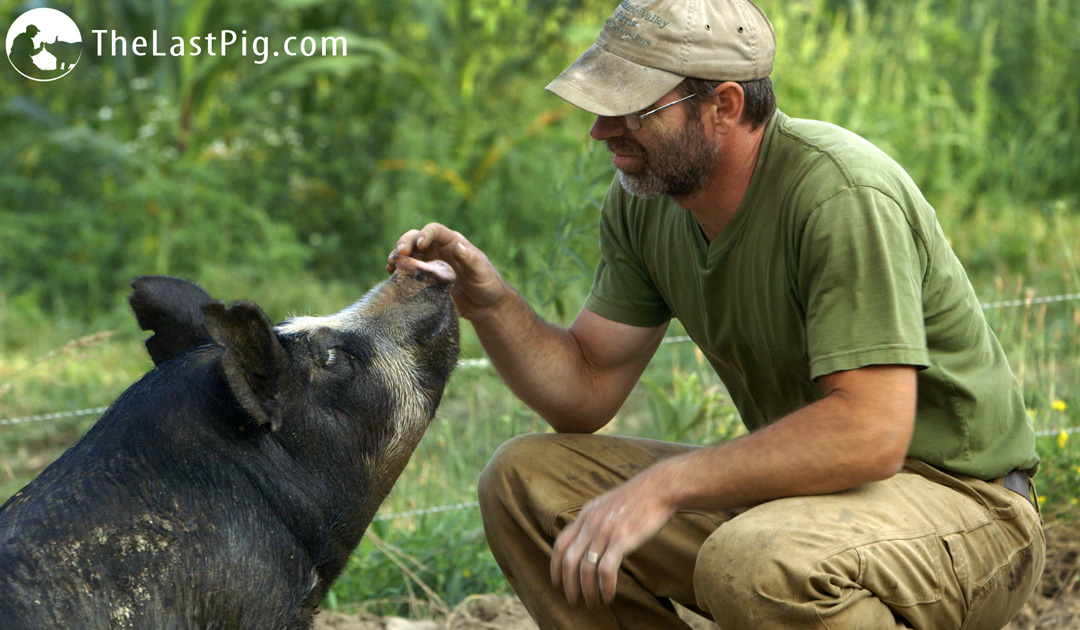
I encountered a similar aesthetic when I clicked the link to The Last Pig. Although I was unfamiliar with the pig farmer Bob Comis, the sight of a black-and-white pig gazing directly at me with soulful eyes piqued my curiosity.
The Last Pig will make a difference for pigs because it’s evident that each pig is soulful, intelligent, and unique. We captured this essence in the fields, where we shot for almost nine months, for a week each month.
In the process of immersing ourselves, we saw some of these pigs grow up. You see the pigs through the eyes of farmer Bob, who evolves when he decides that he cannot justify taking them to slaughter anymore. It’s a very moving transition Bob goes through.
Why did you title your film The Last Pig?
Bob saved eight pigs and sent them to sanctuaries. But as Bob phases out of pigs, there will be the last pig that goes to a sanctuary or slaughter; it’s the last pig he will ever have.
What does the last pig endure?
Pigs are extremely gregarious and tightly bonded. It’s incredibly stressful for a pig to be in a foreign environment without its herd or mates. On seeing their buddies let off, the pigs go back and forth desperately. Sometimes, pigs get so upset that they try to leap over the bars, breaking their limbs. As humane as a slaughterhouse can be, Bob says it’s never humane.
Tell me about the beautiful black and white pig in the opening shot.
They are beautiful, aren’t they? That breed of pigs is called Berkshires, full of joy and curiosity. They [The Berkshires] enjoyed following us around so much that half of what I did on the farm was trying to lure them away from the camera.
[Laughter]
What do you aim to tell with The Last Pig?
I made the last pig to make people think. I hope that as people watch Bob, the pig farmer, on his journey, they go with him, ask the questions he asked himself, and are aware of the impact.
What motivates people to breed certain species?
Phoebe, who I featured in Parrot Confidential, had every kind of parrot you can imagine and didn’t realise how saturated the market was. She thought breeding parrots in captivity would stop the poachers from taking parrots out of the wild to sell them on the black market. And then they started realising that there was a surplus of birds; they didn’t need to bring any more into the world. It’s powerful when you find somebody who has had a realisation and has transitioned in their lives. I think that’s why Bob Comis’s story is compelling. It’s one thing for somebody to stand back and say: “Pig farmers are terrible; we shouldn’t be eating pork.”
It’s so much more powerful for someone to say: “Yes, I farmed pigs for ten years, and I was good at it, and I have decided it’s not the right thing to do for me.”
I recently came across an interview with Bob Comis in which he expressed hesitation about allowing someone else to tell his story, given that he is a writer. I can certainly relate to that feeling; there’s always uncertainty about whether someone will accurately convey your narrative. It was incredibly brave of Bob to grant you access to his story.
Very, very brave. And I feel incredibly blessed to be allowed to tell a story. I also feel a great responsibility when I am permitted to bring your story to the public. The night before I finish a film, I usually have a long, deep cry; it’s cathartic. I have given it my best shot and hope I did well enough, because they entrusted me with telling their story, whether it’s the pigs or Bob. I pray it gets out there and does its work.
Did you grow up surrounded by compassion?
I never really thought about it that way. I grew up in theatre, and I wonder if you are familiar with Tennessee Williams and other playwrights.
I am [familiar] with Tennessee Williams.
He [Tennessee Williams] sees people through a compassionate lens. We performed those plays at the theatre. We also lived with the acting company every summer, and it was an exciting environment to grow up in because no one was guarded; everyone expressed their emotions freely.
I feel fortunate to be influenced by my late mother, who was bright, interested, and fascinated by everything. My mother was passionate about life right up to the last breath. She [Allison’s mother] grew up in the South, in the 20s, when inequality existed between the White South and the Black South; her parents had some money, so they had help. And my mother couldn’t bear the disparity. She fanned a lot of my compassion towards other species.
How does your empathy facilitate responsible filmmaking?
Empathy is the most significant component of my documentaries.
For example, when I tackled the subject of chimpanzees, I would have done anything for the individuals we were filming. I want to deliver the chimpanzees’ story in the most respectful and emotionally engaging way so that others will see the beauty in other species. A key component of responsible filmmaking is sharing the depth of a person, Linda or Bob, while treating them respectfully.
How has spending time with animals helped you grow as a human being?
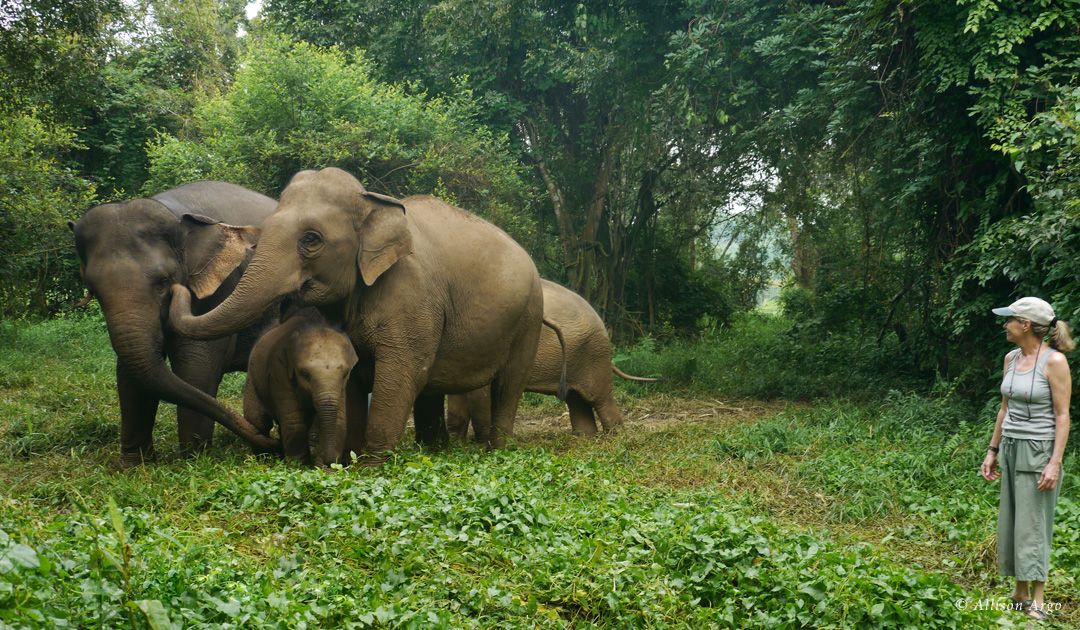
I have grown on a million different levels. I have learned the most from elephants, whom I see as the wisest and kindest individuals on the planet. Having observed elephants relate to one another and understand the depth of their relationships—I have never seen that depth in any human being or any relationship between human beings—it’s something I aspire to.
In my documentary The Urban Elephant, a film about elephants in captivity, there is an amazing scene between two old circus elephants who had been together 30 years earlier and had not seen one another since. Nobody knew or suspected that the elephants had known each other 30 years ago. When one elephant was brought to the sanctuary where the other lived, they practically broke the steel bar to get to each other.
To witness how three decades did not weaken the bond between elephants was moving. They were communicating on a level we can’t fathom. When I was making the film, I lost a dear girlfriend, and I wept for my loss and wept with joy for what the elephants had regained. The elephants’ example lives with me.
The pigs are incredibly social and very gregarious among themselves. If they are lucky, pigs naturally live in herds and are rare as a herd. To me, pigs are the ultimate community. I get isolated in my work because I edit from home; sometimes, there is another person, and I don’t need to go out for days. I forget to connect with my community when I am that isolated. I think about the pigs—I need to pay attention to that community, that humans thrive in communities.
Thank you for sharing the story of the elephant’s reunion. Many of your films have helped me experience emotions that society often teaches us to suppress.
That’s fascinating and so true.
A scene that resonates with me on multiple levels features Lorita, the parrot, who was unjustly caged and forced to watch freedom remain just out of reach. I deeply empathise with her suffering.
A parrot would be an odd choice of an animal with whom to identify.
Resiliency is another quality that comes to mind when I think of the individuals I have filmed and profiled. They [animal individuals] have been through so much, yet they are still willing to trust. And still willing to be alive despite some terrible acts of human violence. Some laboratory chimps are a great example; they pick up their lives where they left off and can thrive again.
How did you transition from an actor to a filmmaker?
I hadn’t found my path yet, and I went into acting. I did plays on Broadway and soap operas, then moved to Los Angeles and did movies. And I did well. However, I became increasingly isolated from the creative process, which left me creatively unfulfilled.
I was married to an incredible cinematographer. We became fascinated by Dian Fossey [American primatologist and anthropologist] and the reports she sent back from the wild about gorillas—they were gentle vegetarians sitting in groups. All of this was groundbreaking at that time. We started going to zoos and seeing the inconsistencies—what we were learning about how they lived in the wild and what we were allowing them in captivity. I started saying, “We need to make a documentary about gorillas in captivity,” and we embarked on The Urban Gorilla.
Are you a self-taught filmmaker?
Oh yes, entirely self-taught; I never attended any filmmaking classes. I would love to return to school now because technology is advancing quickly. My strongest qualities are storytelling and compassion, which make me passionate; they give me the energy and drive to get up in the morning and complete a film despite the odds. Take The Last Pig, not a penny has gone to my co-editor and the composer. And yet, it’s all about passion for getting a message out there. When I feel discouraged, all I have to do is look at some images of the pigs, and I am motivated.
What does it take to make the switch?
Passion. Passion can motivate you. You are not even aware of how creative you need to be because all you care about, in my case, is getting the word out about gorillas living in captivity—to show their abysmal treatment. And I didn’t know a thing about filmmaking.
Sometimes, being unequipped is the best way to approach things.
I agree. My film school was the three years I spent making The Urban Gorilla. The turning point was when we went to Takoma, Washington, in Washington State. We had heard about a gorilla in a shopping mall, and we couldn’t believe it was true in the United States. So we flew to Takoma, and there was this little, tacky, low-end shopping mall, and sure enough, there was a full-grown silverback gorilla at the very back of the store. His name was Ivan, and he had not seen another gorilla for 30 years. Ivan had been living indoors, in a concrete cube and a trailer; that was his life for 30 years.
Ivan was on display, and people would come into the store to see him and buy something. This horrific sight was the real catalyst. I started producing this documentary and couldn’t raise funds because I hadn’t made a film before. Eventually, the word trickled down to National Geographic, and they called me. Upon seeing the film, they took it on and aired it on National Geographic. The great thing was that the film helped catalyse a spark in the movement that had already started—to speak against keeping any gorilla alone, in isolation. The store went bankrupt, and Ivan was sent to a zoo in Atlanta, where he lived with other gorillas in a more natural setting.
On seeing the film bring about concrete change, there was no turning back; it was empowering and inspiring.
What inspired you to start your company (instead of directing for someone else)?
First of all, I want to pick and choose my topics. I don’t want somebody to say: “Okay, you are going to make a film on widgets because that’s what is popular right now,” or “We need more films about light bulbs or computers”; it wouldn’t fulfil my mission or my emotional convictions. Also, I have never worked for anybody; I have always been self-employed.
National Geographic often asked me to become a staff member, but it would go against the grain of who I am and impede the types of films I want to make. The way my filmmaking unfolded, in the first film, I did everything myself. So, I have just continued that way. I wish I could collaborate with someone.
How do you assemble your team? Beyond expertise, what qualities do you prioritise, and why?
The most important aspect of being on the team is being kind and sensitive. A documentary can only be as good as what we shoot, and we cannot get any decent interview or relaxed behaviour from the animals if someone is harsh, judgmental, or rough. I work with wonderful, sensitive people who have the skill set.
While working on the chimp film, I knew Andy Young had to be the cinematographer—he had filmed primates before and understood them. We would sit with the chimps before we filmed, and Andy would show them the camera and let them touch it (there was a mesh in between). Andy, pointing to his camera, would say, “This is a C300,” and the chimps would be in raptures, listening to him and looking at the camera. Andy would carry on, “This lens is, and this is the on-off button, and you can look at your reflection in the lens.” So, the chimps were cool with us when we started shooting. The chimps loved Andy, and the people did, too; they could see how much Andy cared for and respected them.
How do you balance the responsibilities of a team leader and a colleague?
I struggle with those two roles [being a team leader and a colleague]. My part in the field is clear. I am not a cinematographer, and I greatly respect those who are. I know exactly how we fit together and use a common language. My role as a producer is to ensure everybody’s needs are met. It’s hard when I work back in the studio with a co-editor, for instance, because I am the producer and editor. It’s ultimately my film, and I don’t want any hard feelings if there is an altercation.
I read a piece on one of your interviews with a documentary filmmaker—
Kate [Bewett].
She was talking about her partnership with—
Brian Woods?
Yes. Their [Kate and Brian’s] partnership is wonderful. I don’t have that partnership, and I would love to. Finding just the right fit would take an enormous amount of trust.
How do you pick the subject for your films?
I believe strongly that my films find me. The subjects tap me on the shoulder and say: “Hey, we need somebody to tell our story, the story of chimpanzees in North America or captive elephants. Can you do it?” I am motivated to take on these assignments, feeling this knee-shaking responsibility.
Did dissuading voices affect you on your journey?
I am affected every day. Sadly, I am not very thick-skinned. The positive feedback and gratitude from others, along with my passion, keep me going.
You need to be not only financially sustainable but also emotionally sustainable.
When you are not financially viable, there will be many disappointments. You don’t get into many film festivals; you could get into one, get it onto the air, and get it into grassroots screenings. But how do you feed your soul during these difficult times, and how do you deflect negativity? It’s a challenge. It’s a constant work in progress for me.
I empathise with your situation. Wanting to tread gently in the world is frowned upon and ridiculed.
I know what you mean; it’s hard to walk gently in the world when you step on a landmine.
How do you deal with different points of view?
A little bit of conflict is healthy; it’s essential to hear from people who don’t share your point of view. Recently, a friend of over 25 years saw my movie, and I saw hers, and we started talking about farming—the ethics of being a meat-eater versus being vegan. It turns out she [Allison’s friend] values eating meat and doesn’t want to give that up; she doesn’t want farms to disappear, and she hates to think of the world as a place where it has to be one thing or the other, be it factory farming or being a vegan. It fascinated me because neither of us likes conflict, but I am glad she could express herself. The choices we make are just the right way for us.
You refer to your films as being critical to the educational market. How does learning affect our personal choices?
The more exposed we are to information, the more involved and aware we become. I will give you a basic example of food. Children are raised to eat what their parents feed them, and society governs what’s okay to eat and what’s not.
Bob Comis, the pig farmer, says he has been doing a lot of thinking. The dog Bob loves dearly lives in his house and sleeps on his bed, which made Bob question: “Why is the pig out in the field while the dog is in bed? Why is the dog not in the fields?” And it’s just because society has said it’s the norm. What do I want to eat—do I want to eat meat, or do I want to eat vegetables?
You will only discover who you truly are if you are exposed to more information and choices. It’s crucial to inspire compassion in our society; we need to do a better job through television and films.
Does the portrayal of animals in advertisements and movies, as well as the presence of stuffed animals in stores and museums, shape our perceptions of these creatures?
I listened to a piece on NPR featuring an interview with a guest from The Centre for Biological Diversity. He talked about how animals are vital to our childhood. We are raised surrounded by stuffed animals, books, and the family pet, and it’s so ironic that, at the same time, we are allowing so many species to go extinct.
Part of being human is living on the planet with other species. Our lifestyles and the human assault on nature undermine the importance of that relationship.
Could ignorance be one of the fundamental reasons we treat animals as inferior beings?
That’s the case; once ignorance is passed down through society, it [the poor treatment of animals] becomes normal and accepted. Extreme animal rights people, who are more strident than I would be, serve a purpose because they make people take notice and think. We need to be stimulated to question the norm. We are evolving. When I was a child, I went to circuses, and nobody questioned the treatment of elephants; honestly, I don’t recall being disturbed by it. I didn’t know how deep, sensitive, and intelligent elephants are, or how they relate to one another, because I hadn’t seen a story like Shirley and Jenny.
Decades ago, during a holiday—I must have been around 19 or 20—I visited the Singapore Zoo, where I posed for and purchased Polaroids with orangutans. On my way out, I even bought a couple of stuffed orangutan toys. At the time, the closeness to these magnificent creatures and their docile nature did not raise any concerns; I was thrilled to be in their presence. However, as the years went by, my conscience began to question: were the orangutans under the influence of drugs? This realisation prompted me to conduct some research, which ultimately led to a more informed understanding of the situation.
Exactly. I get angry when circuses and sometimes zoos don’t do anything to educate you. For a child to see an elephant parade around a circus ring in a tutu, with a headdress on, and a guy with a hook prodding an elephant is no way to see an elephant. Or seeing wild animals in stressful situations in unnatural environments is not the proper context. A child can learn better values and understand species better by watching countless great documentaries.
Your film, The Urban Gorilla, illustrates that timber logging in the Congo, located in Western Africa, is the leading cause of gorilla deaths. This issue mirrors the deforestation occurring in Indonesia and Malaysia, which threatens the survival of the orangutan, another species of great ape. Furthermore, orangutans are often killed to obtain their babies, which are sold as pets or used in the bush meat trade. Do greed, corruption, and poverty drive the killing of these animals, or is it rooted in apathy and indifference?
The situation is a combination of palm oil manufacturers’ greed and consumer convenience. It’s hard to find a bar of soap that doesn’t contain palm oil; not many of us check the ingredients in soap the way we do in food. In some cases, it’s desperation—the poor people at the bottom of the food chain are working for day wages while cutting down rainforests.
The situation parallels that of slaughterhouse workers at the end of the supply chain.
Yes. In the factory farms, most of the workers are undocumented immigrants who have low-wage jobs. When you get into elephant poaching, you bring in another group. I don’t know if you have read about—
The ivory trade?
Yes, the ivory trade funds terrorist groups. Now, is that greed or power-mongering? It touches on every negative aspect of human life.
How are baby gorillas rescued from poachers, and what’s the incentive to hand them over?
In many cases, baby gorillas are confiscated rather than willingly surrendered. Occasionally, they become sick, and poachers realise they cannot provide the necessary care. These poachers often attempt to sell the baby gorillas on the black market, but when interest wanes, they look to rid themselves of the animals. In the past, countless babies suffered severe trauma and inadequate care, leading to many of them not surviving.
Shirley, the elephant’s story, deeply affected me, evoking a sense of helplessness. What cushioned it with humanity was Solomon James, Shirley’s keeper. Can you share something about Solomon and the bond that exists between animals and humans?
I had filmed Carol Buckley, who, with Scott Blais, had founded the Elephant Sanctuary years prior and had contacted Carol to shoot a story with her. One day, I was informed that an elephant named Shirley was being transferred from Louisiana. Shirley was the poster child for circus elephants—she was crippled.
I flew with my crew to Monroe, Louisiana, not knowing who was taking care of Shirley; it was Solomon, and he was painfully shy. I wondered how I would get him to open up and talk on camera. But Solomon proved extraordinary because of his love and connection to Shirley. I asked Solomon how he felt about Shirley’s life, and he said, “Well, it makes me sad that she is all alone. She should be with other elephants, but I try to do what I can with her.” It was a massive deal for him to travel to Tennessee—he had never been on an aeroplane, but he was willing to for Shirley.
When Solomon [James] took the chain off her legs at the sanctuary, he looked up at me and said, “I don’t know who was the first to put a chain on her, but I am glad to know that I could take it off. She is free at last.”
All four of us in the crew burst into tears. Holding the boom pole with both hands, the soundman had tears streaming down his face; it was so eloquent and beautiful. This black man from the South is talking about taking the chains off this individual. It was extraordinarily profound.
How do the circumstances you observe—the cockatoo confined in a cage or the elephant squeezed into a tiny space—affect you? And how, if at all, do you manage to disengage from those feelings?
You mentioned Lorita [the parrot]—I haven’t thought of Lorita for a couple of years—and I immediately start crying; I am choking up right now. That is one of the most tragic stories I have ever encountered—a bird that was wild a year ago and is now in this tiny, substandard cage, being fed a terrible diet. And there is a family of parrots around her, flying through the trees, and Lorita is calling to the parrots, which tears me apart; it breaks my heart.
The pig film was particularly challenging because we filmed the pigs for over eight months, and I got to know the pigs, the farm, and the farmers; they are part of my DNA. For the past year, I have been living in such an emotionally difficult place—editing and living with the images of slaughtered pigs.
On the other hand, Shirley and Jenny’s story focuses on a joyous reunion. We knew Shirley and Jenny would live together, but these pigs were in the slaughterhouse. Though I was a witness, I couldn’t have stopped the slaughter physically; it would have been inappropriate. And yes, I feel complicit.
To convey their [pigs] story, you had to endure the suffering alongside the pigs. Being empathetic, this must have been challenging for you.
Well, thank you; that is very generous. Sometimes, I get to have these amazingly rich experiences —not the slaughterhouse one, but just living on a farm for a while or getting close to elephants for a year—what an extraordinary gift. So, I feel selfish to have those experiences and yet carry the emotional burden of some things I have witnessed.
Take Anita Krajnc; she is an amazing woman who has started the Toronto Pig Save. Anita is in the second phase of her court battle in Ontario, Canada. In the summer, Anita’s group goes out to the stoplights with water to give water to the overheated pigs being transported to the slaughterhouse. Anita was arrested this summer for providing water to pigs. I don’t know how the case will turn out, but Anita’s group says it’s important to witness what’s going on so the cruelty doesn’t go unseen, so we don’t sweep it under the carpet.
A significant part of your job involves waiting on location; what are your thoughts during those moments?
In times of waiting, it was between shots that I learned about the impact of the dairy and egg industry from Bob [Comis]. I had turned a blind eye or wasn’t exposed to what dairy cows go through.
Chatting with Bob as we waited for the sun to be right made me realise I couldn’t eat eggs, drink milk, or consume dairy products anymore.
I am the one responsible for thinking ahead, so a lot of time is spent brainstorming the next shot. My favourite time while filming The Last Pig was the end of the day. During the summertime, the days are long in upstate New York, and we would get up at four in the morning and shoot until nine at night, sometimes even later, as the last of the light is beautiful. We’d usually bring a bottle of red wine and sit silently, taking in nature. It’s so rare that I slow down and exist in the present, especially in a beautiful natural setting, listening to the gentle nursing of the pigs and pigeons flocking around. I still draw from upstate New York.
Do you have a fixed working process, or do you allow for natural progression and embrace surprises as you film?
Films tend to be different—some, by nature, are more spontaneous, while others have a clear blueprint, like the one with frogs. Of course, there were surprises along the way—you don’t know what frog the scientist will find in the jungle! A lot of field directing or field producing demands a game plan, but when things fall through or get turned around, you must think on your feet, be spontaneous, and be a good troubleshooter. It’s also important to be open to things you haven’t anticipated; that is where the magic often happens. For example, I wanted to find a local pet in Costa Rica, where we were to film wild birds and parrots. And suddenly, the soundman came running to me and said: “There is a parrot in the cage, there is a parrot in the cage.” He had been gathering ambient sound and started hearing “Ola, Ola.”
You sound like a parrot.
[Laughs]. The soundman looked a little closer, and under the tree was this little cage with a parrot. We asked if we could film the parrot, and the owners agreed. I hadn’t planned on that, and it was one of the most moving stories I have ever encountered.
How do you generate funds for your films?
Funding is the hardest part of filmmaking. I am not good at asking for money. Grants require a considerable amount of time to complete applications. I have yet to receive a grant, so I am discouraged. I have run campaigns, and there is tremendous work involved, but it’s wonderful to have this little flock of angels who believe in your project and want to see it succeed. National Geographic and the Nature series on PBS have funded many of my films; the flip side is that I don’t own any of the rights
An intriguing aspect of your films—ranging from the scene featuring Dr Linda Koebner and the chimpanzee in *The Wisdom of the Wild* to the poignant narrative of the pig set against the backdrop of picturesque fields in The Last Pig—is your ability to poetically immerse us in the harsh realities of life.
I don’t know if Kate [Blewett] mentioned it, but when you deal with painful stories, you must find something to temper the harshness and the pain. There is an irony with the pigs—they lived in a gorgeous place and had beautiful lives, and the irony is that this is the slaughterhouse.
Do you find fulfilment in being a filmmaker?
Getting behind the camera makes me feel more connected to what I do, and I am using much more of myself to offer the world.
Learn more about Allison Argo.
BEING A BEACON
emblematic of my essence
THE MARIONETTISTS
The master manipulators
CORONA DI ALLORO
wear your crown
FRENCH LAUNDRY
restoring your soul’s hygiene
OLIO NUOVO
custodians of culture
THE BIRD BATH
holding space: a home to feel safe
JO-ANNE MCARTHUR
Photographer for Animals, CA
“Most people usually assume that cows continually lactate; people don’t realise that cows are constantly re-impregnated, and their babies are taken away for slaughter so we can drink the milk.”