INNOCENCE
untainted lives
By Heera Alaya
January 1st, 2021
The disfigured landscape, bearing signs of wear and tear, neglect, and men betraying their own, cannot diminish the staggeringly stunning beauty of Kashmir.
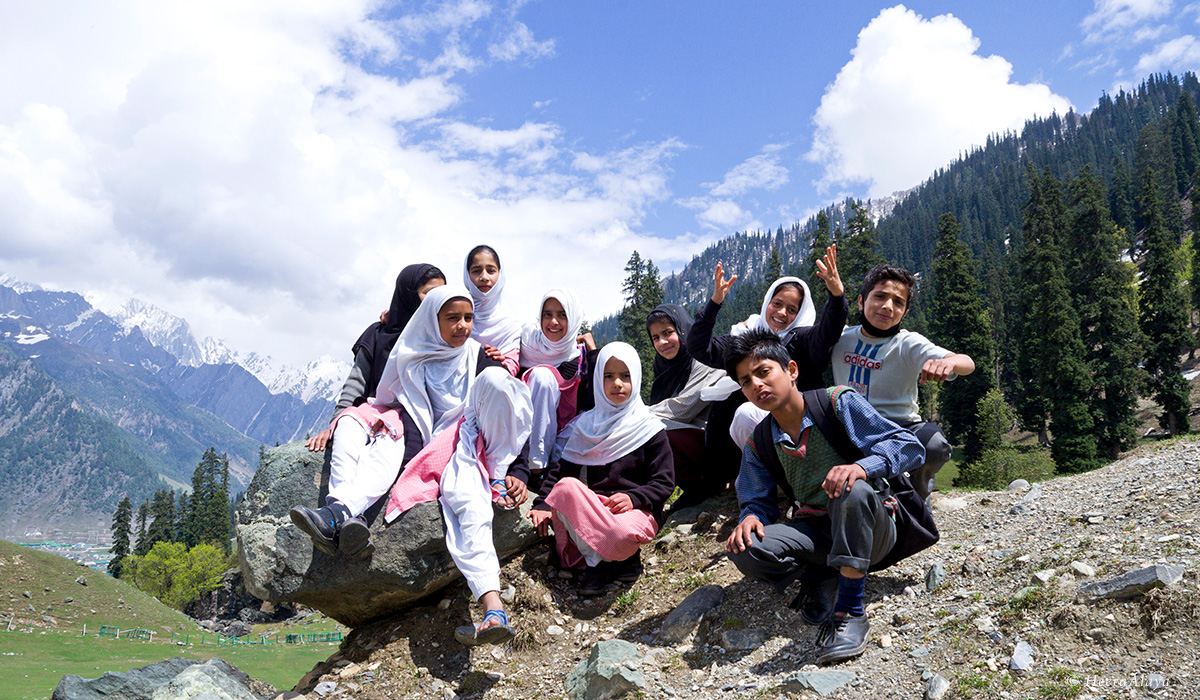
On yet another enchanting morning, I found myself captivated by the multiple layers of nature’s splendour. Once again, my guides were the light bouncing off mountains and the air infused with pine and cedar. I trekked on, admiring the wildflowers with their sun-drenched faces, the nimble lambs grazing alongside their flock, and the gleaming, meandering streams. I hadn’t anticipated life would surprise me with delightful, Mary Poppins-like moments—children rushing down the verdant slopes toward me, showering me with pure, unadulterated affection.
The children’s instinctive warmth encouraged me to open up right away. I was amused as I found myself readily answering their volley of questions (who thought they could out-curious me?). Charged with youthful exuberance, these youngsters, who were on a school picnic, were eager to be photographed, with some even requesting solo shots and retakes. I was pleasantly surprised to see the shy children assert themselves. This spontaneous photography session, a gift of innocence, was an absolute delight.
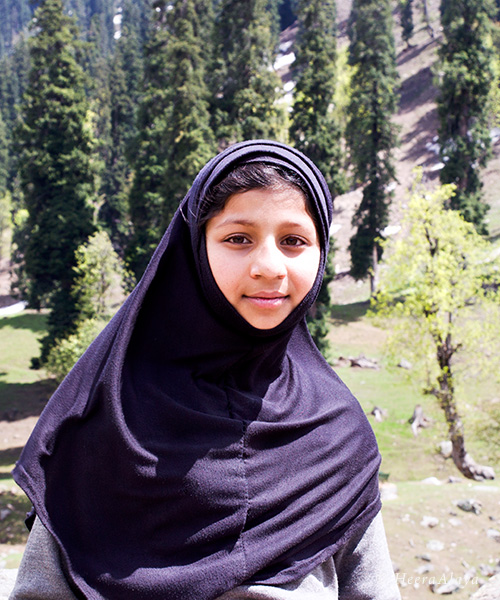
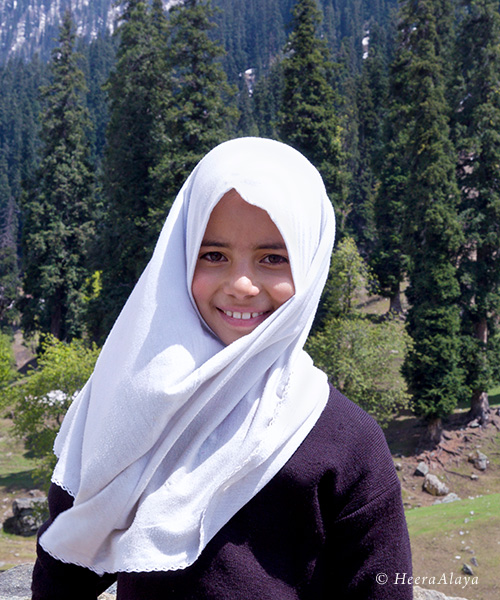
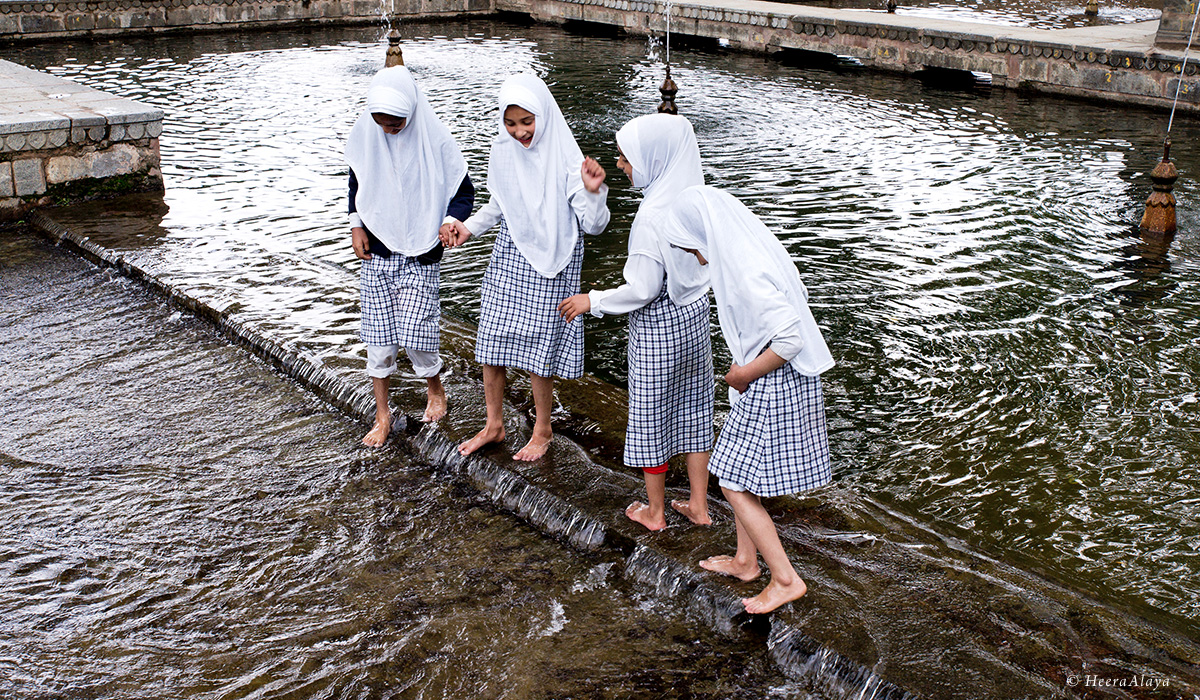
Days later, as I wandered through a magnificent garden I had frequented as a child, the joyful sounds of children squealing with happiness added a lively touch to the blooming flowers and intricate stonework. The girls’ carefree laughter and the boys’ bashfulness were a sight to behold. How splendid childhood is—free of worries and capable of finding joy in the simplest of things (which adults often dismiss as trivial). I felt a strong impulse to join in their fun—to laugh, giggle, and kick up in the sparkling beads of water.
The twinkle in the children’s eyes revealed that, despite the conflict and unrest surrounding them, they felt secure within the confines of their homes. In stark contrast to the girls’ freedom, one friend chose not to partake in the fun. This withdrawn child seemed to bear a profound story she was unable to share, and I could sense her pain. While the other children greeted me with waves, she averted her gaze, quick to look away. I found myself pondering whether, unlike the everyday public life marked by checkpoints and surveillance, this child’s private existence was the casualty of a different war—a heinous crime she was powerless to combat within her own home. The thought unsettles me, as I contemplate the lifelong psychological and emotional ramifications of crimes committed against innocent, voiceless children. I realise that unless children’s plight moves us and we question the value of our own lives, we cannot truly safeguard the innocence of childhood.
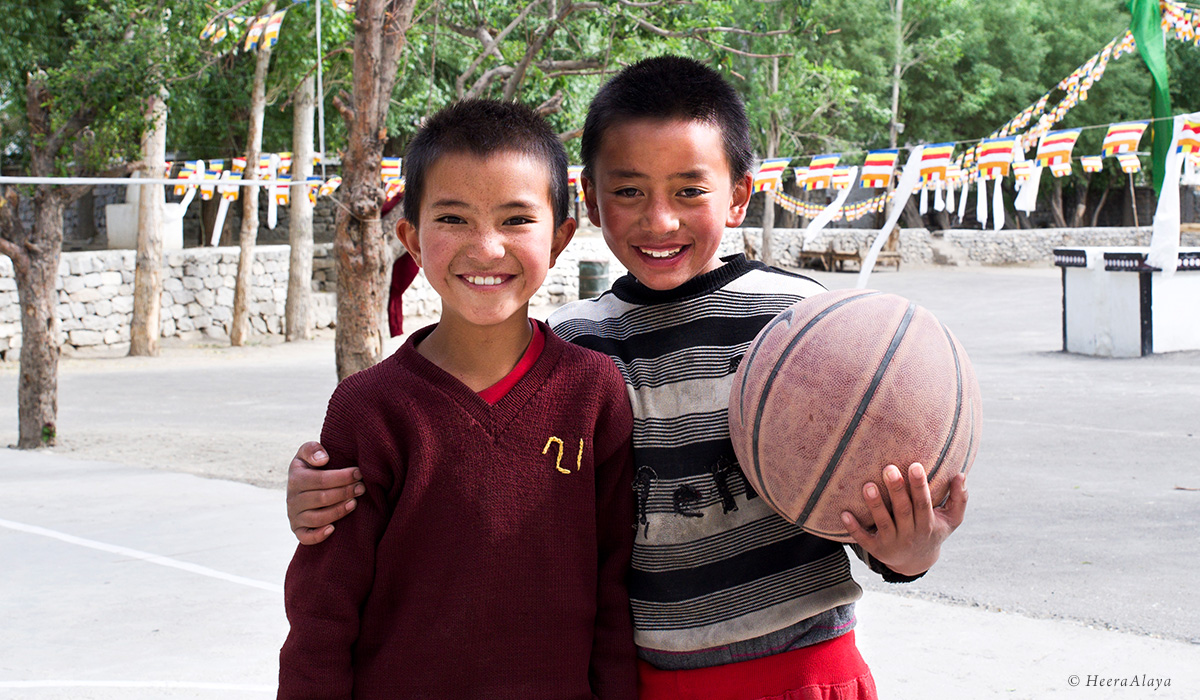
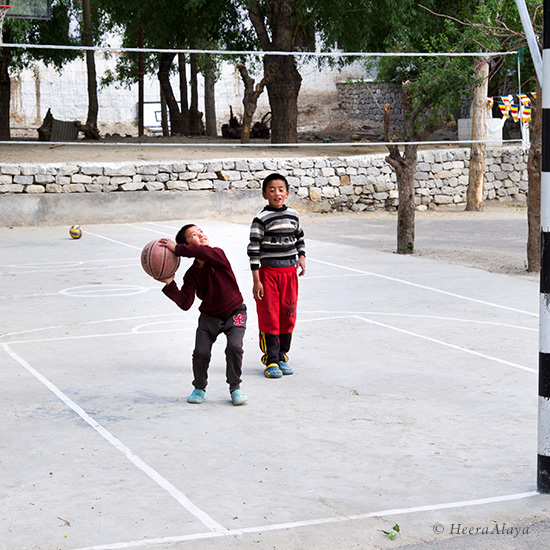
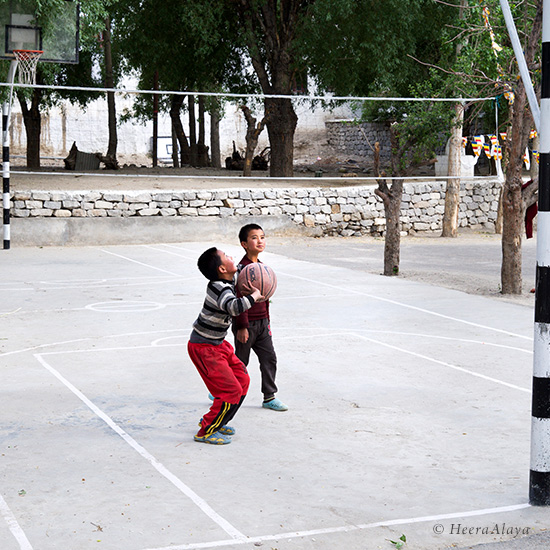
Further north, amidst the pervasive presence of Buddhism, I encountered a profound sense of brotherhood. The tender, smiling faces of the young boys on the court instantly illuminated my soul. These innocent lives serve as a poignant reminder that self-expression is shaped not only by one’s inherent nature but also by factors such as emotional security, environment, playmates, and caretakers. The monk teachers, who graciously extended their hospitality to me, foster a spirit of gentleness among the boys.
As I pressed forward on my journey, I held the children’s innocence close to my heart, a soothing balm for my soul.
The journey kept giving.
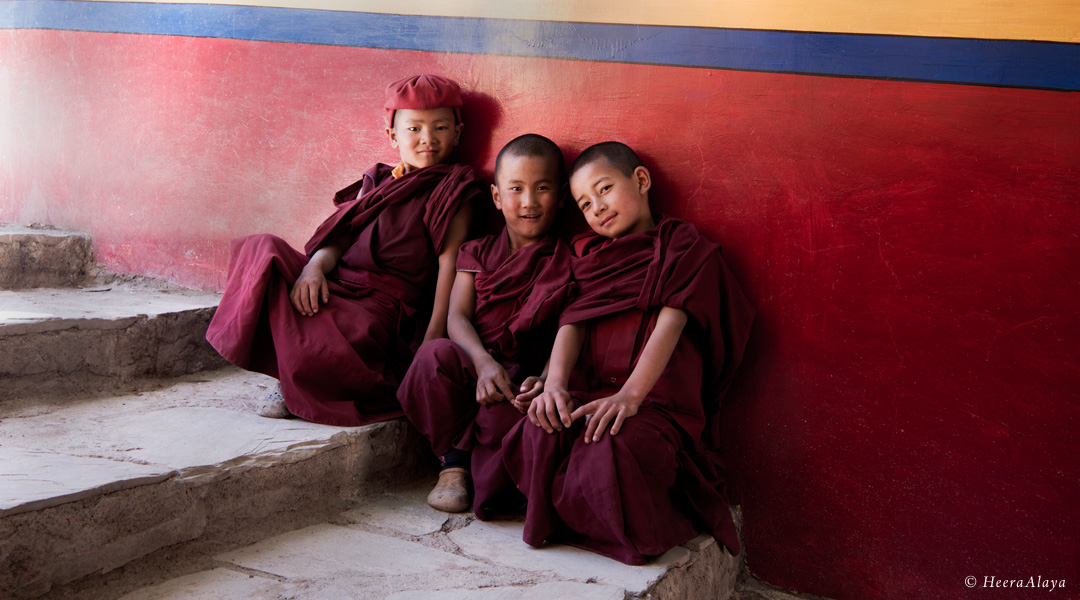
After a couple of days, during a visit to a monastery, I was drawn to the exuberant demeanour of a young novice monk (top left) and wanted to photograph him with his two friends. The child monk suggested various spots for the pictures, and once we finished, he leaned in and whispered, “200 rupees.” This enterprising lad then encouraged his friends to do the same, though they appeared hesitant. Our young monk was likely earning a commission from them. Talk about resourcefulness!
A short while later, our monk friend popped up around the corner, this time alone, and without his cap, offering: “500 rupees, one photo!” Since the child monks in their maroon robes all looked quite alike, I couldn’t be certain if he was the same one from earlier, but the impish smile on his cute face quickly dispelled any doubt. Kneeling, I asked if he was the same child who posed with his friends earlier; he nodded sheepishly, having cleverly altered his appearance to earn a tip. It’s been ages since I laughed so hard that my stomach hurt!
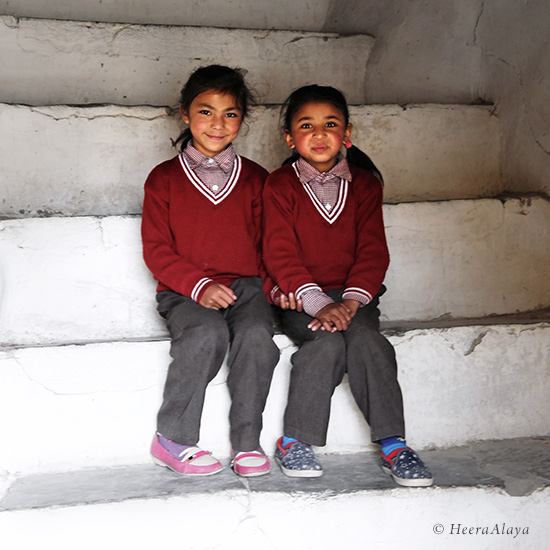
During my visit to another monastery, I found myself surrounded by Buddhist children and monks during their prayer session. A young girl in pink shoes) glanced at me intermittently, offering a hint of a smile. I appreciated her acknowledgement and returned the gesture. After the lengthy prayer meeting, I approached this delightful child to ask if she would kindly allow me to take a few pictures. She agreed, bringing along her shy friend and reassuring her with a gentle touch. This brief interaction highlighted the confident child’s spirit of inclusiveness—something she had subtly demonstrated toward me earlier—and her support for her friend. It exemplified genuine and nurturing friendships that naturally encourage, embrace, and guide one another.
The genuine warmth of feeling welcomed and included enveloped me as I journeyed through the endlessly sculpted mountains toward my next destination. During a refreshment stop, I engaged with children playing along the road and invited them to join me. These innocent souls filled my heart with song, dance, and silliness, much like a reunion with a familiar friend. In moments like this—when I encounter contented children so free of pretence—I am reminded of how fortunate they are to experience a true childhood, unlike those raised in the city. City-bred children often lose their innocence, becoming ensnared in a world of pretension and greed that ultimately leaves them spiritually impoverished.
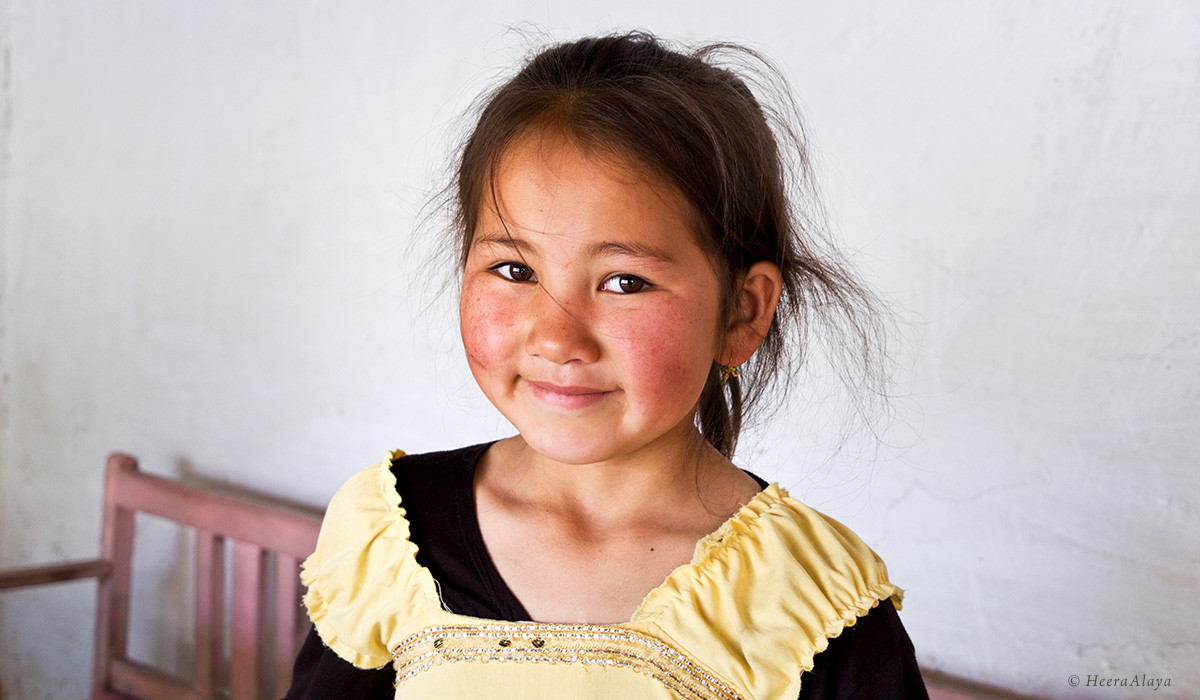
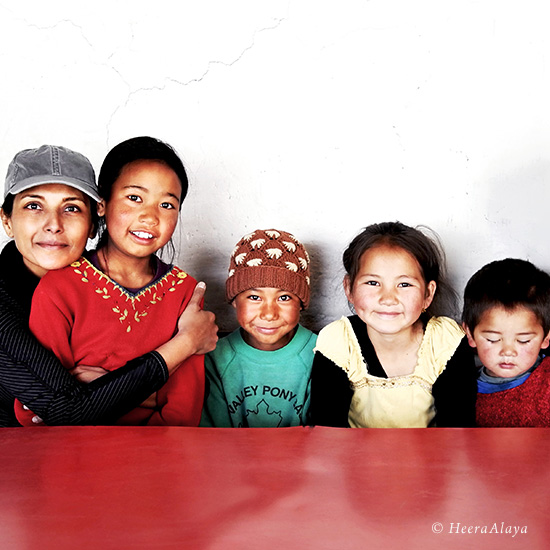
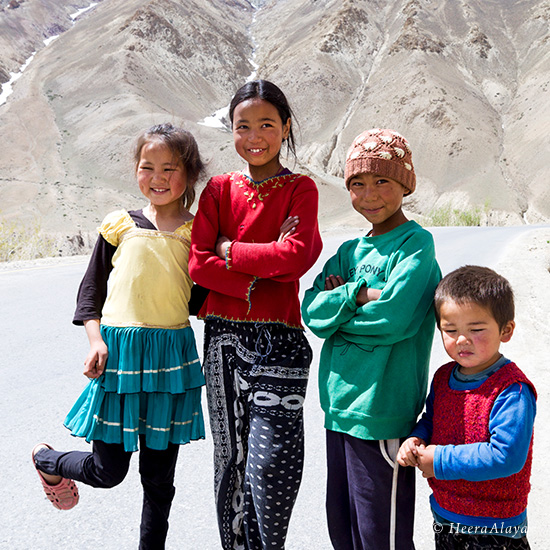
Throughout my largely unscripted spiritual journey, I encountered children and experienced a wide range of emotions and behaviours, ranging from vitality and fellowship to spontaneity. These children serve as a reminder that they perceive the world with their hearts and communicate with their eyes. One of the most beautiful aspects of childhood, especially for those nurtured and protected by their caregivers, is that children remain untainted by the prejudices that often come with adulthood. It raises a profound question: how can we not see it as our collective responsibility to preserve their innocence?
BEING A BEACON
emblematic of my essence
THE MARIONETTISTS
The master manipulators
FRENCH LAUNDRY
restoring your soul’s hygiene
AJEET SINGH
we know of a baby who was raped
KATE BLEWETT
Bulgaria’s Forgotten Children
TAINA BIEN AIMÈ
“What was her life’s journey?”
ALLISON ARGO
Documentary Filmmaker, USA
“Resiliency is another quality that comes to mind with the individuals I have filmed and profiled. They [animal individuals] have been through so much, yet they are still willing to trust.”